5 Ways Your Cat Is "Protecting" You — Decoded
Your cat sleeps at your feet every night. It follows you from room to room. It greets you at the door, rubs its face against your leg, and sometimes leaves a toy on your pillow.
It's easy to look at all that and think: my cat is protecting me.
And honestly? That's a lovely thought. But the truth is more interesting — and in some ways, better. Your cat isn't planning a security detail for you. What it's doing is something deeper: it's treating you as part of its territory, its family, its safety. That's not less meaningful than "protection." It's arguably more so.
I've had cats long enough to notice they're not trying to be bodyguards. They're just trying to keep you close. Here are five behaviors that look like guarding — and what's really going on behind each one.
Why is my cat always watching me?
Your cat watches you. Not in a creepy way — in a steady, attentive way. And it follows you around the house, from the kitchen to the couch to the bathroom.
The "protecting you" read: your cat is keeping an eye on you, guarding you.
What's actually happening: this is about belonging and safety. Cats feel secure when they're near someone they trust, and staying close to you is a sign that you make your cat feel safe [1]. It also echoes kitten behavior — kittens stay close to their mother, and some cats carry that into adulthood with their human [2]. Following you isn't guarding duty; it's your cat choosing to be near the person who makes it feel at home.
Mine does this every single time I'm in the kitchen. Not because she's hoping for scraps — she just wants to be where I am.
Why does my cat rub its head on me?
Your cat presses its forehead or cheek into your leg, or rubs its face against your hand. Maybe it does this every time you come home.
The "protecting you" read: your cat is marking you as its own — claiming you.
What's actually happening: that's not far off, but it's about territory and belonging, not protection. Cats have scent glands on their cheeks, chin, forehead, and the base of their tail [3]. When they rub against you, they're depositing pheromones — literally putting their scent on you [3]. This is scent-marking: it declares you part of your cat's territory and social group [3]. Your cat isn't guarding you; it's broadcasting "this human is mine" to the world (and re-claiming you if you've been away, since your scent fades) [3].
Notice how the scent wears off when you shower? That's why the welcome-home head-butt happens so reliably. You got clean. You need re-claiming.
Why does my cat lick me?
Your cat licks your hand, your arm, maybe even your hair. It's a raspy tongue, but it's unmistakably affectionate.
The "protecting you" read: your cat is grooming you, taking care of you.
What's actually happening: this is care, but it's grooming, not guarding. Cats groom each other to strengthen bonds and mix scents — it's a social behavior that creates a shared "group smell" [1]. When your cat licks you, it's treating you like family, the way it would a fellow cat it trusts [1]. It's not a bodyguard move; it's the feline version of a hug from someone who considers you part of its inner circle.
Not the sandpaper-in-the-face part, though. That part I could do without.
Why does my cat bring me dead things?
One morning you find a toy mouse on your doorstep. Or, if your cat goes outside, maybe something less pleasant. It's the classic "gift."
The "protecting you" read: your cat is bringing you food, providing for you.
What's actually happening: this one has a real survival root — but it's about hunting and sharing, not guarding. Cats are hunters, and bringing prey or toys back to the "family" is a hunting-contribution behavior [2][4]. Your cat is treating your household as its social group and contributing what it caught — like it would for kittens it's feeding [2]. It's a compliment, and an instinct, not a security detail.
By the way, you don't have to thank it by keeping the trophy. A gentle "good job" and a quiet disposal works fine.
Why does my cat sleep by the door?
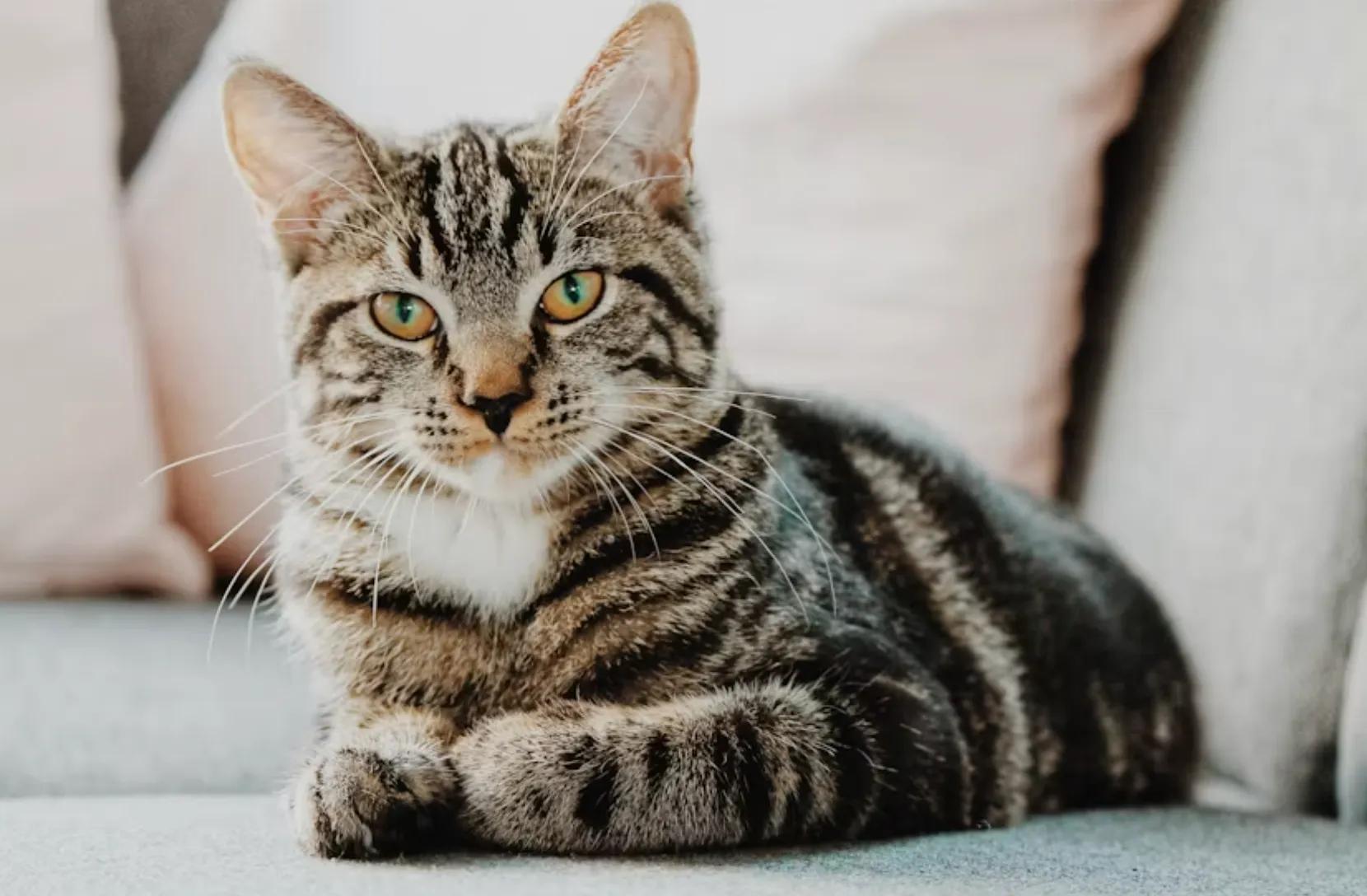
Your cat sleeps right by the door. Or on your chest. Or at the foot of the bed, facing outward like a little sentinel.
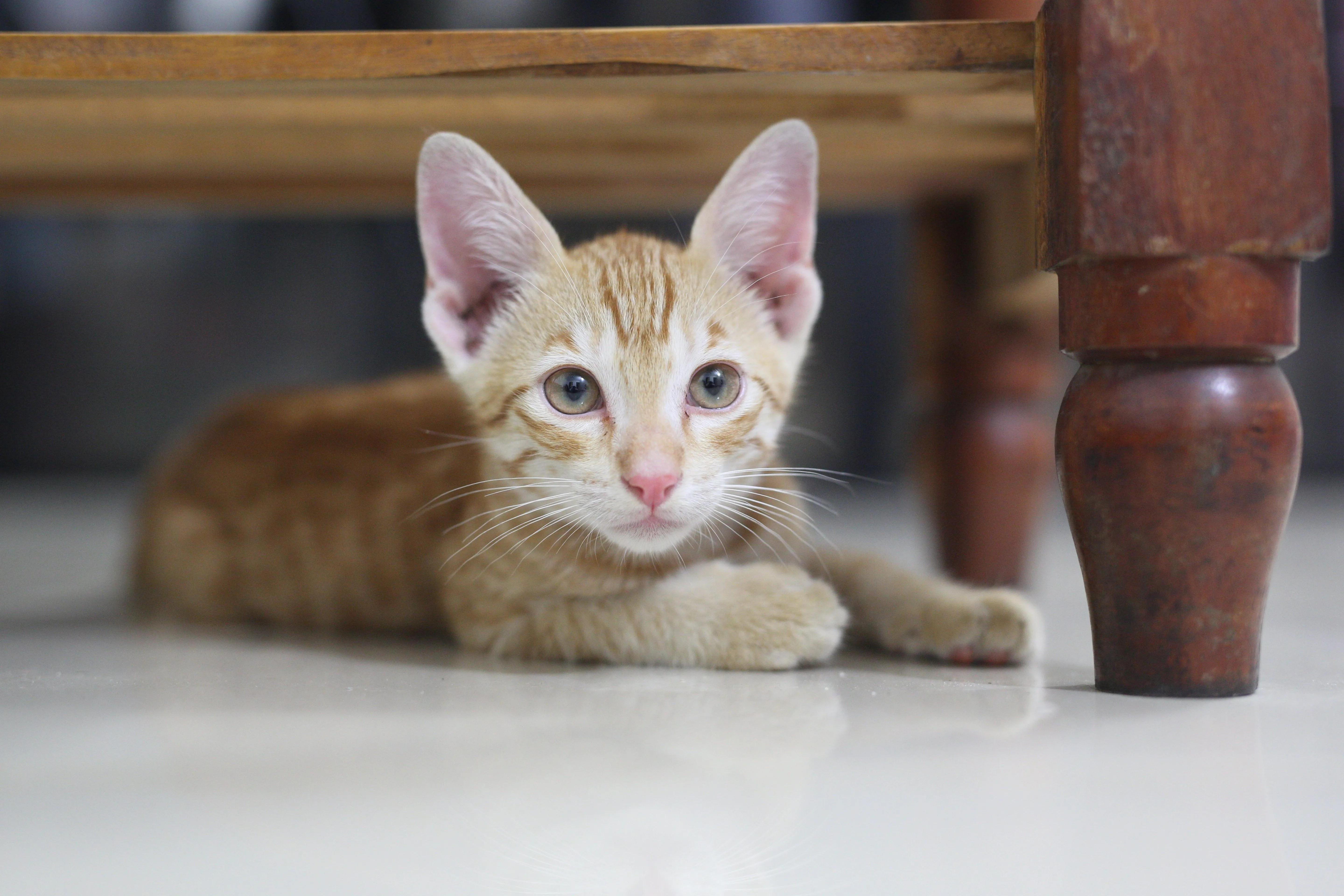
The "protecting you" read: your cat is standing guard over you while you sleep.
What's actually happening: there's a kernel of truth here — cats are territory-minded, and choosing a doorway lets them watch their space and feel in control [5]. Sleeping near you is also a huge sign of trust and security; a cat only sleeps somewhere it feels safe [5]. So your cat is choosing a spot to keep watch over its territory — which happens to include you. It's less "protecting you" and more "securing our shared territory," which is arguably just as sweet.
Mine faces the door every single night. I like to think she's on duty. She's probably just using my legs as a pillow. Both are fine.
The honest truth: your cat isn't a bodyguard
So here's the takeaway that's more meaningful than "protection": your cat isn't planning to guard you — it's treating you as family, territory, and safety.
All five behaviors trace back to a few core drives: belonging (you're part of my group), territory (you're mine / part of my space), safety (I feel safe with you), and instinct (hunting, grooming, scent). Those are the real "why" behind the guarding look.
"Protection" implies your cat sees you as something to defend. The truth is your cat sees you as home.
A quick note: when "protective" behavior is too much
One small caveat, because it matters for your cat's health. If "guarding" crosses into something that looks obsessive or painful, don't write it off as affection. I made that mistake once — chalked it up to a clingy cat. It wasn't.
Excessive rubbing or grooming — especially combined with signs like scratching, fur loss, a head tilt, or disorientation — can be a sign of an underlying issue like allergies, ear trouble, or a neurological problem, and it's worth a vet check [3].
Normal "protective" behaviors are sweet. But if they change dramatically or come with symptoms, that's a different story — one worth telling your vet about.
The takeaway
Here's the one-line version: your cat isn't a bodyguard — but it's treating you as part of its family, its territory, and its safe place, which is better.
When your cat watches you, follows you, rubs on you, grooms you, gifts you, and sleeps by the door, it's not on security duty. It's weaving you into its world — marking you as its own, keeping you close, and feeling safe with you. That's not "protection" in the way we think of it. It's something deeper: you're not someone your cat defends. You're someone your cat calls home.
So next time your cat parks itself at your feet and gives you that slow, steady blink — that's the feline version of "I've got you" [1]. Enjoy it.
Furpick.app is a participant in the Amazon Services LLC Associates Program and other affiliate programs. We may earn from qualifying purchases. Content from Amazon and other retailers is provided 'as is' and subject to change. All trademarks are the property of their respective owners.