How to Build Trust With Your New Cat: 7 Cat-Speak Moves That Actually Work
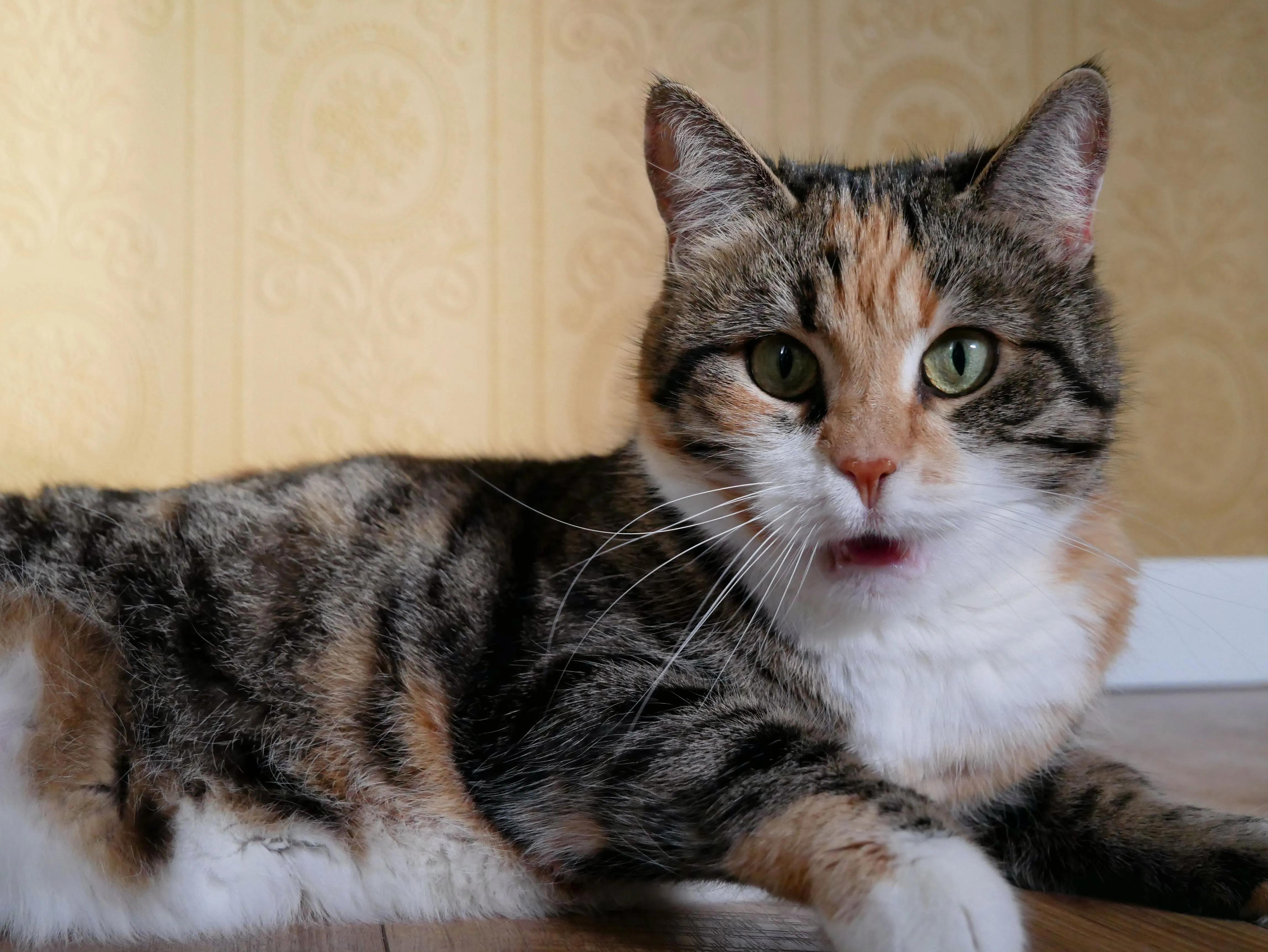
You bring your new cat home. You crouch down, reach out, and try to pick it up. It bolts under the couch. You chase it, towel in hand. It hisses. You feel like you've failed.
You didn't fail. You just spoke the wrong language.
In cat terms, reaching, chasing, and grabbing aren't "I love you." They're "I'm a predator, and you're prey." A cat that runs from you isn't rejecting you — it's reading your body language the way a cat would, and your body language said danger.
I've been there. My first rescue cat spent a week under my bed. I thought she hated me. It took me too long to realize the problem wasn't her. It was me — specifically, the way I kept trying to make her trust me instead of letting her.
So let's fix that. Trust with a cat isn't built by holding on tighter. It's built by backing off, speaking their language, and letting them come to you. Here are seven cat-speak moves that actually work — each one backed by behavior science, not wishful thinking.
Why does my cat run away when I approach?
Let's start with the biggest mistake: chasing.
When you approach a hiding cat head-on, with your body facing it and your hands out, you're doing exactly what a predator does. Cats are prey animals by instinct. A fast, direct approach reads as a threat — full stop [3].
So the first move is counterintuitive: do nothing. Don't chase. Don't reach under the bed. Don't drag it out "so it gets used to you." Every time you force the interaction, you teach your cat that you're something to flee.
What actually helps: let the cat be the one who decides to come out. Sit on the floor, at the cat's eye level, facing slightly away (not at it), and just exist in the room. Read a book. Be quiet. Let curiosity — not fear — be the reason it approaches.
This is the foundation of everything else in this article. Trust starts the second you stop being the scary thing.
Why does a slow blink calm my cat down?
Here's the single most useful cat-speak move there is: the slow blink.
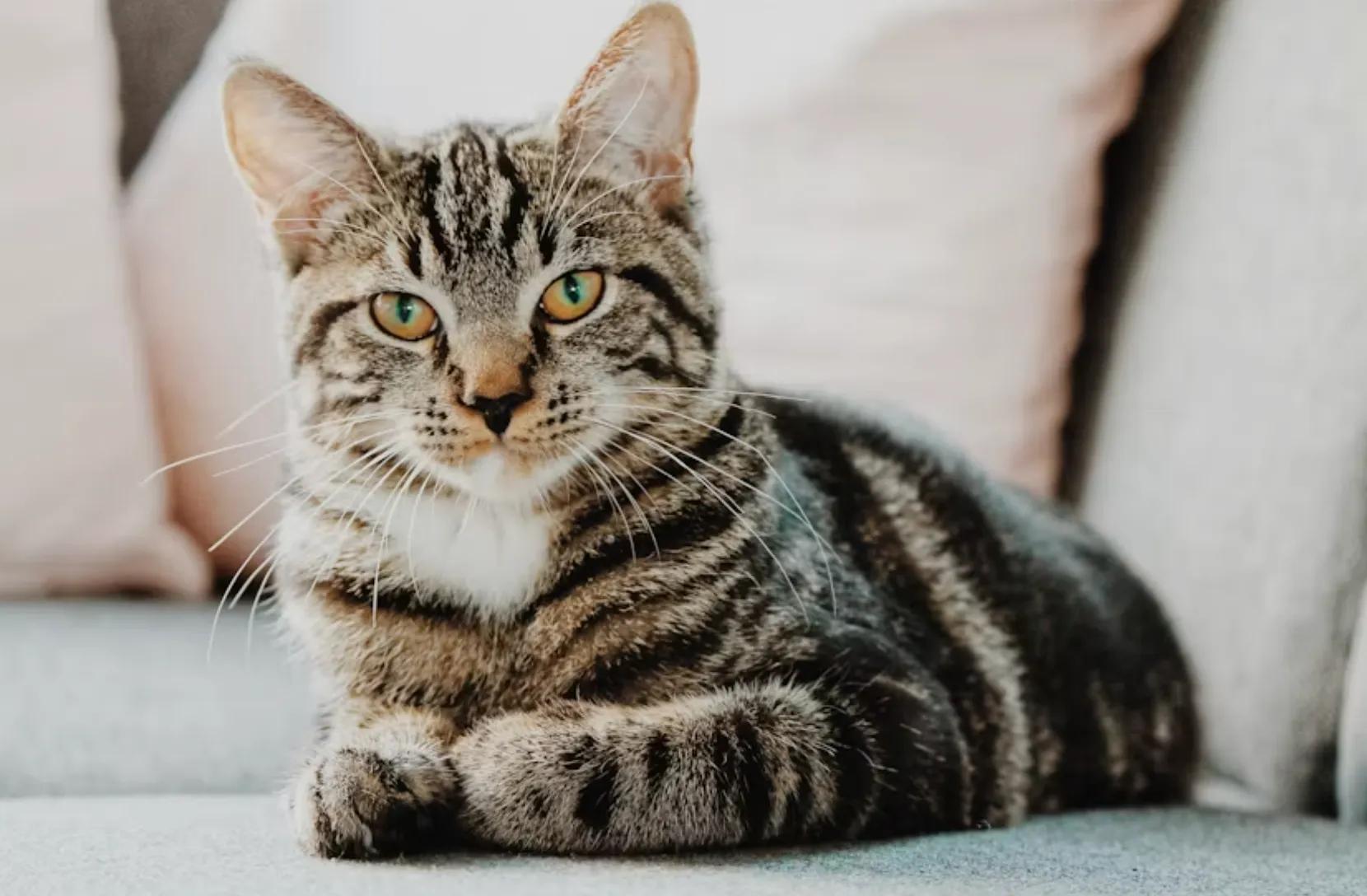
When a cat looks at you and slowly half-closes its eyes, that's a sign of relaxation and trust — researchers call it a "cat smile." And here's the remarkable part: it works in reverse. When you slow-blink at a cat, the cat tends to relax too, and is more likely to come to you.
This isn't folklore. In a 2020 study from the universities of Portsmouth and Sussex, researchers ran two experiments on cats and slow blinking [1]. In the first, cats half-blinked and narrowed their eyes more often in response to their owners doing the same. In the second — and this is the interesting one — cats were significantly more likely to approach a stranger who slow-blinked at them than one who sat still with a neutral face [1].
Think about what that means. A complete stranger can build rapport with a cat faster just by slow-blinking at it. You, the owner, have the same tool. Use it.
How to do it: look at your cat, let your eyes soften, and slowly close them for a second, like a long, gentle blink. Then look away. That's it. Do this a few times a day, especially when your cat is watching you from across the room. You're literally saying, in cat, "I'm relaxed, and I'm not a threat."
The slow blink also works with shelter cats — research found cats that slow-blinked more were adopted faster, because it made them seem more approachable to humans [2]. It's the same signal, both directions.
Why does my new cat need a safe room?
Most well-meaning owners make the same mistake: they turn the cat loose in the whole house on day one.
I did exactly this with my first cat. Big apartment, all doors open, "make yourself at home." She spent the next week in the tiniest gap under the bed. My mistake, not hers.
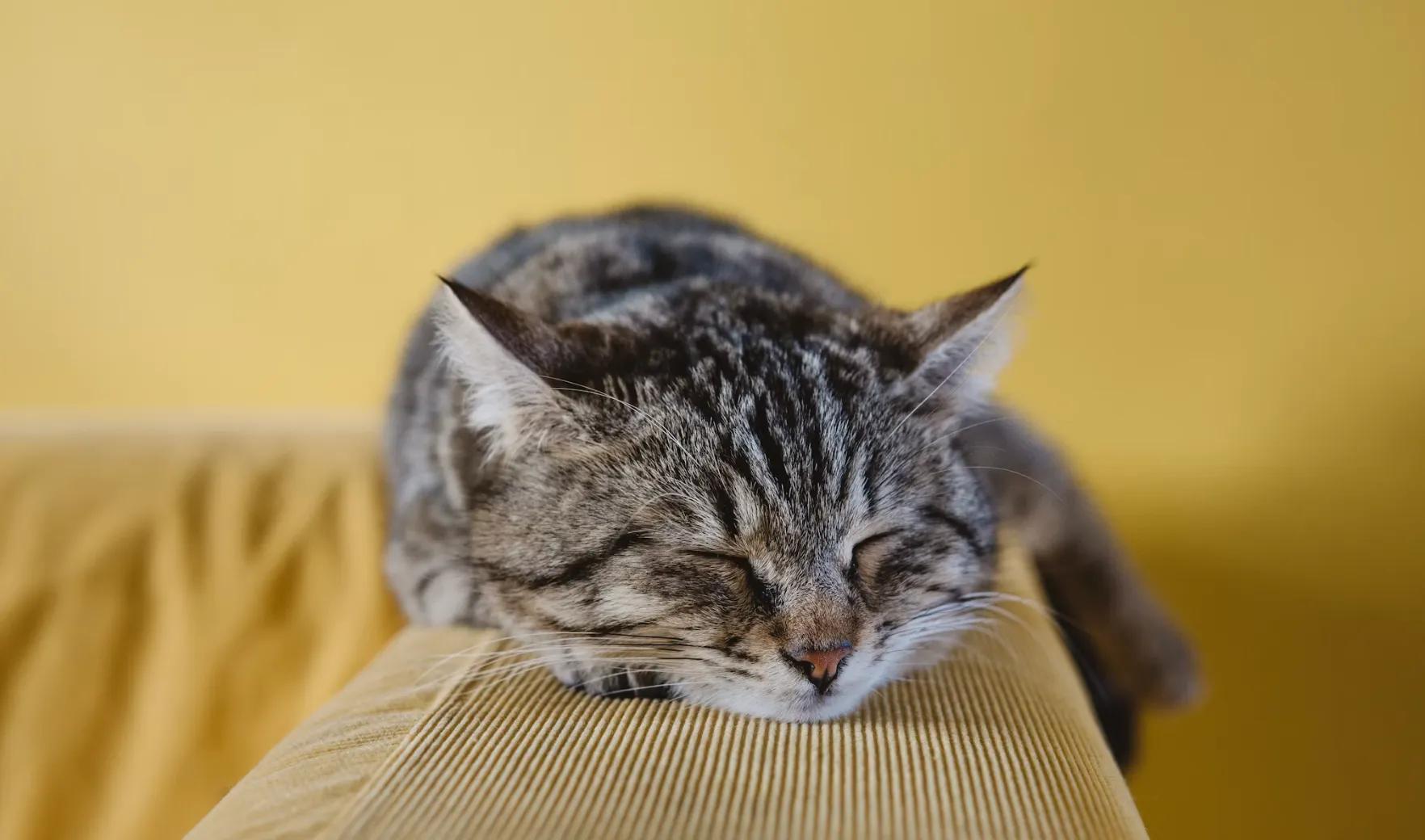
That's a lot. A new home is a wall of unfamiliar smells, sounds, and open space. For a cat that just left everything it knew, that's overwhelming — so it hides, and hides, and hides.
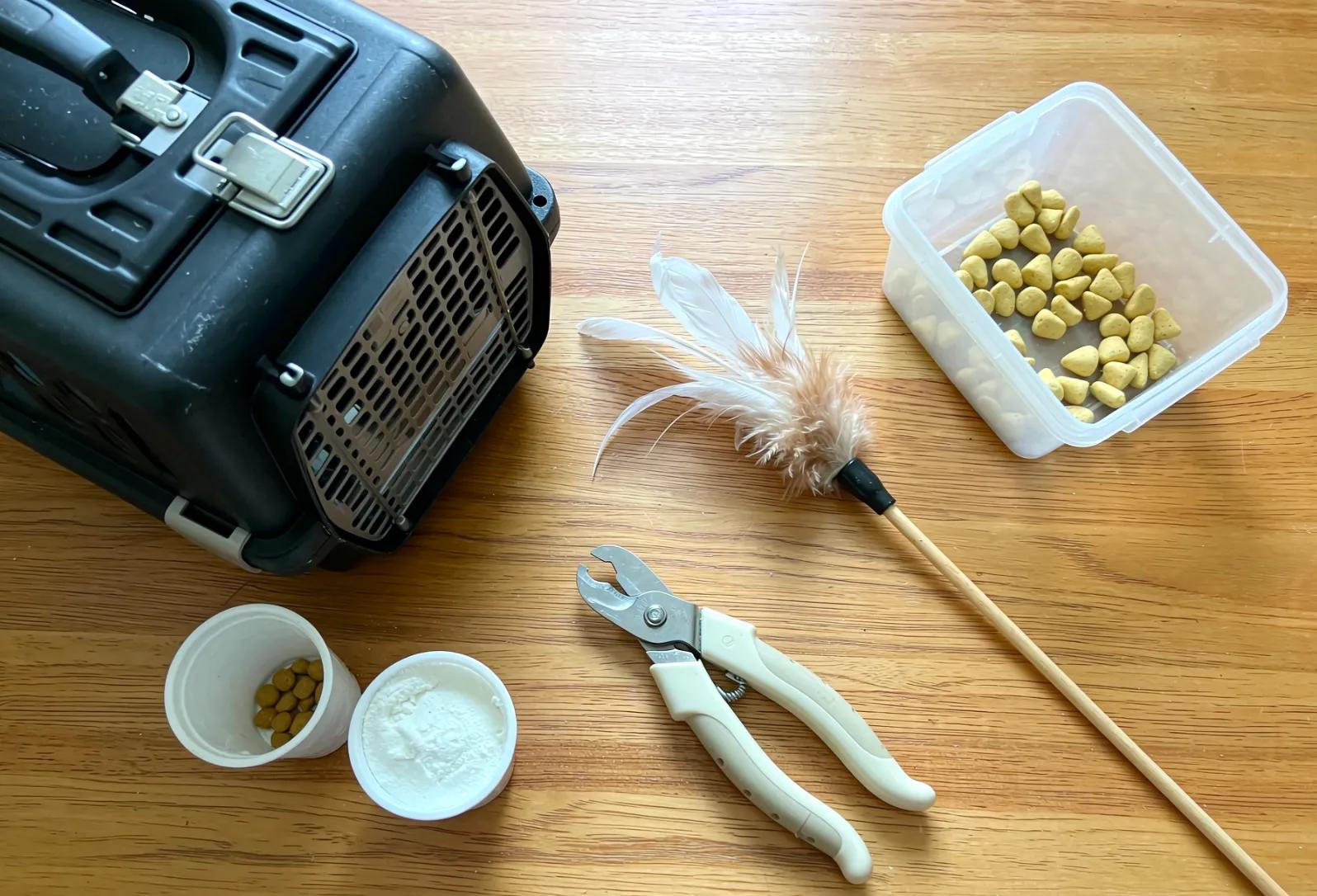
The fix is a safe room. Not a cage — a small, quiet room (a bathroom, a spare bedroom) where your cat has everything it needs and, crucially, can't be surprised. Put in food, water, a litter box, a bed, a scratching post, and one or two hiding spots (a cardboard box with a towel works great). Then close the door and let your cat decompress.
You might feel like you're "ignoring" it by shutting the door. You're not. You're giving it something more valuable: a space that's entirely its own, where nothing can sneak up on it.
Visit for short, calm sessions. Sit on the floor, slow-blink, toss a treat its way, then leave. Let the safe room be the place where good things happen. Over days, your cat will start to explore — and when it's ready, it will come to the door when you do. That's the signal to open it up a little more.
How does my scent help my cat feel safe?
Cats live in a world of smell. Their sense of smell is extraordinarily acute — they have roughly twice the scent receptors of a human, plus a secondary organ for analyzing odors [4]. Scent is how they read their environment and recognize what's familiar and safe.
Here's a move a lot of people skip: give your cat your scent before you give it your hands.
Leave an unwashed T-shirt you've worn, or a soft blanket, in your cat's safe room. Your scent — calm, familiar, you — becomes part of the cat's territory. Instead of "who is this giant thing," the room smells like "this is home, and this human is part of it."
Cats can distinguish their owner's scent from a stranger's, and familiar scent is a core part of how they feel safe and bonded. So while your cat hides, it's also sniffing your shirt, learning that you're not a threat.
This is the one that felt the weirdest to me at first — leaving a worn T-shirt on the floor on purpose. But it works. My cat stopped treating the laundry pile as suspicious territory the day it became my territory instead.
You can also do the reverse: rub a clean, dry cloth on your cat's cheeks (that's where its scent glands are) and let the scent linger in the room. You're essentially building a shared scent profile — the feline version of saying "we're on the same team."
Why do treats actually build trust?
Food is the shortest path to a cat's heart. Not because cats are greedy — because food is a positive association.
Every time you offer a treat and nothing bad happens, your cat's brain quietly notes: "this human + food = good." That's operant conditioning, the same principle behind all positive-reinforcement training [5]. And it's the opposite of what fear does. Fear says "avoid," treats say "approach."
The American Association of Feline Practitioners (AAFP) emphasizes that positive reinforcement is the foundation of building trust and changing behavior — and it only works if the reward is something the cat actually wants [5]. So find what your cat loves (treats, a favorite food, even a little play), and use it strategically.
Here's the smart way to do it:
- Toss, don't hand. Early on, toss a treat a few feet away rather than holding it out. A hand reaching toward a scared cat can still feel threatening. Let the cat come to the treat, then to you.
- Mark the moment. When your cat does something brave — takes a step toward you, comes out from under the bed — that's when the treat comes out. You're rewarding courage, not just begging for attention.
- Keep it short. A couple of minutes, a few times a day. Cats learn better in short, positive bursts than long sessions.
Over time, the shift shows up on its own: your cat starts showing up when it hears you, because you've become the person who brings good things. That's trust, built one treat at a time.
I won't pretend it's noble. I have, on multiple occasions, bribed a scared cat into loving me with a steady supply of chicken-flavored treats. It works. No shame in the game.
Why does sitting still work better than chasing?
This is the move that goes against every instinct: the more you try to catch your cat, the less it will trust you. The more you sit still, the more it will trust you.
Cats approach what's calm. A still, quiet human at floor level is boring and unthreatening — exactly what a nervous cat wants to investigate. A moving, reaching human is a target to avoid.
Cat behaviorist Jackson Galaxy's advice comes down to one phrase: slow and steady wins the race [6]. Don't rush the cat. Don't force cuddles. Don't pick it up until it's comfortable being near you. The relationship moves at the cat's pace, not yours.
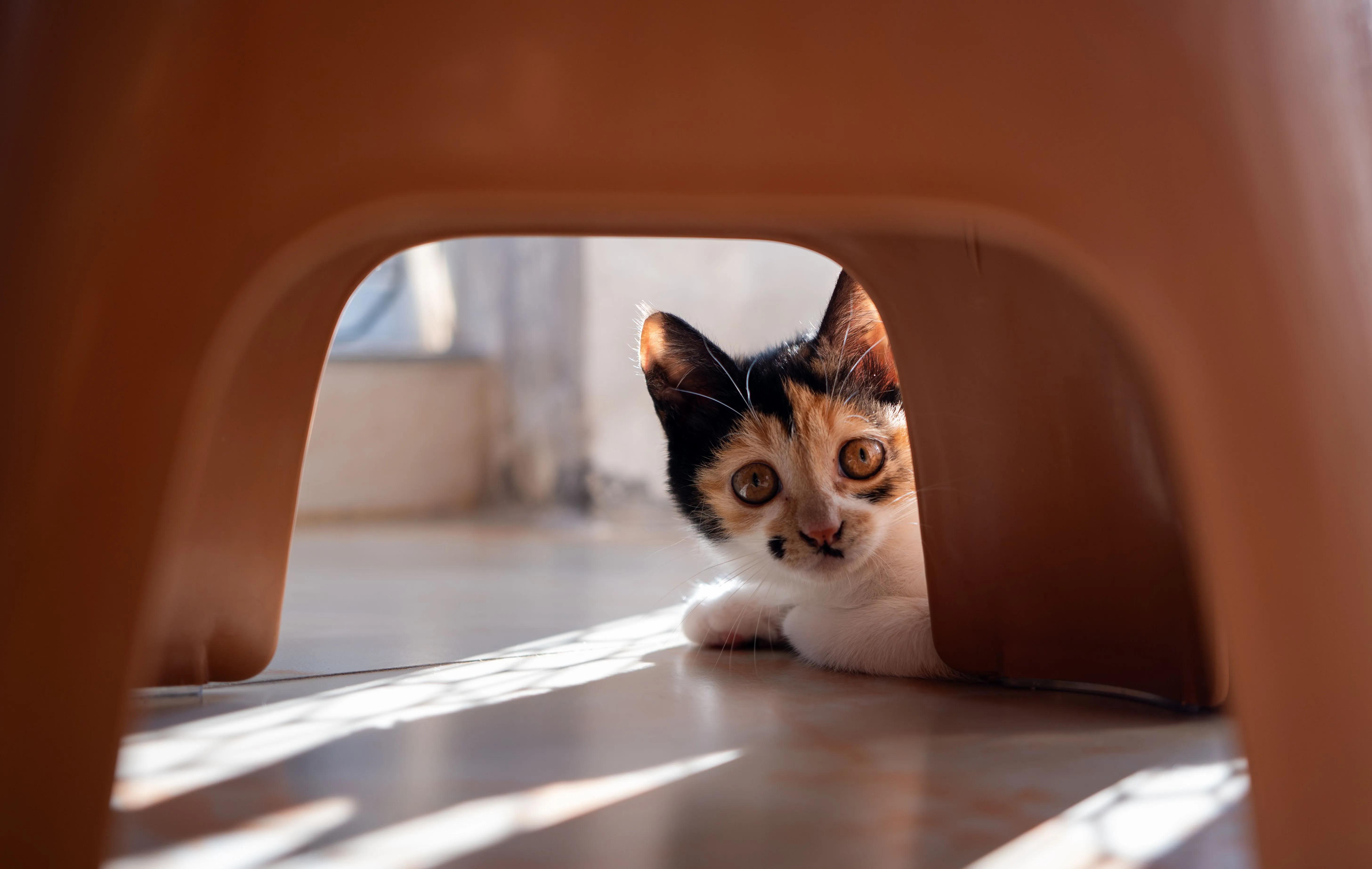
Concretely, try "passive attention": just be in the same room, doing nothing cat-related. Read. Work. Sit low. Don't look directly at the cat (direct eye contact is another predator signal — glance, then look away). Let the cat watch you, learn you're safe, and eventually wander over on its own.
The first time your cat brushes against your leg or jumps up next to you without you reaching for it — that's the moment everything clicks. You'll know you did it right, because you won't have done anything at all.
How do I know my cat trusts me?
Once you've put in the work, how do you know it's working? Cats are subtle. Here are the signals that say "I trust you" — in the cat's own language.
- The slow blink. If your cat looks at you and slowly blinks, that's a cat kiss. Blink back. You've been accepted.
- The exposed belly. When a cat rolls over and shows its belly, it's showing you its most vulnerable spot — a huge trust signal [7]. Important caveat: this is not an invitation to rub. Many cats will swipe at a hand that goes for the belly. I learned this the hard way, with a scratch that took a week to heal. Enjoy the display, resist the grab, and let the cat decide if it wants contact.
- Kneading (making biscuits). When your cat kneads its paws on you or a blanket, it's a behavior left over from kittenhood, when kittens kneaded their mother. A cat that kneads you feels safe and content — it's treating you like family [7].
- Sleeping on or near you. Cats only sleep where they feel safe. A cat that curls up on your lap, at your feet, or even in the same room at night is telling you it trusts you with its most vulnerable state: sleep [7].
- Coming to you. This is the big one. When your cat chooses to come to you — for a treat, for a scratch, or just to be near — that's the goal. Trust, in cat terms, is your cat deciding you're worth approaching.
None of these happen overnight. And that's the point.
A quick note: when "hiding" is too much
One boundary worth mentioning, because it matters for your cat's health. Some hiding is normal. But if your new cat won't come out at all, won't eat or drink for more than a day, is hiding in a way that seems painful, or stops grooming, that's a red flag — not a personality trait.
A sudden, deep withdrawal can signal stress that needs help, or an underlying health problem. In that case, don't just "give it more time." A quick call to your vet is the right move — they can rule out illness and help you adjust the environment. There's no medication to hand out here, just this: recognize the signs, and get a professional look if it's severe [8].
The takeaway
Here's the one-line version: you don't earn a cat's trust by grabbing it — you earn it by letting it come to you.
Slow-blink. Give it a safe room. Leave your scent. Use treats as positive reinforcement. Sit still, and let the cat set the pace. Then read the signals — the slow blink, the belly, the kneading, the cat that decides to sleep beside you.
Your new cat isn't rejecting you. It's waiting for you to speak its language. Learn a few words, and you'll both be home.
Furpick.app is a participant in the Amazon Services LLC Associates Program and other affiliate programs. We may earn from qualifying purchases. Content from Amazon and other retailers is provided 'as is' and subject to change. All trademarks are the property of their respective owners.