Your Cat Hides Pain — Here's How to Tell
Over 90% of cats older than 12 show signs of joint degeneration on X-rays. Go ahead and read that again, because the second half is the part that matters: most of those cats never limp, never cry out, never do anything a worried owner would call obvious. They just get a little quieter. A little slower on the jump. A little more likely to hiss when you touch the spot that hurts [1].
I found this out the hard way with my own cat. She was eleven, still eating normally, still purring. What I noticed was that she stopped jumping onto the kitchen counter — she'd meow to be lifted instead. I figured it was "getting old." It wasn't. Two weeks later, the vet told me she had arthritis in both hips.
Cats are built to hide pain. That sounds like a warning; it's really just how they're wired. So the honest question isn't whether yours could be hurting without you knowing — it's how to tell, before it turns into something that shows up too late.
Why do cats hide pain at all?
It's not stubbornness. It's survival. Cats are what behavior researchers call meso-predators — mid-level hunters that can also be hunted. Out in the wild, a cat that looks weak or injured advertises itself as an easy target. So evolution did cats a favor: it hardwired them to mask discomfort [2].
The American Animal Hospital Association puts it plainly. When a cat is hurting, it rarely limps or vocalizes the way a dog might. Instead, pain shows up as changes — small shifts in how a cat moves, eats, sleeps, and reacts to you [2]. Lori Kogan, a psychologist at Colorado State University who works on feline welfare, frames it as a reflex: "If your cat is doing something weird or different, the first question should be: could this be pain?" [2]
That's a genuinely useful lens, because it flips the way most of us think. We tend to ask "is my cat in pain?" the way we'd ask it about a person — expecting the answer to come with some clear outward sign. A cat doesn't work that way. The more useful question isn't "is it in pain?" (for most cats, at some point in their lives, the honest answer is "probably, at least sometimes"). It's "has something about how it normally lives changed?" Changes are the language cats use for discomfort. Pain is one of the loudest things a change can mean.
And here's the trap: because the signals are quiet, owners routinely file them under "old age" or "moodiness" and never mention them at the vet. The pain keeps running underneath, unmanaged, for months or years. The cat isn't being difficult. It's just doing what evolution taught it — and paying a quiet, ongoing price that no one notices because nothing ever gets loud enough to scare anyone.
How common is hidden pain in cats?
More common than most people realize. Here's the part where the worry is actually justified — the numbers back it up.
Radiographic studies have repeatedly found that a majority of older cats carry joint disease. One commonly cited figure: more than 90% of cats over 12 have radiological evidence of degenerative joint disease, and roughly 60% of cats over 6 are already affected [1]. That doesn't mean every one of those cats is in pain — X-ray changes don't always equal clinical discomfort. CARE (Cat Arthritis Resources & Education) estimates that around 40% of cats with arthritis experience pain from it [1].
Now the part that stings: pain in cats has historically been under-treated. International Cat Care, working through the International Society of Feline Medicine, reported that after spaying, only about 33% of female cats received pain relief — versus about 75% of dogs [3]. Cats aren't in less pain after surgery. They're just quieter about it, and for a long time that quietness read as "fine."
So when you hear that a cat "seems fine," understand what that actually means in a species wired to hide suffering. It's a low bar.
What does pain actually look like in a cat?
Forget limping. In cats, pain is almost always a behavior change. That's the single most useful shift in how you look at it — and the most counterintuitive. A dog in pain limps, whines, won't put weight on a leg. A cat in pain usually just... rearranges its life around the hurt. Here's what to watch, grouped the way vets think about it [1][2]:
Temperament. A cat that used to be social suddenly becomes snappy — hisses when touched, bats at hands, hides more. People call this "cranky." It's often a cat guarding a painful spot. The cat that always slept on your lap now sleeps alone at the foot of the bed. The cat that loved being petted now flinches when you reach for its back.
Mobility. Less jumping, or a different way of getting up. A cat that used to launch onto the couch now walks to the edge, crouches, then climbs. It may hesitate before stairs. It may stop jumping onto counters entirely, or miss jumps it used to nail. Pay attention to how it gets down, too — cats with hip pain often back down carefully instead of hopping.
Grooming. Reduced grooming shows up as a dull, greasy, or matted coat — especially over the back and hindquarters, which hurt for an arthritic cat to reach. Sometimes the opposite happens: a cat over-grooms one specific spot, usually a joint that hurts, licking it raw. Both are worth noting.
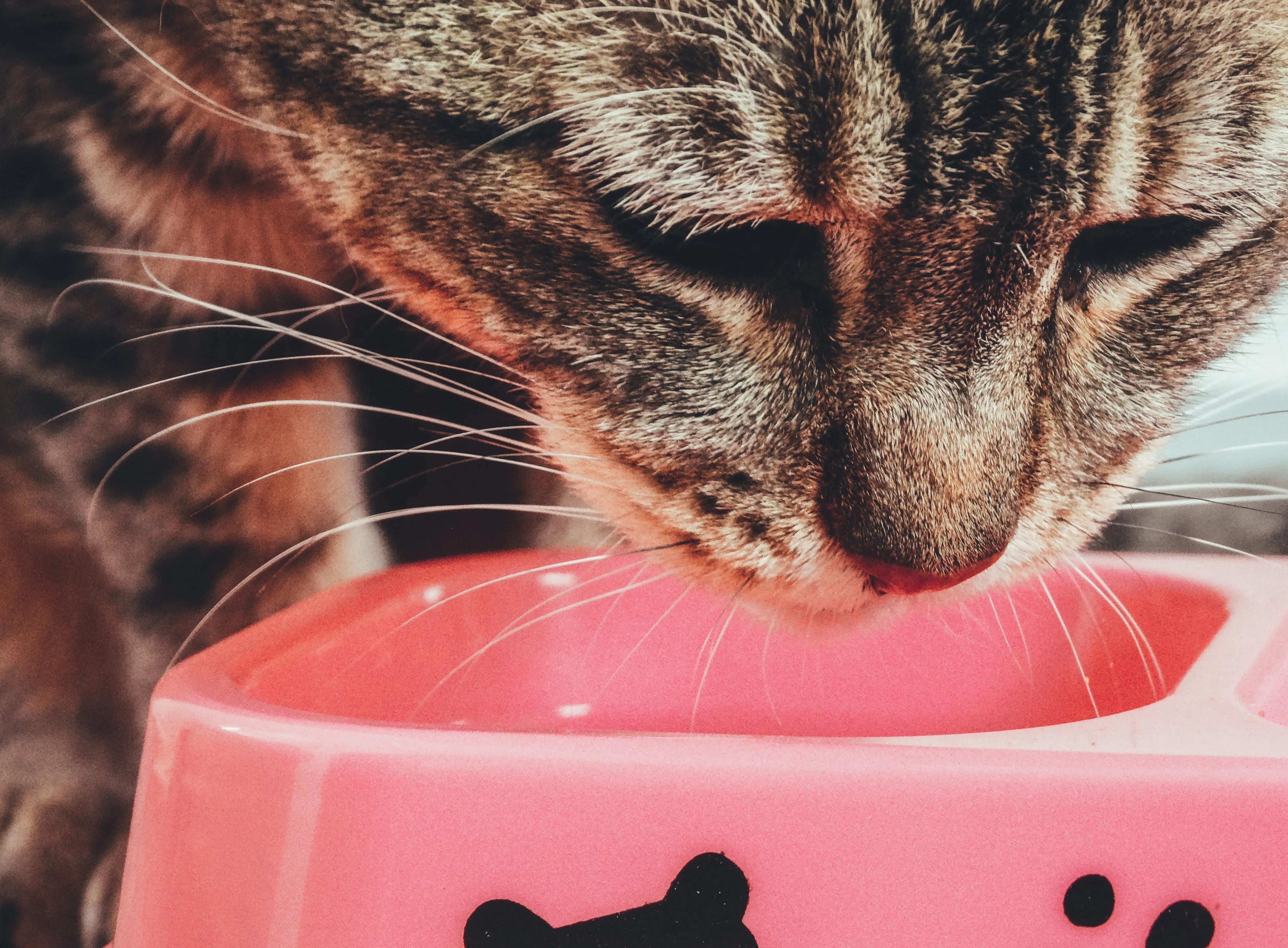
Eating and drinking. Changes here can signal oral pain or something systemic. A cat that suddenly scoops food out of the bowl to eat it off the floor may have a sore mouth [2]. Drinking much more, or much less, than usual is worth flagging — increased thirst is a classic sign of kidney trouble, which cats hide beautifully until it's advanced.
Litter box. Urinating outside the box isn't "spite." It's often a cat that can't comfortably climb in, squat, or hold a position. It can also flag urinary or kidney trouble [1][2]. If your cat suddenly stops using the box, add "pain or illness" to the list of suspects before you blame the litter.
Sleep. Cats in pain sleep differently — more, or in odd positions, or in places they never used to. A cat that suddenly seeks out warm spots, or flinches when you accidentally bump a sore leg in its sleep, is telling you something.
The unifying idea, from every vet source I found: pain is the first thing to rule out when a cat's behavior changes — before you conclude it's "just old" or "just grumpy." One behavior change on its own might be nothing. Two or three showing up around the same time is a pattern, and patterns deserve a call.
Is your cat "just getting old" — or hurting?
This is the question that actually trips up owners, so let's slow down on it.
Aging itself isn't a disease. Healthy older cats slow down a bit — they sleep more, play less. That's normal. But there's a difference between "slower in general" and "stopped doing specific things it used to do without trouble."
Here's a practical frame I've started using, and it came from my own mistake: ask what your cat stopped doing. An old cat that still jumps on the couch (just less often) is different from an old cat that never jumps anymore, or only jumps after hesitating. Not jumping at all, or being unable to settle into its usual sleeping positions, are red flags for joint pain — not normal aging.
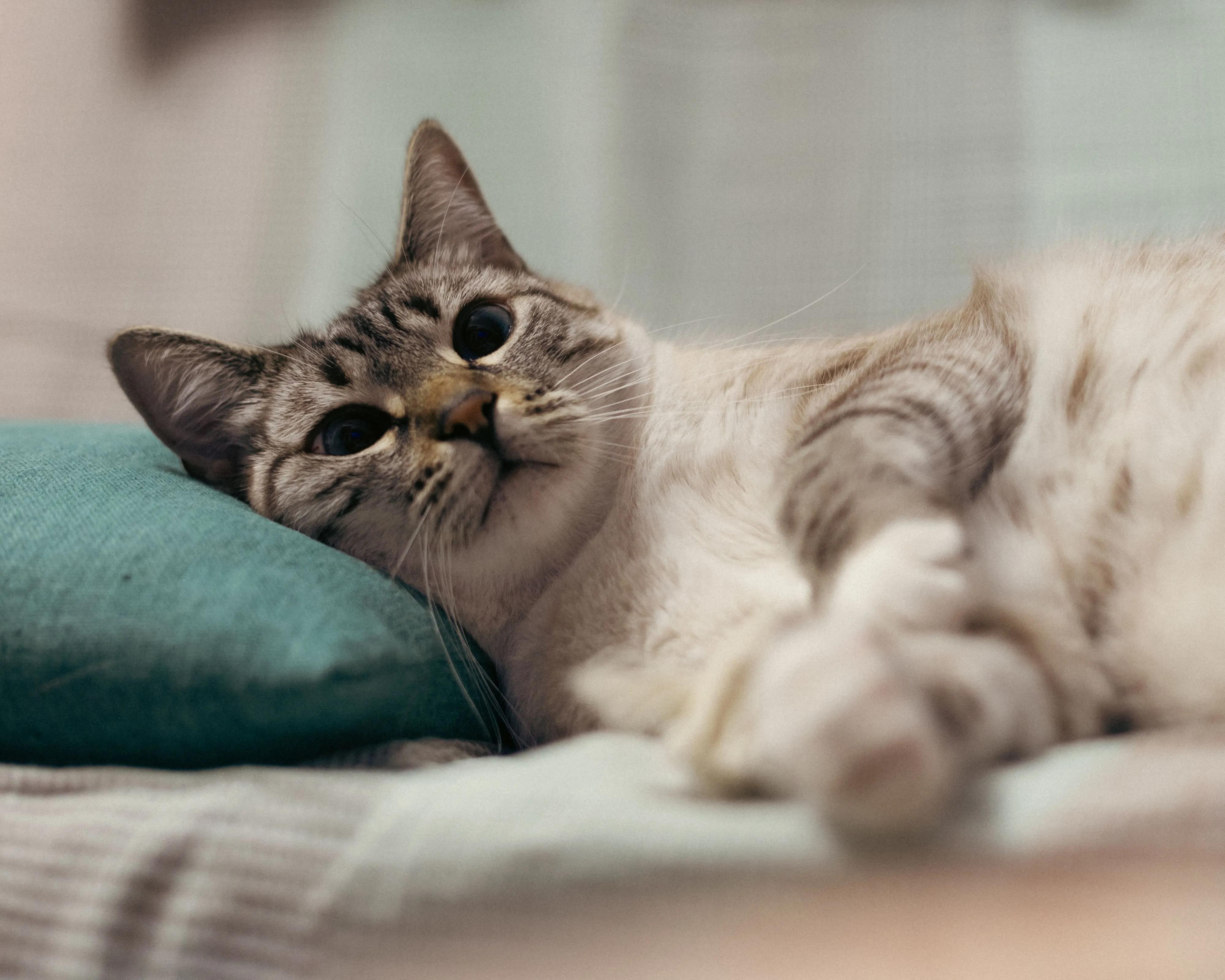
To make this concrete, here's the rough distinction owners should keep in their heads:
The line isn't always crisp, and you shouldn't have to draw it perfectly — that's what the vet is for. But the pattern above gives you a place to start: general slowing down is aging; stopping specific things is a signal.
The other tell is reaction to touch. Grooming a spot, lifting the cat, or pressing gently near the hips and watching for a flinch, a hiss, or a tail lash can reveal a cat guarding a painful area. Most cats with arthritis are tender somewhere even if they never limp [1][2]. If your cat is fine being stroked along the head and neck but pulls away the instant your hand reaches its lower back or hind legs, that asymmetry is worth mentioning to the vet.
The cheap, reliable move: record your cat on your phone doing the normal daily things — climbing, eating, using the litter box — and show the clips to your vet. Vets have told owners this for years, because so many behavioral changes happen at home and look "fine" in the clinic [2]. A short video is worth more than a hundred words at the appointment. It also means you don't have to try to describe something mid-visit, under pressure, while a cat that's "perfectly normal in the exam room" stares at you from the carrier.
Can you actually check for pain at home?
Yes, within limits — and one tool has blown up for exactly this reason. The Feline Grimace Scale, a facial-expression scoring system developed for acute pain, saw searches grow more than 500% over the past year as owners caught on that cats telegraph pain in their faces [6].
The scale looks at five facial features, and once you know them you start seeing them in any cat that's hurting [2][4]:
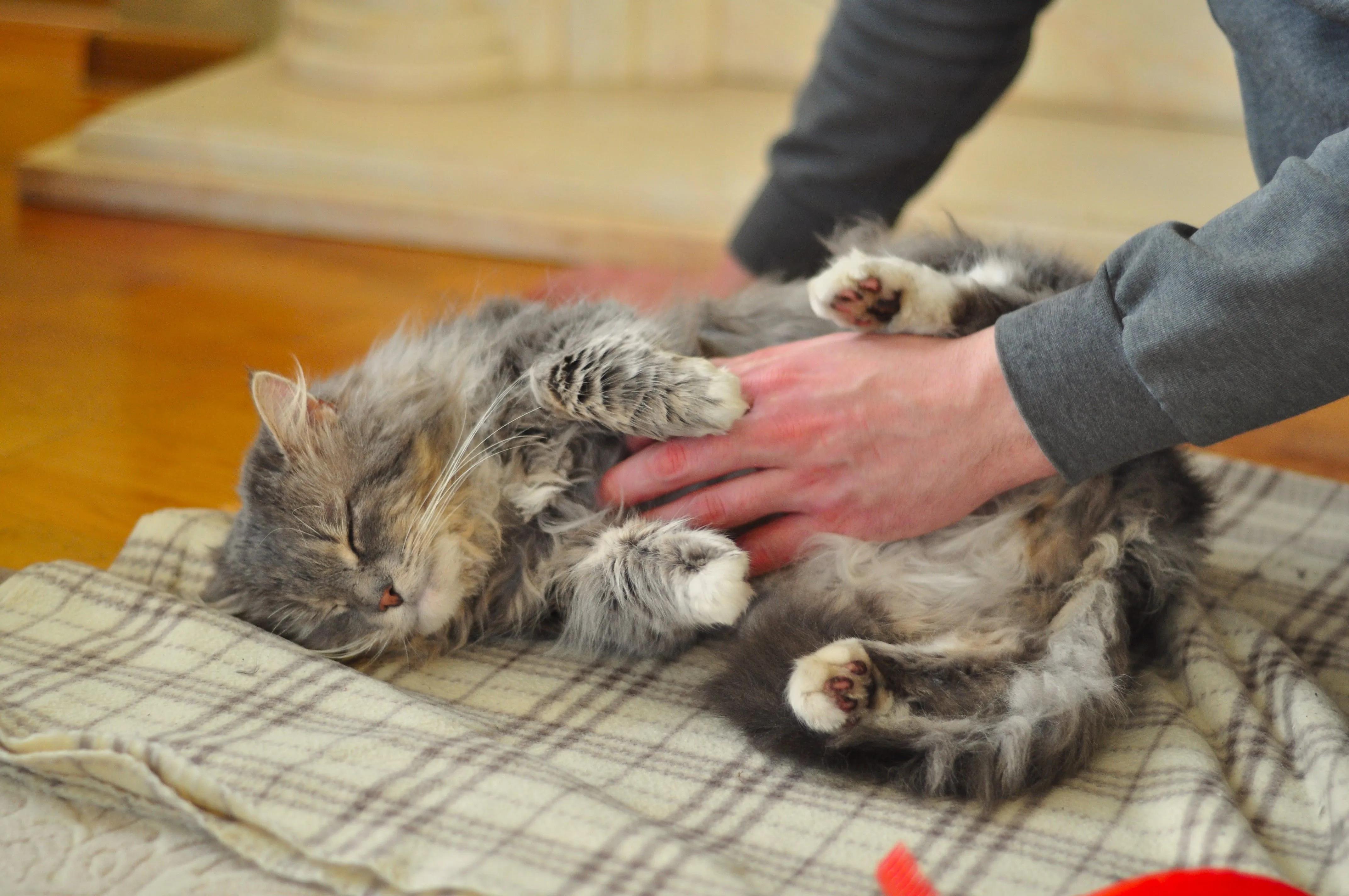
It's free, it's quick, and it's used in vet clinics to score acute pain. The research behind it is solid — it was developed and validated for acute pain assessment in cats, and it's the kind of tool a vet might pull up on their own phone mid-exam.
Here's the honest caveat, because I don't want you misusing it: the Grimace Scale is calibrated for acute pain — the sharp pain after surgery or injury — and it's really a clinical tool. At home, it's a useful extra set of eyes, not a diagnosis. If your cat's face looks tight, its ears are pinned back, and it's avoiding you, that's worth a call to the vet. It is not, on its own, a way to pronounce your cat fine.
For chronic pain like arthritis, facial cues are less reliable than behavior. Which brings us back to the checklist above: mobility, grooming, litter box, temperament. Those tell you more about a cat living with daily joint pain than any single screenshot of its face.
Is pain always arthritis?
No — and it's worth widening the lens, because "pain" gets talked about almost like it's one thing. It isn't. Behind a behavior change, the source can be any of several common culprits, and recognizing that is part of why you shouldn't try to diagnose it yourself:
Dental pain is one of the biggest hidden ones. Cats hide tooth trouble remarkably well — many keep eating right up to the point where a tooth is badly infected, because chewing on the good side doesn't hurt [2]. Drooling, pawing at the mouth, eating differently, or food falling out of the mouth are all red flags. Dental disease in cats is common and routinely under-treated.
Urinary issues often show up as behavior first. Straining, urinating small amounts often, urinating outside the box, or crying out while trying to pee are classic signs — and in male cats, a complete blockage is a true emergency.
Gastrointestinal problems can present as nothing more than a cat that's withdrawn, hunched over, or painful when you pick it up around the belly. Weight loss with a normal appetite (or a cat that eats but drops weight) can point to conditions like hyperthyroidism.
The point isn't to build a checklist of diseases. The point is that a behavior change can trace back to many different pain sources, which is exactly why your job is to spot the change and hand it to someone who can untangle the cause. Don't assume "behavior change" always means joints — and don't assume it never does.
When should you actually call the vet?
Now the part owners really want: when does "watch it" become "call now"? Here's how I'd split it.
Call your vet soon (same day or next) if your cat shows a clear, recent behavior change — especially if it's a senior or has a chronic condition. Sudden hiding, not eating, drinking or urinating much more than usual, a new limp, weight loss, or a coat that's suddenly dull all warrant a call. Early arthritis caught now is much more manageable than the same arthritis caught a year later. You don't need to panic over every quirk, but a real change that doesn't self-explain deserves a phone call.
Go to an emergency vet right away if you see any of what emergency vets call the red-flag symptoms. A veterinarian I read from Catster, Dr. Kim Podlecki (who spent over a decade in emergency medicine), lists these as instant-action items [5]:
- Straining to urinate, or trying repeatedly with little or no urine — this is a life-threatening blockage, more common in male cats.
- Open-mouth breathing or obvious trouble breathing. In cats, panting isn't "normal exercise"; it's an emergency.
- A seizure.
- Any known contact with lilies — even if the cat looks fine. Lilies can cause acute kidney failure in cats.
- A fall or fight with an animal you didn't witness, leaving the cat unwell.
- Vomiting or diarrhea that won't stop, especially lasting beyond about 12 hours, or with blood.
The theme across all of these: cats hide pain so well that by the time a symptom is loud, it's often serious. Emergency vets say it plainly — it's better to be cautious than to wait for a quieter cat to get louder. If you're unsure whether something is urgent, call your regular vet's office and ask; a two-minute phone call beats a sleepless night wondering.
Wait — am I supposed to diagnose my cat?
No. Let me say this plainly, because the whole point of this article could be misread as "become your own vet." It's the opposite.
Your job as an owner is recognition, not diagnosis. You're the one who lives with the cat and sees the daily behavior changes. Your job is to notice, record, and — when something doesn't add up — take the evidence to someone who's trained to interpret it. That's the entire ask. Recognition turns a delayed "he'll be fine" into a timely vet visit, and that timing is often the difference between a manageable problem and a crisis.
I'll be honest about the other direction too: not every behavior change is pain, and not every ache needs an emergency room. Senior cats have senior quirks. The frame isn't "panic about everything." The frame is "when a behavior changes and won't explain itself, rule out pain first — and let a vet help decide."
It's also worth knowing that catching pain early is genuinely good news, not a doom sentence. Once a vet identifies the source — arthritis, dental disease, a urinary issue — there's usually a lot that can be done. For arthritis alone, modern management can combine pain relief, joint-support nutrition, environmental tweaks like steps and ramps, and even physical therapy or laser treatment. The point of recognizing pain isn't to deliver bad news. It's to get the cat into the group of animals whose pain is actually being managed, instead of the group quietly enduring it. Most cats aren't treated for their pain not because it's untreatable, but because no one ever knew it was there.
So the real takeaway from all this is shorter than it feels: cats hide pain, but they can't hide the changes pain causes. Learn to read those changes — the skipped jump, the hiss at a touch, the dull coat, the litter box miss — and you stop waiting for a cat to "tell" you something's wrong. That's the whole difference between catching it early and finding out too late.
My cat's hips weren't going to fix themselves, but once we knew, the plan was straightforward: pain relief, a few low ramps, and a soft bed she could climb into without the jump. She's still not leaping onto counters. She doesn't need to. The point was never to make her young again. It was to stop mistaking her quiet for fine.
Furpick.app is a participant in the Amazon Services LLC Associates Program and other affiliate programs. We may earn from qualifying purchases. Content from Amazon and other retailers is provided 'as is' and subject to change. All trademarks are the property of their respective owners.