4 Positive Training Drills to Fix Common Cat Problems (Step by Step)
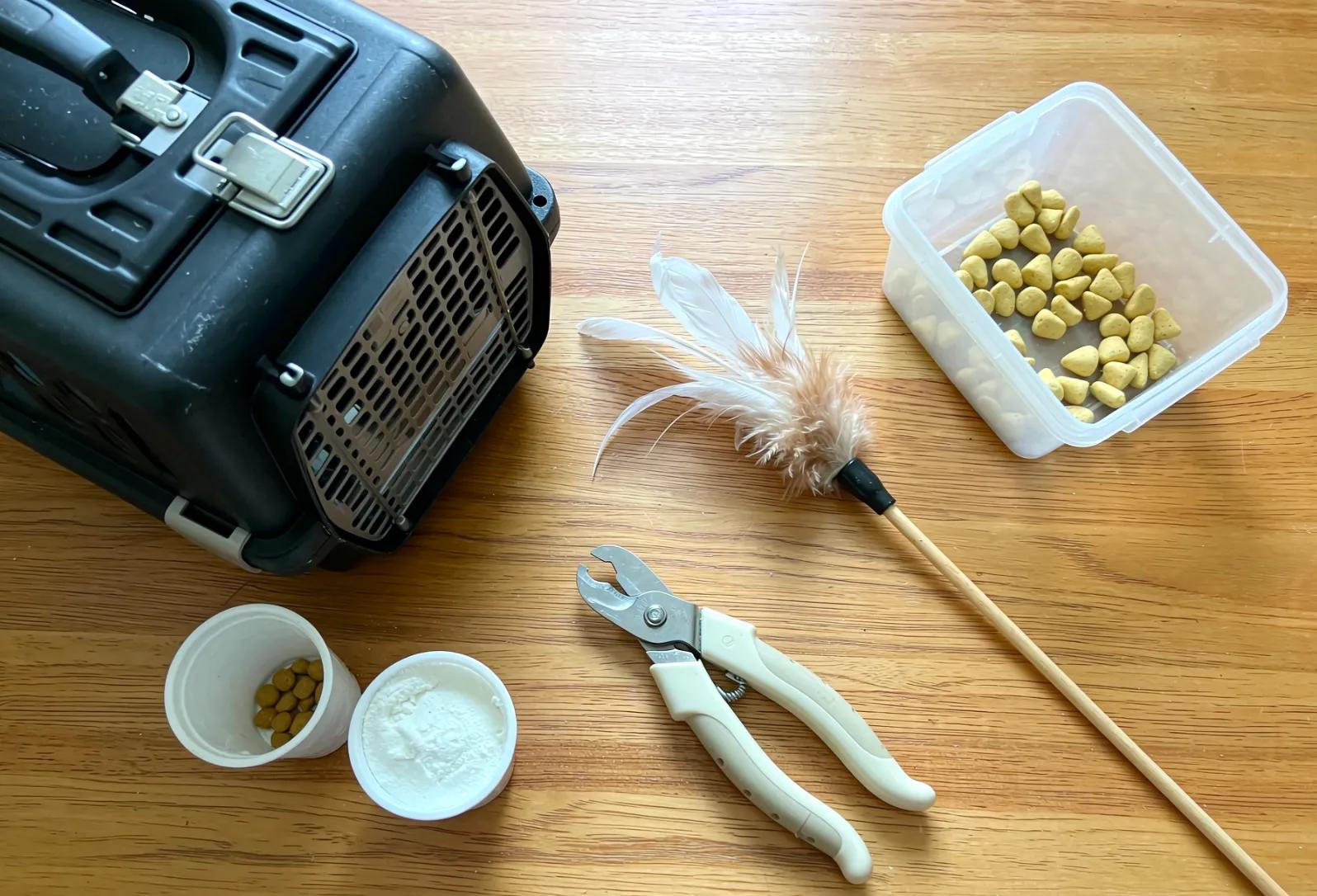
Let's be honest: you don't want a lecture on cat psychology. You want to know how to get your cat into the carrier without a wrestling match, how to trim those nails without losing a finger, how to stop the 6 a.m. bite-and-run, and whether that "come here" thing can ever actually work.
Good news: all four are trainable. Bad news: not with force, and not overnight.
The method is positive reinforcement — reward what you want, set up the environment so the good choice is the easy choice. The AAFP calls this "cooperative care": training your cat to want to cooperate, instead of forcing it [1]. And it's backed by real science — a 2020 meta-analysis of 34 studies found reward-based training has a large effect on behavior change (Tau-U 0.77) [2].
Drill 1: The Carrier (Teach Your Cat to Walk In Voluntarily)
The carrier is the #1 battleground. Fix that association: leave it out all the time with a blanket, drop treats inside, reward touching and stepping in, build door tolerance. Done over a few weeks, your cat walks in on its own [3].
This is the drill that changed my life with my last cat. I'd spent two years wrestling her into the carrier twice a year. Three weeks of treats + targeting, and she'd stroll in, curl up, and wait for her reward. I still can't quite believe it worked.
Drill 2: Nail Trims (Build Tolerance, Don't Wrestle)
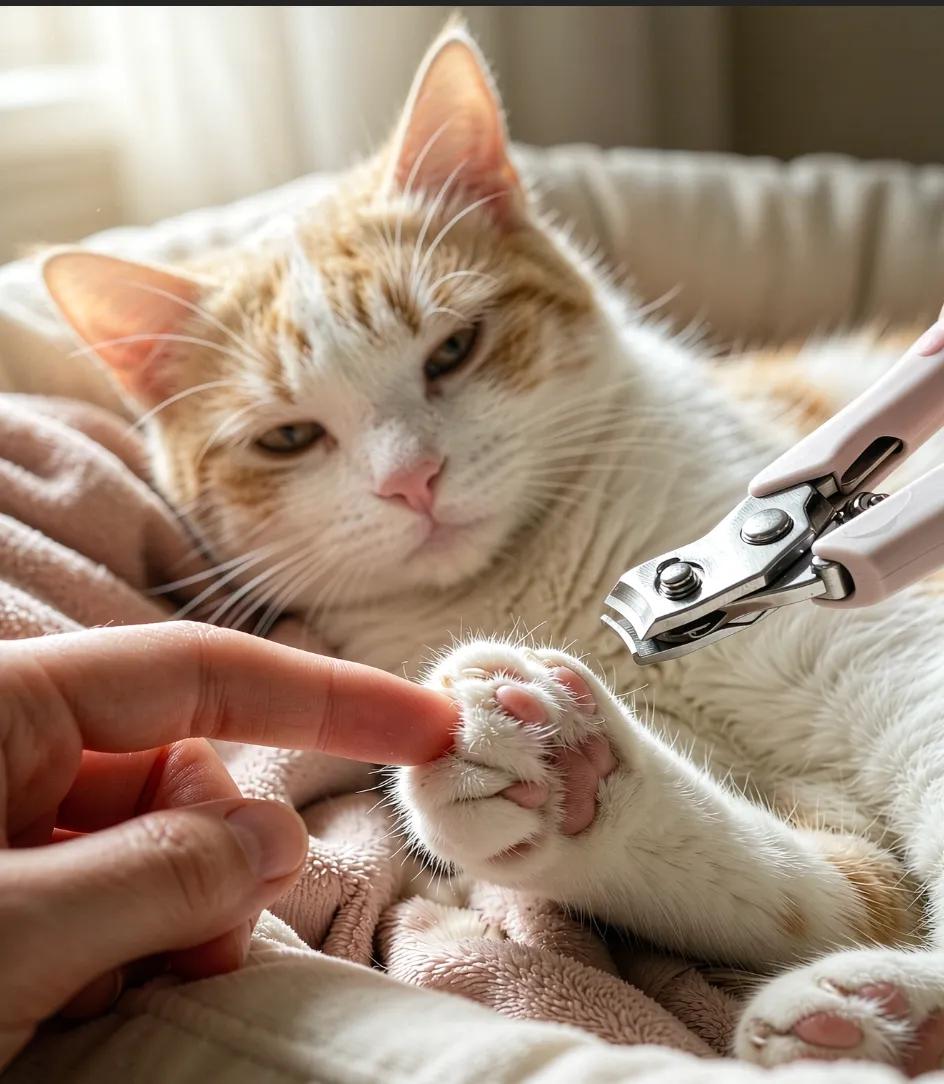
Nail trims feel like a violation to most cats. The fix is desensitization: touch the paw, expose a claw, introduce the clippers, cut one nail, then one more each session. Use your cat's best reward — 63% of cats prefer non-food rewards like play or petting [1] [4].
Drill 3: Coming When Called (Yes, Cats Can Learn Recall)
Cats can learn to come when called. Pair the cue with food, reward the arrival, practice at distance. The golden rule: never call your cat for something unpleasant [5].
Drill 4: Stopping the Biting and Scratching (Redirect, Don't Punish)
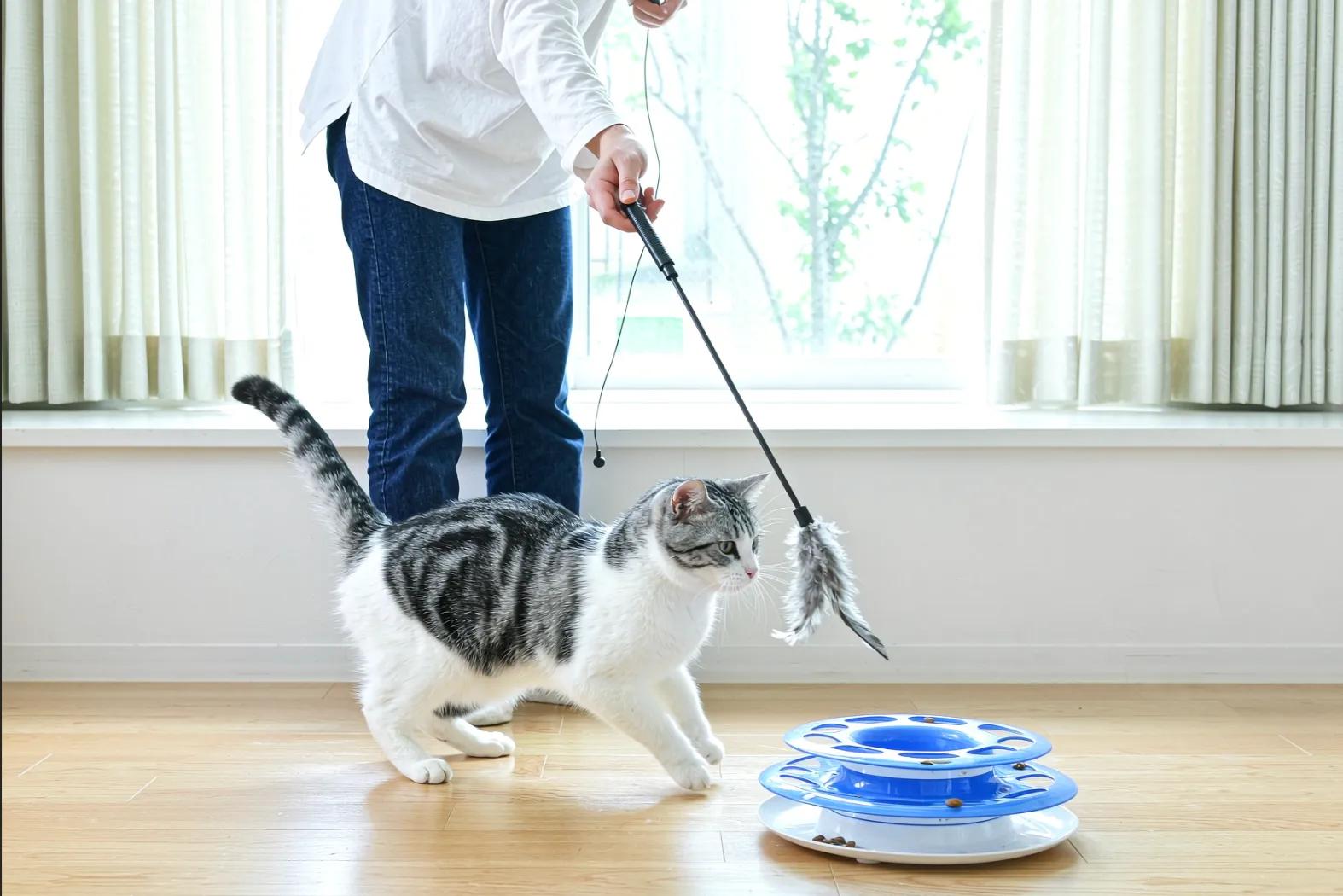
Punishment backfires here — it can actually increase aggression [6]. Remove your hands from the game, end the game when it bites, redirect with a wand toy, give daily structured play, and provide food enrichment. Pam Johnson-Bennett's mantra: "Hands are for petting, not for playing" [7].
The Tools Behind Every Drill (the 5 AAFP Methods)
- Capturing — reward a behavior your cat already does.
- Luring — use a treat to guide a behavior.
- Targeting — teach your cat to touch a target, then move it anywhere.
- Shaping — break a behavior into tiny rewarded steps.
- Conditioned reinforcers — a click or word that marks the right moment.
For most people, shaping + a high-value reward + consistency is enough. The clicker is a nice-to-have, not a must.
When to Stop and See the Vet
Not every behavior problem is a training problem. If a behavior appears suddenly, or your cat seems to be in pain, see the vet first — rule out medical causes before assuming it's behavioral [8]. And never train a cat that's sick or in pain [1].
The Takeaway
You don't need to be a cat whisperer. You need four simple drills, done with positive reinforcement, short sessions, and consistency.
Set up the environment so the good choice is the easy choice, reward it, and let the rest fade.
Furpick.app is a participant in the Amazon Services LLC Associates Program and other affiliate programs. We may earn from qualifying purchases. Content from Amazon and other retailers is provided 'as is' and subject to change. All trademarks are the property of their respective owners.