Your Cat’s Eyes Water When Eating? It’s Not Emotional Tears
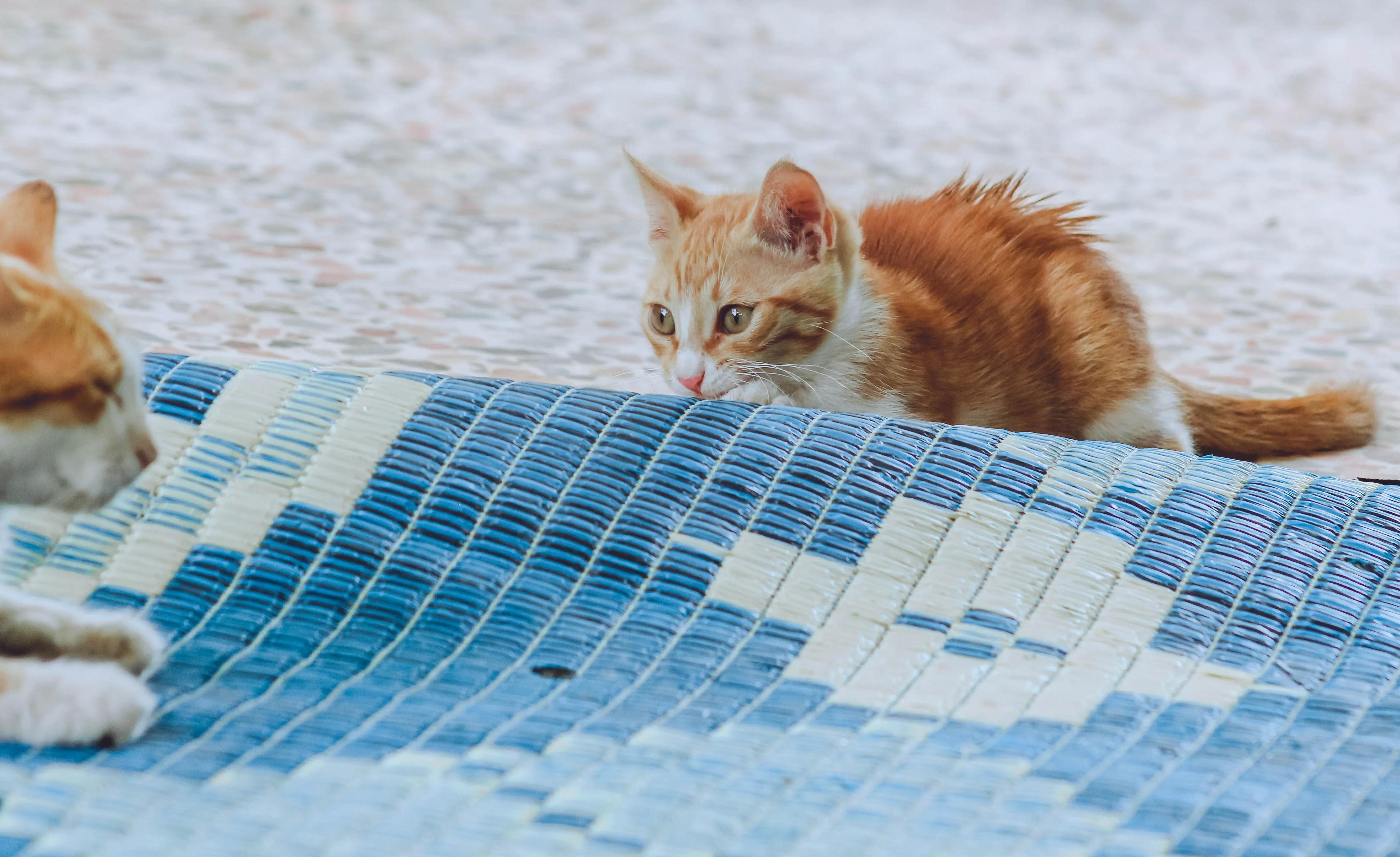
You're holding out a treat, and your cat is going absolutely crazy for it. Purring, drooling a little, devouring it in two seconds flat. And then you notice it: your cat's eyes are watering. Maybe even a small tear tracking down its face.
Cue the joke almost every owner makes: aww, you love it so much you're crying?
But that's not what's happening. Not even close.
Cats don't cry emotional tears. They don't weep out of joy, sadness, or being "moved" by a delicious treat. When your cat's eyes water while eating, something else is going on — and most of the time, it's completely normal.
Let me walk you through what's actually happening behind those watery eyes, when you genuinely don't need to worry, and the few cases where you should pay attention.
Do cats cry emotional tears?
Let's start with the biggest myth: no, cats don't cry because of emotions.
In humans, emotional tears are a real thing — we cry when we're sad, overwhelmed, or moved. It's wired into us. Cats don't have that. A cat's tears are strictly physiological, produced for one of two reasons: to keep the eye lubricated and healthy, or to respond to irritation, pain, or something in the eye [1].
That watery look when your cat eats a favorite treat isn't a tear of joy. It's your cat's tear system doing its normal job — and often, it's being triggered by the act of eating itself.
Why does eating make your cat's eyes water?
So if it's not emotion, what is it? There are a few reasons, and most of them are innocent.
The food is triggering a saliva-and-tear reflex. When your cat smells something delicious and starts eating, its body kicks into "digestive prep" mode — it starts producing saliva. Eating and the anticipation of food is one of the most common normal triggers for drooling in cats [2]. And because the tear and saliva glands are both tied into the same nervous-system response, all that salivation can come with extra tears too — this is likely a big part of what you're seeing. Your cat isn't crying from happiness — it's got the physiological version of "mouth-watering" turned all the way up.
Your cat's tear ducts are narrow. Compared to a human's, a cat's tear drainage system is small and slow [3]. Tears are produced constantly to keep the eye moist, and they normally drain away through tiny tubes (the nasolacrimal ducts) down into the nose. When tears are produced a bit faster than they can drain — say, during the stimulation of eating — they spill over the eyelid instead. That's the "watering" you see.
Food residue can irritate the eyes. Treats and wet food can be crumbly or moist. As your cat eats, tiny bits can get near the eyes, or strong food odors can be mildly irritating, prompting a little extra tear production to flush things away [4].
So, short version: when your cat's eyes water at mealtime, it's usually just a normal reflex — saliva ramping up, tears overflowing because the drainage system is small, and a touch of irritation. Not sadness.
Some cats just tear up more (and it's still normal)
Breed matters here, so you don't worry for no reason.
Flat-faced breeds tear up a lot. Cats with short noses and flat faces — think Persians, Himalayans, and other brachycephalic breeds — are much more prone to watery eyes [1][3]. Their facial structure makes their tear ducts smaller and their eye sockets shallower, so tears spill out more easily. If you have a Persian, seeing watery eyes while it eats (or just in general) is often simply normal anatomy, not a problem [1][3].
For these cats, watery eyes are a fact of life. It's not sadness, and it's not usually a health issue — it's just the breed.
When watery eyes are a sign to watch
Now, the honest part. Most cases of eating-related tearing are normal. But occasionally, watery eyes point to something worth attention. Look at the whole picture, not just the tears.
Watch for allergies. Some cats are sensitive to certain food ingredients, and one way that shows up can be extra tear production around mealtimes [4]. If you notice your cat's eyes water every time it eats a particular treat, and it also has other signs like itching or skin issues, food sensitivity could be behind it.
Watch for mouth problems. Dental disease — like gingivitis or an abscessed tooth — can make eating uncomfortable. A cat with a sore mouth might tear up more as it chews, simply because eating is painful [4]. If watery eyes at mealtime come with things like drooling more than usual, bad breath, or reluctance to eat hard food, dental issues might be the culprit.
Neither of these is an emergency. But they're both worth mentioning to your vet, because they're treatable and ignoring them can let the underlying problem get worse.
The red flags: when tears mean "see a vet"
There's a difference between a few tears at dinnertime and a real eye problem. Here's when watery eyes stop being normal and start being a reason to call your vet:
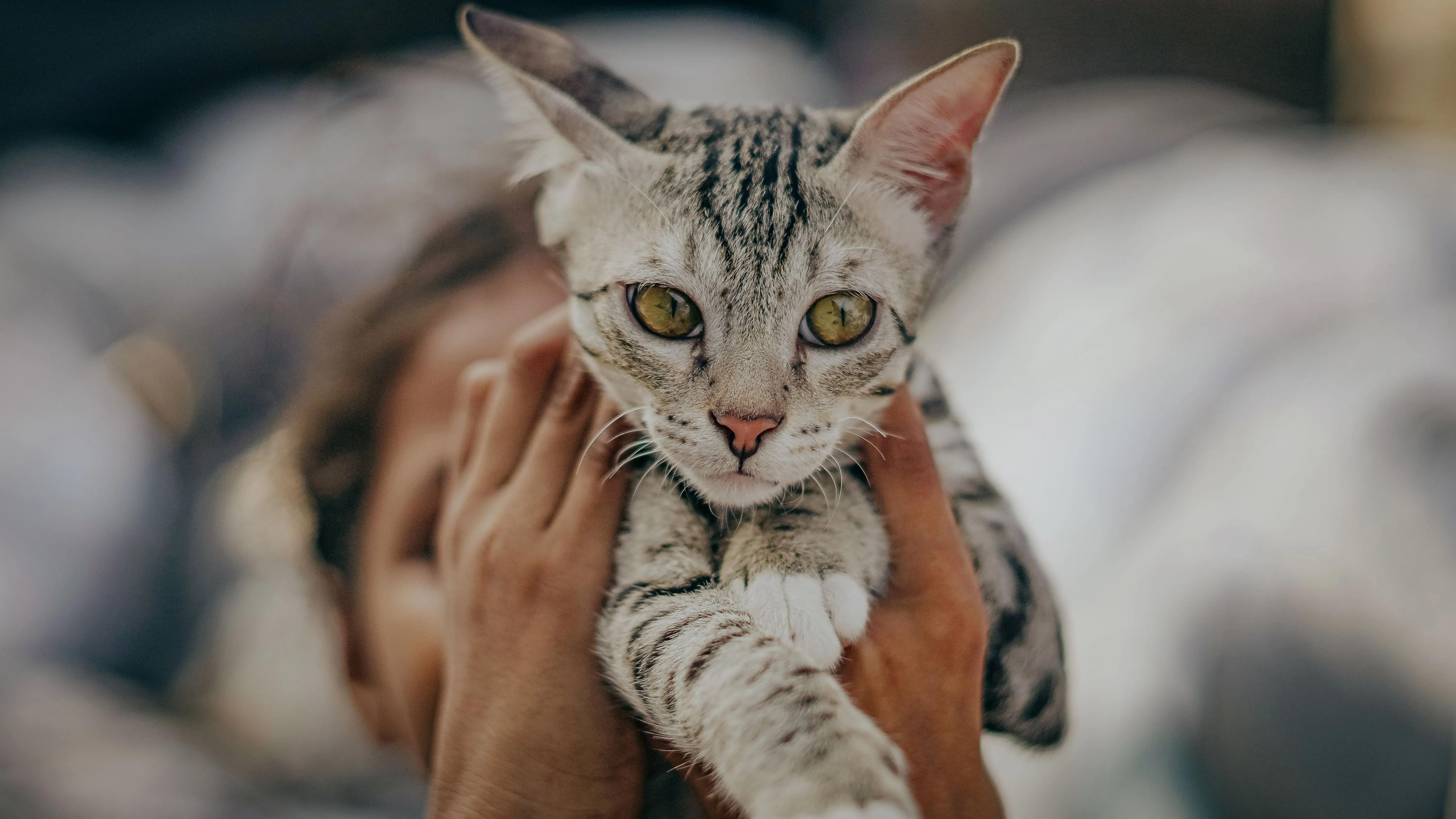
The tearing is constant, not just at meals. If your cat's eye is consistently wet, or has wet matted fur under the eye all the time, that's not a mealtime reflex anymore — it's worth a check [1][3].
The eye is red, swollen, or squinting. Redness, swelling, or squinting alongside tears points to inflammation or pain. One of the most common causes of excessive tearing in cats is viral conjunctivitis (inflammation of the eye tissue) [1], and it usually comes with more than just tears.
The discharge is yellow or green. Normal tears are clear. If the discharge looks yellow, green, or thick, that can signal an infection, and it should be examined by a vet [3].
Your cat is clearly uncomfortable. If your cat keeps pawing at its eye, or the eye looks different in size or shape than usual, that's a vet visit — possibly an urgent one.
One genuinely urgent example: a corneal injury. A scratch or ulcer on the clear front of the eye is painful, and the body responds by producing extra tears to protect it [5]. If your cat's eye is watering heavily AND it's squinting or keeping the eye closed, that can be a corneal ulcer, which needs prompt veterinary attention [5]. Don't try to treat it at home — this is one to get checked quickly.
What you can do at home (the safe stuff)
For the normal, mealtime-tears scenario, you don't need to do anything dramatic. A few simple habits help:
Keep the eye area clean. If tears are spilling onto the fur and causing staining, gently wipe the area with a clean, damp, soft cloth [3]. Plain water is fine — skip chemical wipes around the eyes unless your vet recommends one.
Keep food bowls clean. Food residue and bacteria near the face can irritate the eyes [4]. Washing bowls regularly is a small, easy habit.
Watch, don't panic. If your cat is happy, eating well, and the tears are occasional, it's almost certainly normal. The goal is to notice changes — from occasional to constant, from clear to colored, from no-squinting to squinting.
The takeaway
Here's the one-line version: your cat isn't crying over its food — it's just a normal physiological reflex, and "being moved by a treat" isn't a thing cats do.
Watery eyes at mealtime are usually just saliva and tears ramping up together, spilling over a small tear duct — especially in flat-faced breeds. It's cute to joke about "treat-tears," but your cat's body is just doing its job.
The only time to stop smiling and start paying attention is if the tears become constant, the eye looks red or swollen, the discharge turns yellow or green, or your cat seems uncomfortable. Those are the signals that warrant a trip to the vet — not the occasional tear over a really good snack.
So next time your cat gets a little misty over a treat, you can enjoy the moment. Just know it's not sadness — it's the world's most efficient tiny tear system, working perfectly.
Furpick.app is a participant in the Amazon Services LLC Associates Program and other affiliate programs. We may earn from qualifying purchases. Content from Amazon and other retailers is provided 'as is' and subject to change. All trademarks are the property of their respective owners.