Shedding Twice a Year, Half a Year Each Time: The Complete Guide to Cat Shedding
Let me start with a joke. Somewhere in a cat subreddit, someone was complaining about their shorthair: "She sheds twice a year — each time lasting six months. One brushing session covers the floor. And the loose fur on the ground keeps clumping together and drifting across the apartment like tumbleweeds." The comments were all variations of "same here." Then the kicker: "First year with a cat and shedding season turned me into an allergy sufferer."
If you've owned a cat for more than a month, you can picture that scene without breaking a sweat.
But here's the thing I actually want to talk about today. It's not "how to eliminate shedding" — that's a false premise. You can't. What I want is to help you see one thing clearly: is the fur around your house just a cat doing normal cat metabolism, or is it a body using its only real currency — its coat — to send an alarm?
Let me put my position on the table first: shedding is a badge of cat ownership, not a crime scene. Don't panic at the sight of fur. Judge first, then act. And if something looks genuinely off, go to a vet. Don't DIY your way through it.
Let me load the numbers before we go anywhere. In the United States, about 76.3 million cats live in 43.1 million households — that's 32.6% of all U.S. households, working out to about 1.8 cats per cat-owning home, per the AVMA's 2025 Pet Ownership & Demographic Sourcebook [1]. The U.S. pet industry hit $158 billion in 2025, with APPA projecting $165 billion in 2026 [2]. Cat-only households spend roughly $653 a year per household — about $310 on food, $253 on vet care, and the rest on toys, grooming, and odds and ends [1].
Translation: whatever you're stressing about right now, tens of millions of Americans are stressing about it with you. It's not that you're doing it wrong. It's that this is just what having a cat is.
1. First, Get This Straight: Normal Shedding vs. Pathological Hair Loss
The starting point is knowing the difference between "shedding" and "hair loss."
Your cat's hair follicles run on their own lifecycle: anagen (growth), catagen (transition), telogen (rest), and then the hair falls out and the cycle starts over. Each hair grows at roughly 0.2–0.25 mm per day. Think about that for a second: a cat carries tens of thousands of hairs, and every single one runs on its own little clock. When the seasons flip and all those clocks go off at once, that's a molt. That's "shedding season."
Normal shedding has three tells:
- It's seasonal. It clusters in spring and fall, then settles down.
- It's even. The whole body drops hair "evenly" — no patch here, no bald spot there.
- The skin is clean. No redness, no crusts, no dandruff, and the cat isn't scratching constantly.
Veterinary emergency centers on both sides of the pond publish handy "physiological shedding vs. pathological hair loss" checklists. VCA and ASPCA both lean on the same practical version [3][4]. Let me translate it into plain language:
| Dimension | Normal Shedding | Needs a Vet Visit |
|---|---|---|
| Pattern | Even all over | Bald patches with sharp borders, or symmetric hair loss |
| Skin | Clean, unremarkable | Red rash, crusting, flaking |
| Behavior | Normal | Constant scratching, licking, chewing |
| Rhythm | Mostly spring/fall | Heavy shedding all year round |
| Companion signs | None | Lethargy, refusing food, weight changes |
If you tick even one box on the right side, don't hesitate — go to the vet. VCA flags localized bald spots or rapid worsening within two weeks as reasons to book an appointment soon [3]. ASPCA says it even more bluntly: if you see bare patches or obvious thinning, that's often a health problem, and it's time for a veterinarian [4].
While we're here, let me bust a phrase you hear a lot: "If she sheds this much, just shave her. Problem solved." No. Don't. Cat hair grows at maybe 0.2–0.25 mm a day, so after a full shave it takes 3–6 months to grow back. For that whole stretch, the skin is naked and exposed — sunburn in summer, cold in winter. You traded a few weeks of vacuuming for months of problems.
On the flip side, if your cat's shedding is even and seasonal — congratulations. That's evidence of a healthy animal doing what healthy animals do. What you need is the hands-on section down in Part 5, not a case of the nerves.

Regular brushing is the highest-leverage answer to home-fur overload.
2. Ringworm and Parasites: The Two Culprits to Rule Out First
If you do land in the vet's office, the doctor will probably check two things first: fungus and parasites.
Let's talk ringworm first. The name sounds like a skin worm, but it's actually a fungal infection, and the top culprit is Microsporum canis. The ABCD guidelines — the European advisory board for cat diseases — are clear that this is the most common fungal skin infection in cats [5]. Texas A&M's dermatology service notes the same clinical picture: circular patches, broken hairs, crusting [6].
The classic ringworm signals:
- Round, hairless patches with sharp, defined edges — like someone drew them with a compass
- Flaking, crusting, redness
- Itching in some cases
Here's the counter-intuitive part: ringworm doesn't always itch. Plenty of infected cats don't scratch at all. They just lose fur and flake, which makes it painfully easy to dismiss as "shedding season." And here's the part that makes it genuinely serious: it's zoonotic. The Merck Veterinary Manual and ABCD both flag that ringworm can pass to people — so if your household has kids, older adults, or anyone immunocompromised, take it seriously [5][7].
On diagnosis: vets often start with a Wood's lamp. But ABCD specifically warns that only about half of strains glow apple-green under it — no glow doesn't rule out infection [5]. Confirming it takes fungal culture and other gold-standard tests. Don't buy a lamp and make your own diagnosis. That's how ringworm survives your "home treatment" and quietly becomes everyone's problem.
On treatment, I'll keep it to one sentence: ringworm is a chronic condition, and it takes prescription oral antifungals plus medicated baths, running weeks to months, with re-culture to confirm you've cleared it [5][6][7]. Don't ask me for drug names or doses — these are prescription meds, dosing is the vet's call, and buying your own is running an experiment on your cat's skin.
Now parasites. Flea and mite-driven hair loss has one signature: intense itching. The cat scratches, bites, chews, and licks obsessively, and you'll see little red marks or black "flea dirt" on the skin. This one's relatively easy to tell apart — a cat in a normal molt does not scratch itself bloody.
3. The "Internal" Causes: Hyperthyroidism and Nutrition
Fungus and parasites ruled out, and the vet starts thinking "internal."
The poster child here is hyperthyroidism — the most common endocrine disease in cats. It hits older cats, classically 8–10 years and up, with average onset around age 13 [8]. The Cornell Feline Health Center and Merck describe a very recognizable set of signals:
- Eating a lot more, but losing weight anyway
- Hyperactive, restless, howling at night
- Dull, greasy coat with heavy shedding — grab a handful and it comes out
- Drinking and peeing more
I've met more owners than I can count who told me "she's old, at least she still eats well — that's a good sign," only to have the bloodwork come back with T4 off the charts. Diagnosis is a simple blood test for T4 [8]. Treatment options include oral medication, radioactive iodine, and more — and success rates are high. But it all starts with one thing: the decision to actually go get the blood drawn.
Then there's nutrition. And this is where I want to dismantle a very popular belief: "Cat shedding = nutrient deficiency = buy a coat-booster supplement immediately."
That's half right and half wrong. The right half: cats are obligate carnivores, and protein quality directly shows up in the coat — a cat stuck on low-protein, low-grade food will have rough, dull, brittle fur [9]. The wrong half: fur density and coat quality are decided mostly by genetics. Nutrition can improve what's there; it can't rewrite the blueprint. The "miraculous coat powder" aisle — mostly fish oil, lecithin, biotin supplements — has a serious reality check behind the marketing. In the U.S. market, this category lives mainly as salmon oil and "skin & coat" supplements, and the evidence for dramatic effects is thin [9].
Translation: you can absolutely upgrade to a high-protein food, but you cannot make a British Shorthair's plush density denser, and you can't change a Siamese's sleekness. Don't pin all your shedding worries on "bad nutrition," and don't expect a bottle to rewrite your cat's genes.
4. The Counter-Intuitive One: Psychogenic Alopecia Is Over-Diagnosed
When you see a cat over-grooming its belly bald, the default explanation people reach for is "stress." "We moved apartments, the cat was stressed, she licked her belly bald" — this story travels far. It might also be wrong.
First, a quick definition: psychogenic alopecia is hair loss caused by compulsive over-grooming driven by psychological stress. Sounds reasonable, right?
The data says otherwise. In one dermatology case series, psychogenic alopecia is a genuinely rare diagnosis that nonetheless gets thrown around constantly. The AAHA has been even more direct: it has been grossly over-diagnosed historically — most of these cats actually respond beautifully to anti-itch treatment rather than needing psychoactive medication [11]. And VIN's Veterinary Partner cites a study worth highlighting: of 21 cats suspected of "psychogenic alopecia," after systematic workup, 16 had a concrete medical cause (food allergy, parasites, and the like), and only 2 were genuinely psychogenic at heart [12].
Read that case study again, because it's perfect. 21 cats. Only 2 were "in their heads." Most of the rest had bodies that were actually sick. If your cat keeps licking, don't rush to "reduce her stress" — first let the vet rule out allergies and parasites.
Does psychogenic alopecia exist at all, then? Yes. But diagnosing it is an exclusion process: parasite checks, fungal culture, cytology, and an 8-week food trial all need to come up empty before you consider it [10]. And even then, treatment is rarely about medication — it's about finding and removing the stressor: resource competition in multi-cat households, an under-stimulating environment, a sudden disruption to routine. Those are the real culprits more often than not [12].
One sentence to remember: rule out the body before you blame the mind.
5. Fewer Fur Flights: Tools, Frequency, Technique
Everything above was about judgment. If you've confirmed your cat is just having a normal molt, congratulations — now here's the part you actually came for: how to cut down on fur flying around your house.
Step one, and by far the best value move in this entire article: brush your cat.
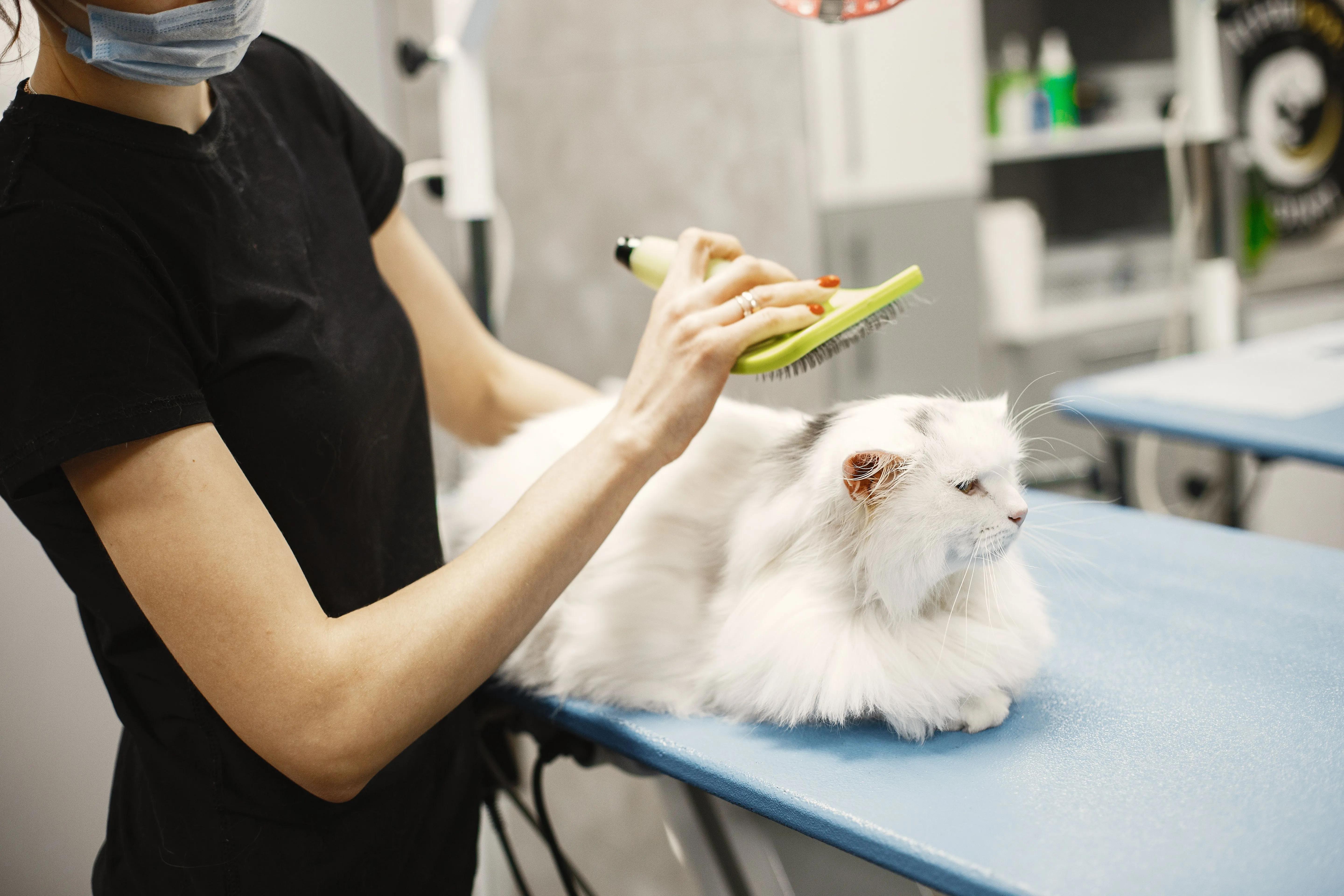
VCA, ASPCA, Texas A&M, and the American Animal Hospital Association are all in unusual agreement here: a healthy cat almost never needs a bath, but every cat should be brushed on a schedule [3][4][13]. VCA's take: brushing removes dead hair and skin, spreads natural oils through the coat, and gives you a built-in skin check while you're at it [3]. There's also a tidy number floating around the vet literature: regular brushing can cut how much fur your cat swallows by up to 60% [14] — which is also the single biggest lever you have against hairballs. We'll get to those.
How often, then? Depends on coat type, full stop:
| Coat type | Frequency | Example breeds |
|---|---|---|
| Short | 1–2× per week | American Shorthair, British Shorthair, Siamese |
| Medium | 3–4× per week | Maine Coon, Ragdoll |
| Long | Daily | Persian, Himalayan |
| Shedding season | Everything goes up; up to 2× daily | — |
Note that last row. That row is the correct way to open "sheds twice a year, half a year each time."
Which tool? Match the tool to the cat:
- Short coat (under ~2 cm): a fine-tipped slicker brush, a silicone or rubber brush, and a wide-tooth comb [15]
- Long coat (over ~5 cm): a fine-tooth comb, a pin brush, a de-matting comb — and when you hit a mat, start from the edge and work in slowly, never yank [15]
- Shedding-season weapon: an undercoat rake / de-shedding tool — the kind that pulls out loose undercoat — is glorious in a molt, and only in a molt
One warning: that undercoat rake is genuinely satisfying during shedding season, but don't use it daily. Overuse thins the coat and can damage follicles [16]. One to two times a week during the molt is plenty.
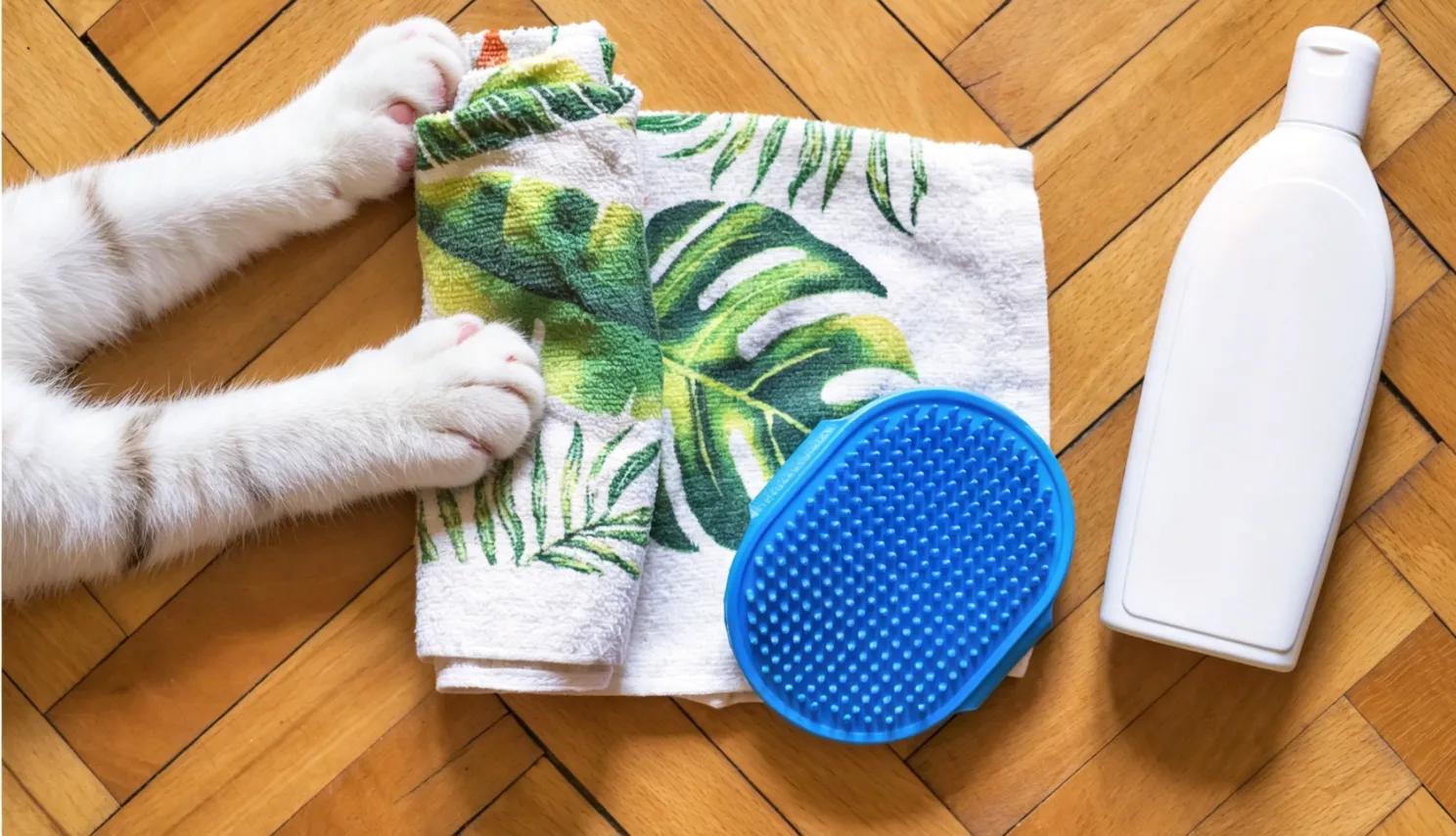
And don't let price scare you. Basic brushes — combs, de-matting combs — run $8–$21 at Amazon or Chewy, with slicker brushes from Hertzko, Safari, and friends sitting in that same range (up to the pro-tier Chris Christensen around $33–48) [17]. A silicone grooming glove will set you back $7–$13 [17]. The famous FURminator de-shedding tool typically runs $25–$35 depending on size and coat length, with short-coat models around $27 and deals occasionally dipping to $20.50 [17]. My advice: buy a $10 comb first, see if you'll actually brush every day, and upgrade only if you do. Don't buy the whole arsenal on day one — the odds of it collecting dust are extremely high.
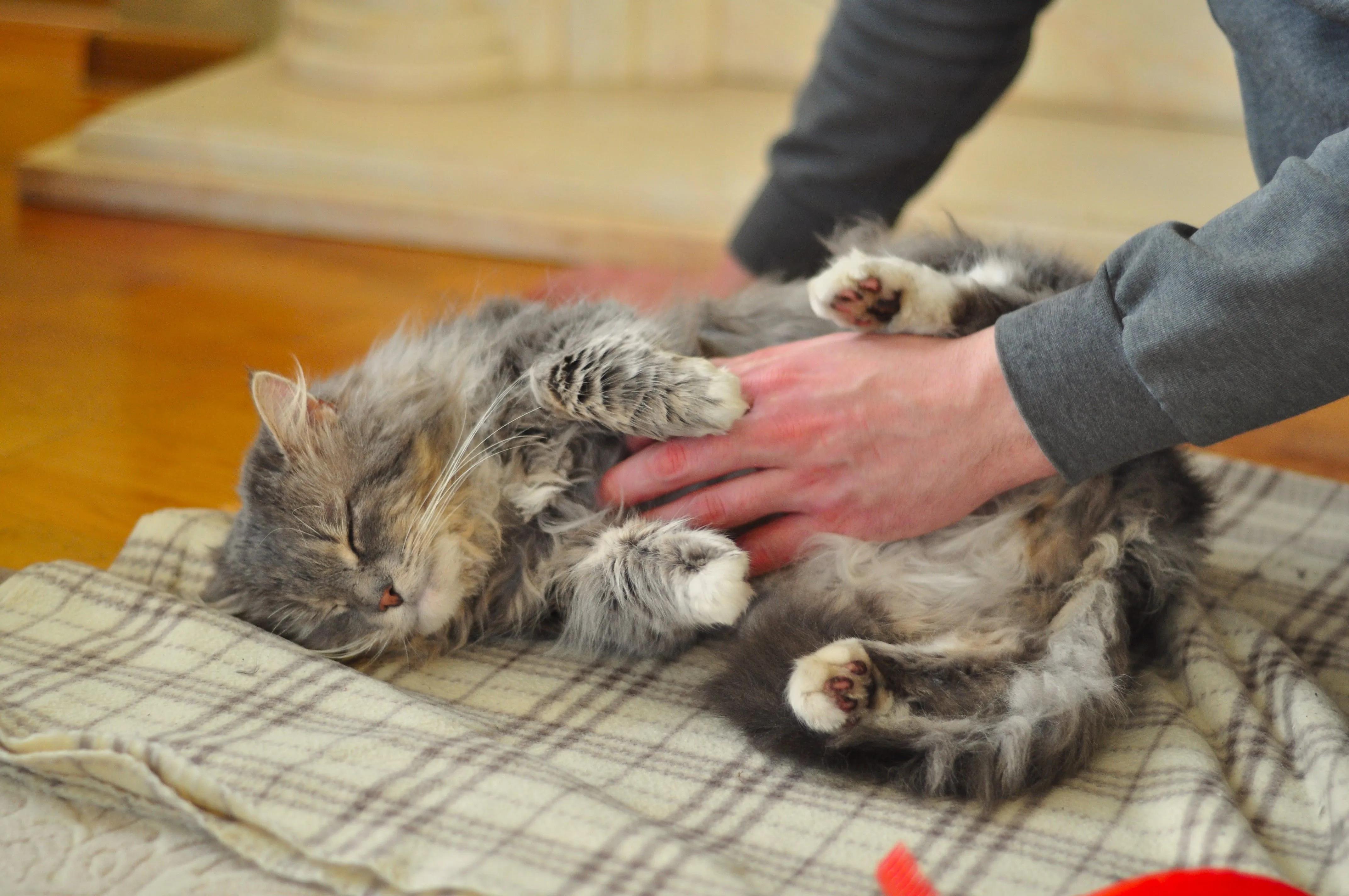
Technique matters too. Start when the cat is relaxed. Brush in the direction of the hair, from head toward the back, and go lighter on the belly, armpits, and inner thighs [18]. A short-hair cat gets 5–10 minutes; a long-hair cat gets 15–20 [15]. And while you're brushing, run your fingers along the skin — do this right and you've just given yourself a free daily skin exam.
One side note: don't try to fix shedding with baths. A cat's skin pH sits close to neutral — 6.39–6.64 per Szczepanik et al. (2011) in the Journal of Feline Medicine and Surgery, measured from 6.39 on the lumbar area up to 6.64 in the inguinal region, with males slightly more alkaline at 6.94 vs. 6.54 in females [19]. Human shampoo sits around pH 5.5. Bath a cat in human-grade stuff too often and you strip the skin barrier — and the shedding gets worse, not better.
When to worry: bald patches and heavy all-year shedding are vet-visit triggers.
6. The Blowback: When Cat Hair Bites Back
We've covered how to fight the fur. Now let's talk about how the fur fights you.
First: allergies. The CDC's NHANES data is the best national snapshot we have — and it's worth being careful with the numbers. Around 17.0% of Americans 6 and older tested positive for cat allergen on skin-prick testing (NHANES III, 1988–1994), and roughly 12% show sensitization on serum IgE testing (NHANES 2005–2006) [20]. But "sensitized" is not the same as "clinically allergic" — plenty of sensitized people never have symptoms. What's worth knowing: the allergen isn't really the hair itself. It's the dander and saliva proteins hitching a ride on the hair. Which is exactly why regular brushing and environment cleaning matter for allergic households — brushing away dead fur and skin means removing allergen sources at their root [4][20].
Second: hairballs. During spring and fall molts, swallowed fur spikes, cats vomit and retch more, and in severe cases a hairball obstruction means surgery [14]. A normal short-hair cat hacks up a hairball maybe every 4–6 weeks; a long-hair cat every 3–4 weeks; anything more frequent than that is worth a workup [14]. Prevention goes back to the same refrain: brush more. Fiber helpers like cat grass and a spoon of pumpkin puree can assist, and hairball gel/ointment does exist — but treat it as an aid, not a miracle cure. The "is it worth it?" debate on hairball products is genuinely open [14].
Third — and this is the one I really want to leave you with: shedding is the vehicle for your cat's health report card. AAHA's 2021 lifecycle guidelines are explicit about it — changes in grooming behavior are a major signal in feline dermatology, and excessive grooming can point to atopic dermatitis, allergies, parasites, or endocrine disease [11]. Put plainly: when your cat suddenly starts grooming compulsively, that isn't a personality quirk. That's a body tapping on the chalkboard.
7. Conclusion: It's a Badge, Not an Anxiety Attack
Let me say the whole thing straight before I close.
First, the overwhelming majority of shedding is normal. Tens of millions of American households live with it. You are not alone in this war on fur.
Second, judgment always outranks treatment. Check the table. Rule out pathological signals. Only then reach for the tools.
Third, memorize your vet-visit triggers: localized bald patches, rapid worsening within two weeks, symmetric hair loss, or hair loss paired with lethargy and weight change. Those go straight to the vet. Don't search social media first.
And back to where we started: shedding is the badge of cat ownership. You choose to live with fur everywhere because you chose to live with a living cat. Her fur is proof she's healthy — and proof of the life you share.
Judge first, act second, see the vet when it's serious. Keep brushing. You can stop worrying.
That's it. Hope this helps.
Furpick.app is a participant in the Amazon Services LLC Associates Program and other affiliate programs. We may earn from qualifying purchases. Content from Amazon and other retailers is provided 'as is' and subject to change. All trademarks are the property of their respective owners.