More Toys Won't Make Your Cat Happy: 5 Uncomfortable Truths About Indoor Cat Care
Here's a number to sit with: Americans spent $158 billion on their pets in 2024, and that's projected to grow [1]. We love our animals, and we show it with our wallets. Food, toys, cat trees, gadgets, supplements — if it promises a happier pet, we buy it.
But here's the uncomfortable part nobody in the pet aisle will tell you: a lot of that money isn't making your cat happier. It's making the pet industry richer, and you more frustrated.
I'm not anti-toys. I own a pile of them. But after years of watching what actually changes a cat's behavior — and what just collects dust — I've landed on five uncomfortable truths that would've saved me a lot of money and stress if someone had told me earlier.
Truth #1: More Toys ≠ More Enrichment
Walk into a pet store and you'd think enrichment is measured in units of stuff. A toy for every shelf, a gadget for every problem. But enrichment isn't about volume. It's about giving your cat ways to do the things it's wired to do — hunt, climb, hide, patrol — and the Ohio State University's Indoor Pet Initiative frames it that way: it's a set of needs, not a collection of purchases [2].
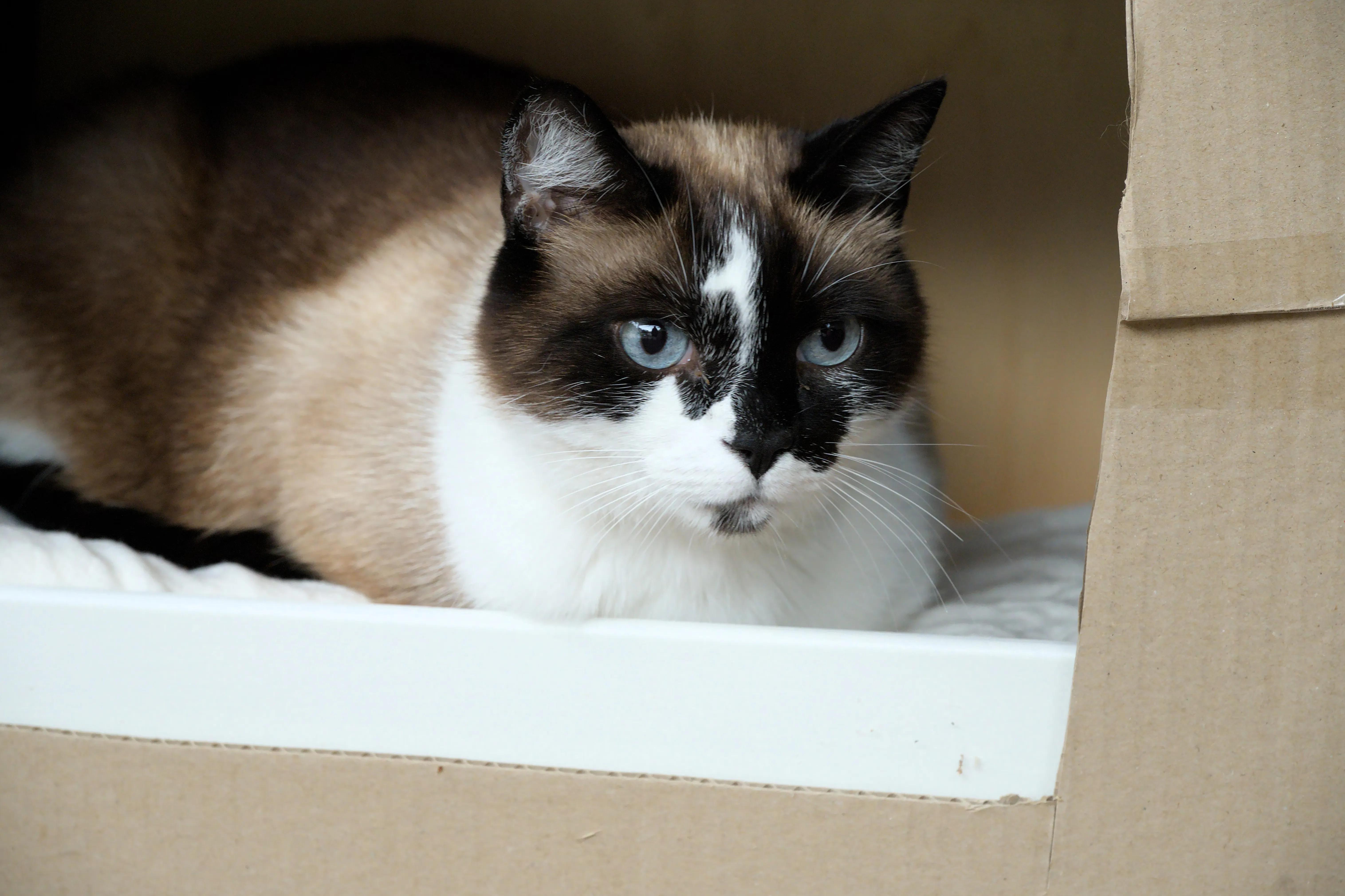
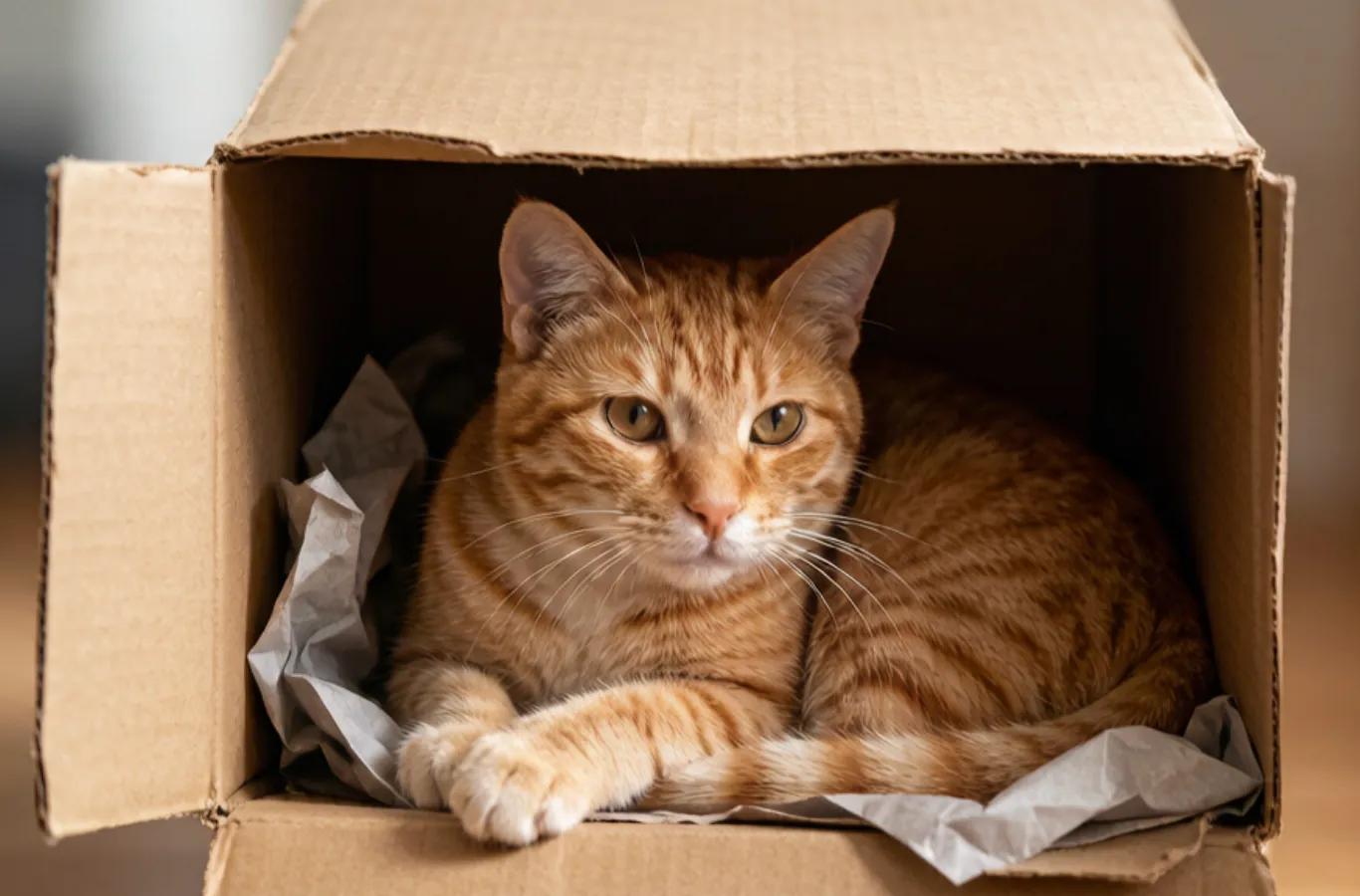
Here's what that means in practice. A cardboard box, a window to watch birds through, and a high shelf your cat can claim will do more for its happiness than three bins of rotating toys. My own cat has a basket of perfectly good toys she ignores in favor of the spot under the bed where she can spy on everyone. The box works because it satisfies a hiding need. The window works because it satisfies a hunting/observation need. The shelf works because it satisfies a security need. A toy satisfies a need only if it actually connects to one of those drives.
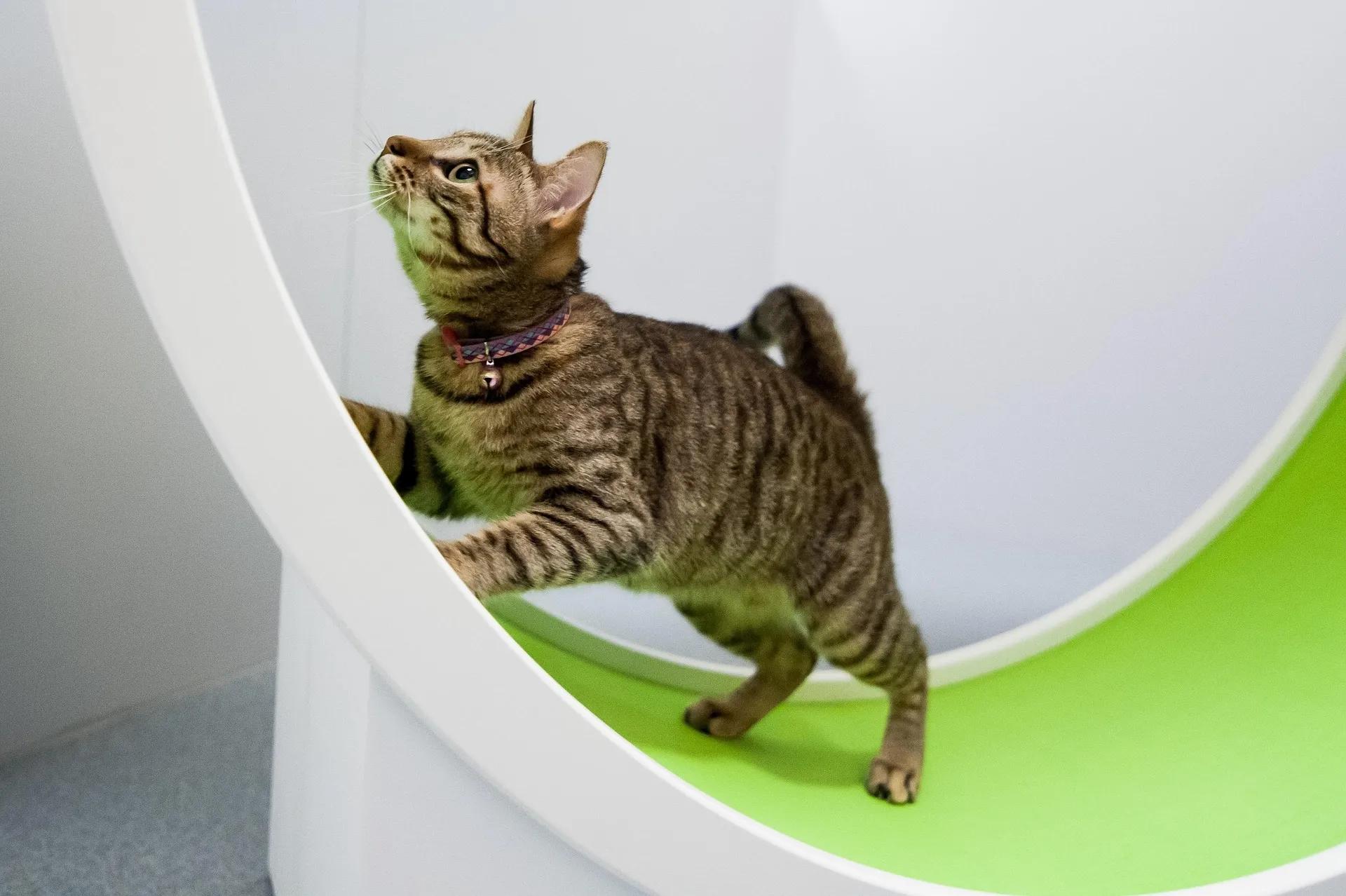
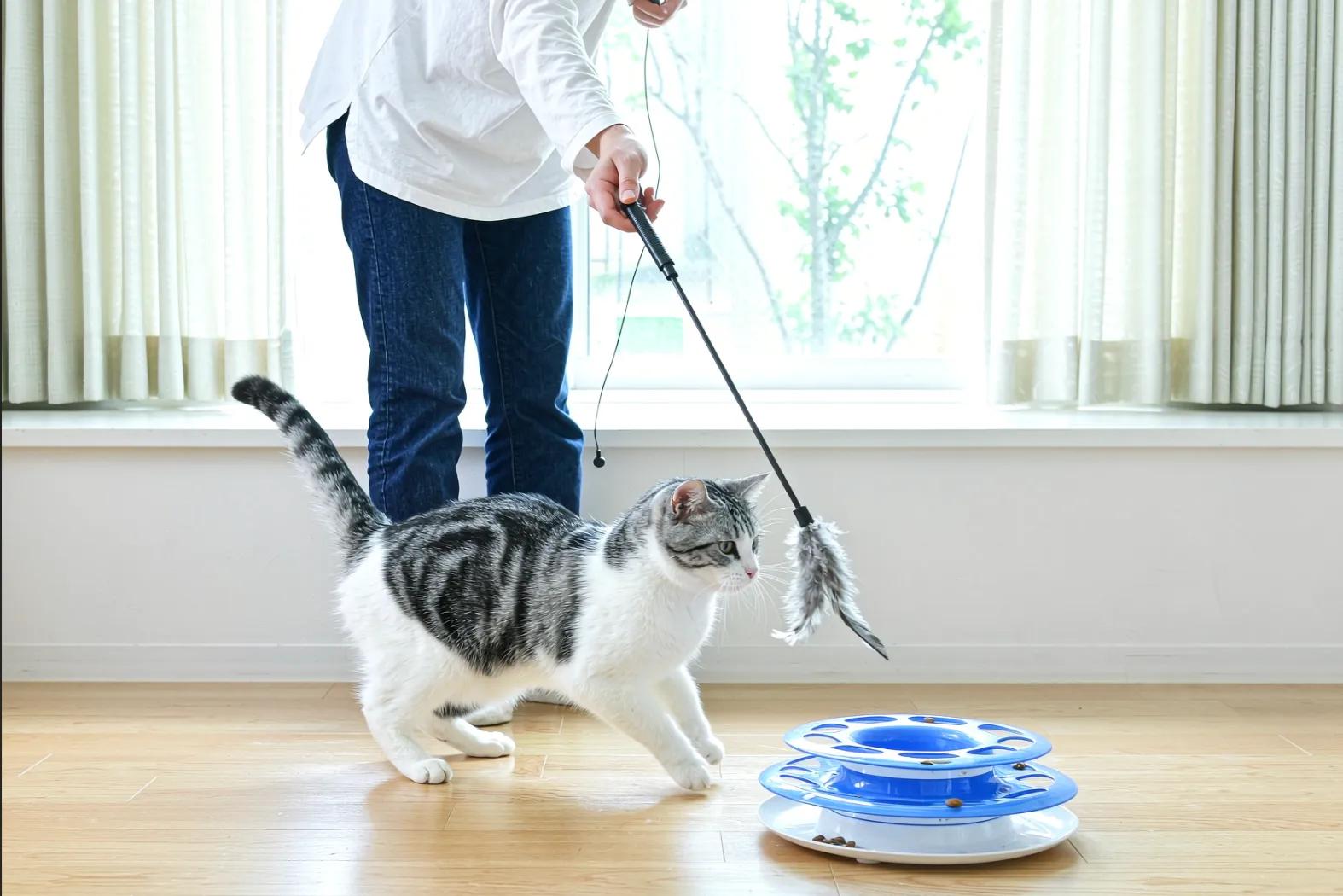
The pet industry sells you the toy. But the play — the way it triggers that predatory loop of stalk, chase, pounce, catch — is what matters. And that often requires your hands and attention, not a purchase [3]. A $7 wand toy you operate will out-earn a $50 auto-toy that plays by itself, because the $7 one is actually "prey" your cat gets to catch.
So before you buy: ask what need this fills. If you can't answer, it's probably going in the bin.
Truth #2: You Can't "Train" a Cat Into Being a Cat
There's a whole corner of the pet world that treats cats like small, stubborn dogs. Buy the training program. Be more assertive. Show it who's boss.
Here's the reality: cats don't work that way. They're solitary hunters of small prey, not pack animals — they don't have that built-in drive to please you that dogs do [2]. So when a cat scratches the sofa or pees outside the box, it's not being defiant. It's meeting a need you haven't given it a place to meet.
Cornell's Feline Health Center is blunt: scratching is innate, as natural as grooming or burying waste, and it marks territory, sheds old claw sheaths, and keeps claws sharp [4]. Punishment doesn't fix that — cats don't connect the squirt bottle to the behavior, they just learn to fear you [4].
You don't train a cat. You design for it. It's not about dominance. It's about setup.
Truth #3: A Cat That Scratches Isn't Being Destructive — It's Being a Cat
This is the big one, because scratching is the #1 thing owners try to stop, and almost everyone approaches it wrong.
Scratching isn't your cat attacking your furniture out of spite. It's a healthy, innate behavior that serves three purposes: scent-marking territory, shedding worn claw sheaths, and keeping claws sharp [4]. Your cat isn't destroying your home. It's maintaining its identity and its tools.
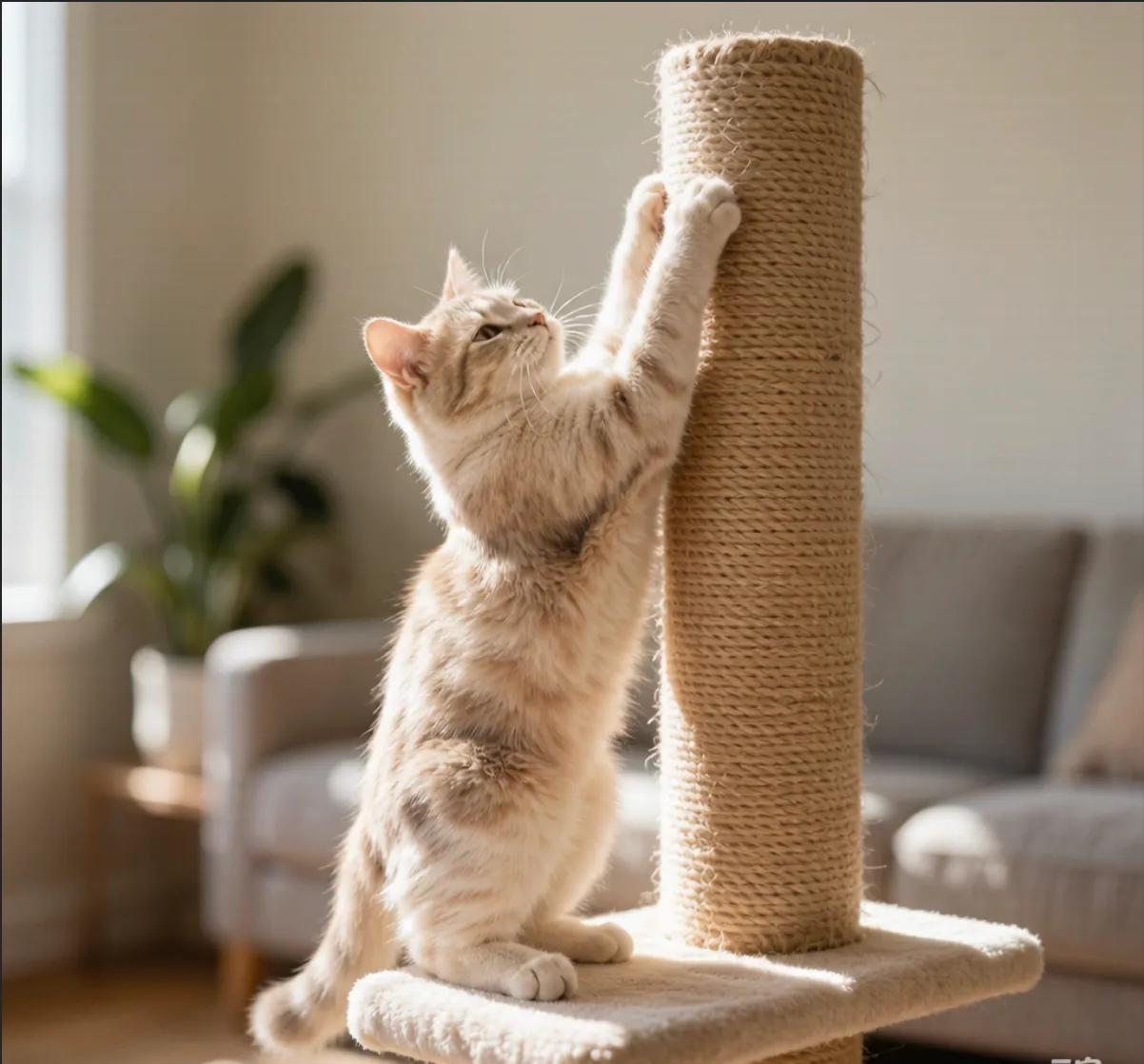
So the answer isn't to stop the scratching. It's to redirect it. Cornell's advice: match the scratching post to what your cat actually likes — vertical or horizontal, carpet or sisal — make it tall enough for a full stretch and stable enough not to wobble, put it where the cat already scratches, then slowly move it [4]. Reward use. Don't punish non-use.
And here's the part people really don't want to hear: declawing is not a solution. Cornell calls it an amputation with major controversy, a last resort [4]. New York banned it in 2019, and other states have followed or are considering it. You're not "fixing" a destructive cat by removing its claws. You're removing a healthy cat's defense and its most natural behavior.
Truth #4: Cats Are NOT Low-Maintenance
This is the myth that sells a lot of impulse cat adoptions. Cats are independent, the thinking goes, so they're easy. You fill a bowl, scoop a box, and you're done.
Let me tell you a number that should kill that idea: 61% of cats examined by US vets were overweight or obese in 2022, according to the Association for Pet Obesity Prevention [5]. A "low-maintenance" animal doesn't end up two-thirds of the population overweight. What that number actually reflects is cats that are indoor, sedentary, and free-fed — and owners who thought "independent" meant "doesn't need much."
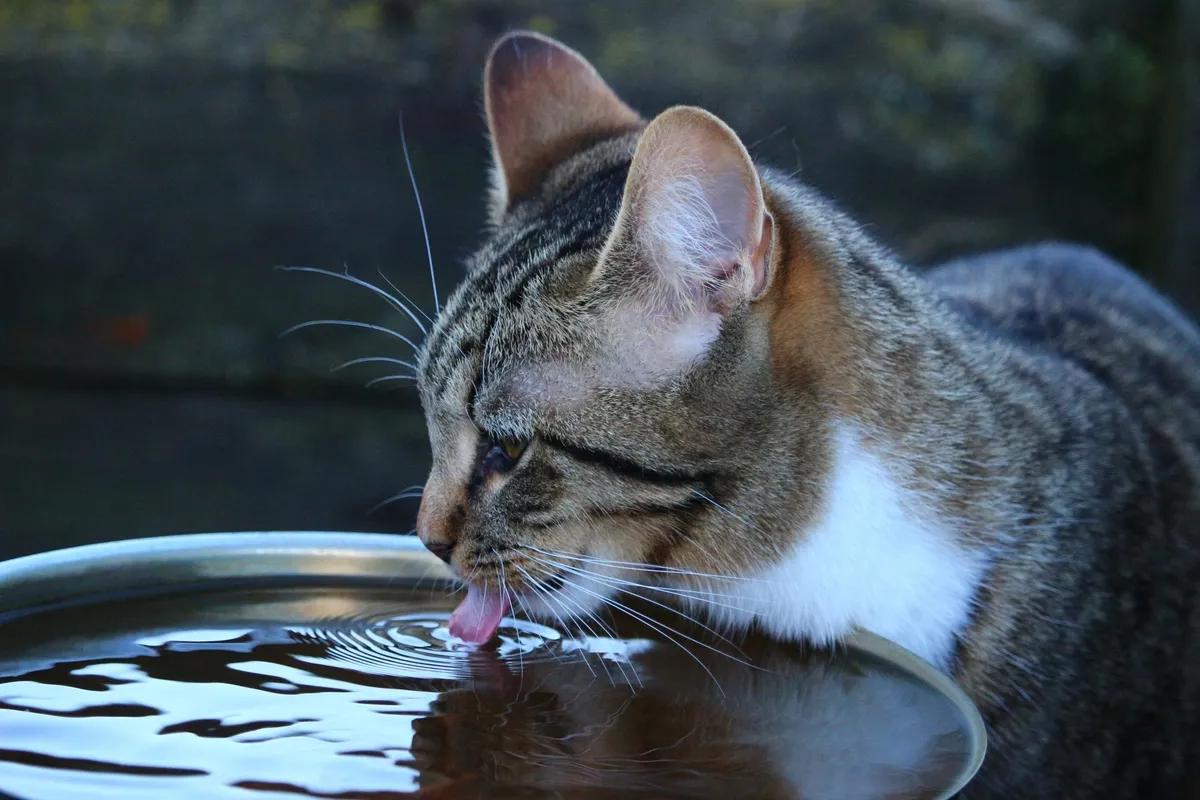
Indoor cats need real care: daily tooth brushing (International Cat Care recommends daily, built up gradually) [6], nail trims every two to four weeks [7], water bowls cleaned daily [8], and structured play to burn energy and stimulate the brain. None of this is hard. All of it is daily. "Low-maintenance" is the opposite of the truth.
The reason this matters isn't just health. An under-stimulated, over-fed cat is a bored cat — and a bored cat develops "problem behaviors" that end relationships [9]. The "easy" cat is actually the one that needs the most thoughtful setup.
Truth #5: A "Problem Behavior" Is Usually a Home Problem, Not a Cat Problem
Here's the one that reframes everything. When a cat pees on the rug, the common response is to call it a "problem cat" or think about rehoming it. But behavior problems are a leading reason cats get surrendered — a study cited by Cornell found 27% of cats surrendered for behavior reasons were given up for aggression [10], and inappropriate elimination is one of the most common rehoming reasons [9].
The uncomfortable truth: in almost every case, the "problem" is a signal that something in the home isn't working. A cat that pees outside the box might have a dirty box, a box that's too small, too few boxes (the AAHA/AAFP rule is one box per cat plus one extra) [11], or a medical issue. A cat that scratches the couch might have no appropriate scratching outlet. A cat that's aggressive might be in pain [10].
The fix isn't to "correct" the cat. It's to investigate the setup — and, when behavior changes suddenly, to check for a medical cause first [10]. Once the environment is right, most "problems" disappear. That's not wishful thinking. That's how cats work.
What This Means for Your Money (and Your Cat)
So where does this leave the $158 billion? It doesn't mean stop spending on your cat. It means spend differently:
- Spend on setup, not stuff. A few perches, a good scratching post, puzzle feeders, and daily play beat a room full of gadgets.
- Spend on care, not cures. Daily habits — brushing teeth, cleaning water, scooping the box — prevent the problems that gadgets claim to fix.
- Spend your attention. The most enriching thing for a cat is often you: ten minutes of interactive play a day [12].
You can't buy a happy cat. You can build the environment and habits that let your cat be happy on its own terms. That's the real "purchase" that pays off — and it doesn't come with a box.
The Takeaway
Your cat isn't a project to fix and it isn't a low-maintenance decoration. It's a small predator with specific needs. Stop buying your way out of behavior problems and start designing your way out. Spend less on stuff, more on setup, and a lot more on attention.
The best cat care isn't a purchase — it's a design decision.
Furpick.app is a participant in the Amazon Services LLC Associates Program and other affiliate programs. We may earn from qualifying purchases. Content from Amazon and other retailers is provided 'as is' and subject to change. All trademarks are the property of their respective owners.