Cat Toys, Decoded: What to Buy, What to Skip, and How to Match the Toy to Your Cat
Why your cat needs enrichment at all
Here's a number to sit with: about 39% of US households now have a cat — roughly 53 million homes, per the American Pet Products Association's 2026 report [1]. The US pet industry as a whole hit $158 billion in 2025 [1]. That's a lot of cats, and a lot of money, pointed at keeping them happy.
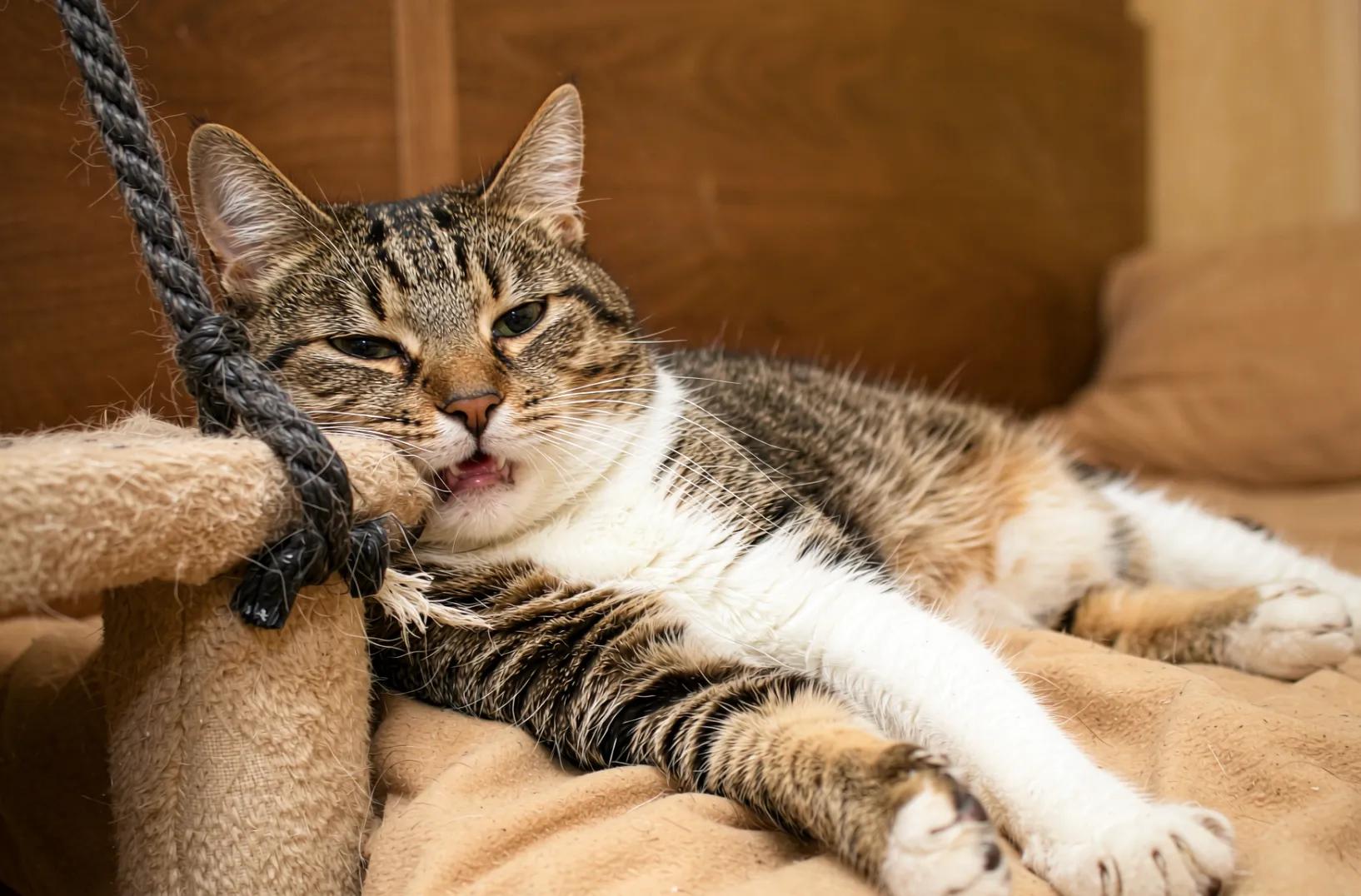
But here's the catch. Cats weren't built for a 1,200-square-foot apartment. In the wild, they spend their days hunting: stalking, chasing, pouncing, catching, eating. Indoor life strips all of that away. Cornell's Feline Health Center points out that scratching — the thing that drives so many owners up the wall — is an innate behavior, as natural as grooming or burying waste [2]. Cats keep their hunting behaviors alive whether or not you're around. If you don't give them an outlet, they'll invent one. That's when the couch becomes a scratching post and the 3 a.m. zoomies become a nightly event.
Enrichment, at its core, is just giving indoor cats a way to do what they'd naturally do anyway. And toys are the tool. Not because toys are the point, but because they're how you trigger that predatory loop.
The one idea that changes how you shop: the predatory sequence
Here's the mental model that makes every toy decision easier. A cat's play is really hunting in miniature. It follows a sequence: search, chase, catch, consume.
The best toys let your cat run the whole loop. Wand toys (the classic stick-and-feather) are champions here because you control the "prey" — you make it scurry, hide, escape, like a real animal [3]. That's why a $7 wand toy beats a $50 gadget for most cats: it mimics prey, not a spinning object.
Now apply this lens to everything you see in the pet aisle and two things get obvious fast.
First, toys that "play themselves" often break the loop. An automatic toy that wiggles by itself triggers chase, sure. But there's no catch, no reward. Behaviorists warn this can leave a cat frustrated — especially with laser pointers, which let a cat stalk, chase, and pounce but never let them "catch" the red dot [4]. Some cats are fine with it. Others get obsessive, staring at walls waiting for the dot. The safest play is to end any laser session by "landing" the dot on a physical toy the cat can actually grab.
Second, the toy isn't the deliverable. The play is. You're not buying a product; you're buying a way to trigger that loop with your own hands and attention.
Match the toy to your cat, not to the shelf
Not all cats are the same player. Before you spend a dime, figure out which type yours is.
The young hunter (kittens and cats under 2). High energy, short attention, everything is prey. They need variety and lots of short sessions. Cheap is fine — they'll wear things out. Rotate toys weekly so nothing gets stale.
The adult "mid-range" cat (2–10). The bulk of cats. They want quality play, not endless toys. Two or three good interactive sessions a day do more than a room full of gear. Focus on wand toys, puzzle feeders, and a solid scratching setup.
The senior or low-energy cat (10+). Slower movement, gentler play. A laser moved slowly, a wand dragged on the ground, a food puzzle at an easy level. Respect their pace. Force them to sprint and they'll just walk away.
The destroyer / obsessive hunter. This is your scraper, your toy-murderer. Give them tough wand attachments, cardboard scratchers they can shred, and puzzle feeders that make them work for food. Channel the destruction instead of fighting it [5].
What's worth your money (2026 US prices)
Let me give you real numbers, in dollars, so you can budget honestly. These are typical retail ranges on sites like Chewy and general pet retailers in 2026 [6][7].
| Toy category | Typical price (USD) | Worth it? | Notes |
|---|---|---|---|
| Wand toy | $5–15 | Yes | Best value; you're the "prey" |
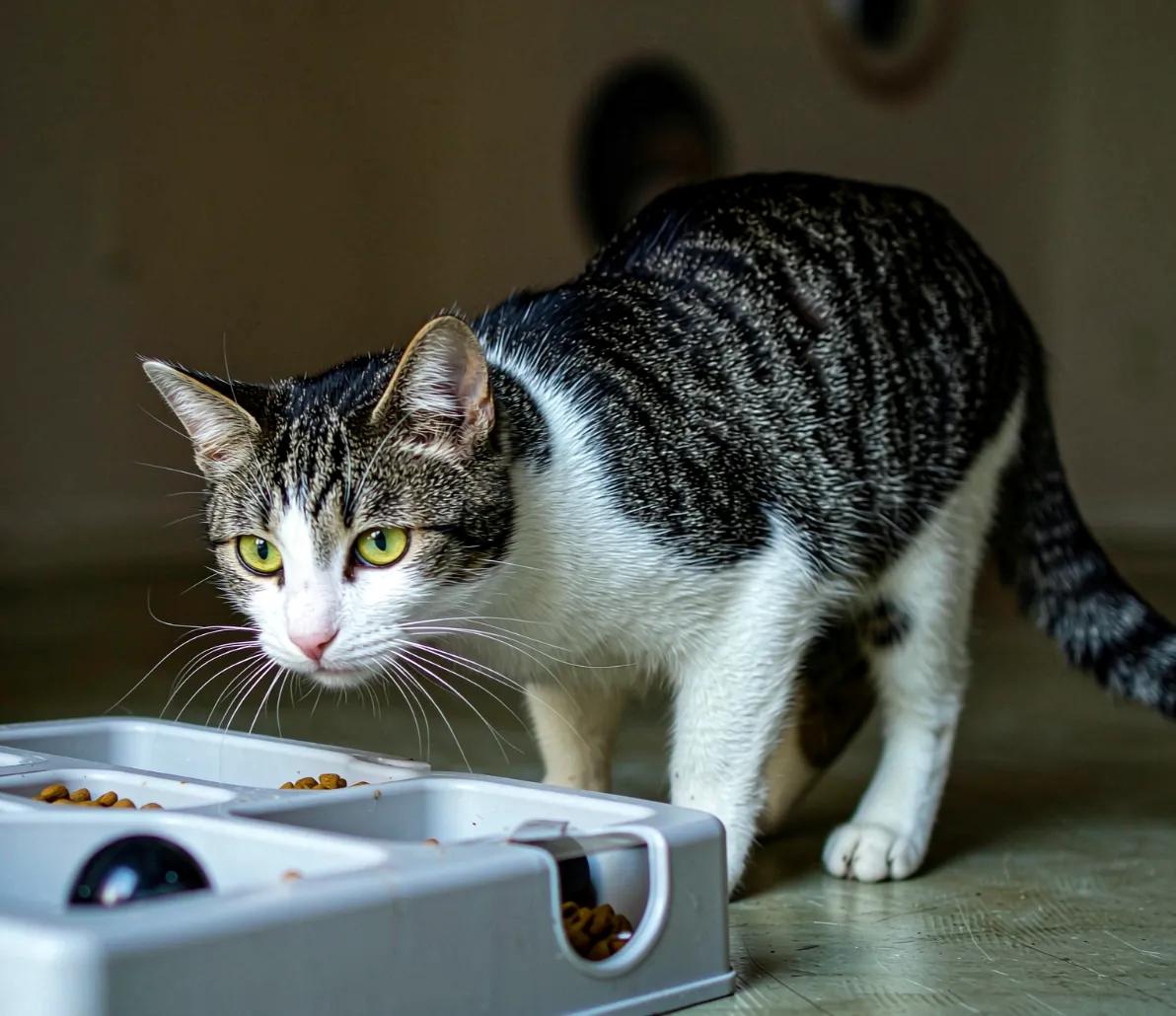
| Puzzle feeder | $10–30 | Yes | Slows eating, adds brain work |
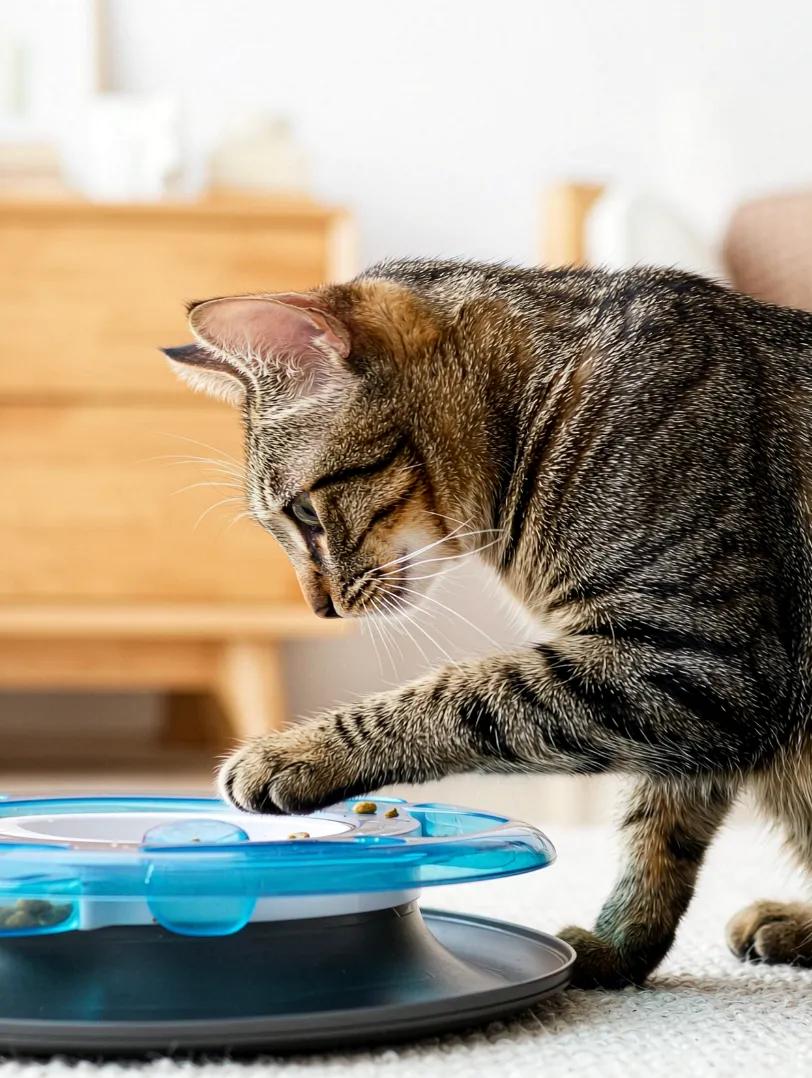
| Ball track | $10–25 | Maybe | Good for self-play |
| Cardboard scratcher | $10–30 | Yes | Channel scratching |
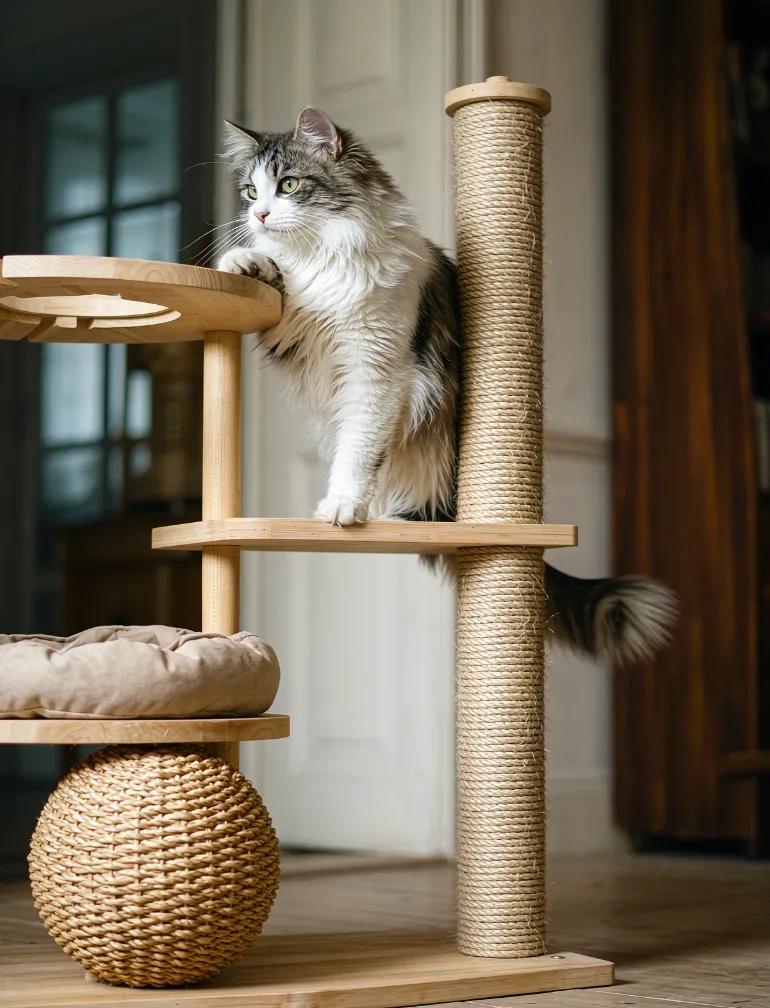
| Cat tree / post | $30–200 | Yes (most) | Vertical space = security |
| Automatic toys | $20–60 | Depends | A gamble |
| Cat wheel | $150–400 | Only if committed | Big spend, not for every cat |
See the pattern? The cheap stuff — wands, cardboard, puzzle feeders — does most of the heavy lifting. The expensive stuff is a gamble, not a guarantee. I've spent more on gadgets I regret than on anything my cat actually wears out.
The "shiny object" tax: what to skip
Let me be blunt about a few categories, because this is where the money drains out.
Auto "play-itself" robots. Some cats love them. Many don't, or love them for a week. If you're buying one, treat it as a maybe, not a must, and start cheap. Don't expect it to replace you.
The "entertainment tower" impulse buys. You know, the $80 contraption with 14 dangling things. Most cats ignore half of it. Start with one or two good toys before you build a jungle gym.
Laser-only toys as a sole strategy. As noted, the no-catch loop can frustrate. If you use a laser, always finish on a catchable toy [4].
I'm not saying never buy these. I'm saying buy them with your eyes open, and don't confuse price with value.
Play beats quantity: how to actually use what you buy
Here's the part that matters most, and it costs you nothing extra.
Honestly, this is the section I wish I'd read years ago.
Play in short, frequent sessions. Behavior experts and vets commonly recommend two or three 10-to-15-minute interactive sessions a day [8]. Short and real beats one long, half-hearted session.
Be the prey, not a bystander. A wand toy only works if you animate it like prey — skittering, hiding, pausing, escaping. You're not dangling it in your cat's face; you're making it flee.
Rotate toys. Store most toys away and bring out two or three at a time. Swap them weekly. Novelty is a huge part of engagement, and it costs you nothing.
Let play end on a win. A real hunt ends with a catch. End each session by letting your cat "capture" the toy, then give them a treat or their meal. That completes the loop — and the next session starts with a cat who believes play works.
Signs your cat's play habits point to a vet
Most of this is lifestyle, not medicine. But play habits can sometimes flag a real problem.
If a normally playful cat suddenly loses all interest in toys, becomes lethargic, hides, stops grooming, or refuses food, that's a change worth taking seriously. I don't say this lightly — sudden shifts like these can signal pain or illness. In that case, don't push the toys. Get them checked by a vet. Play is great for a healthy cat; it's not a treatment for a sick one.
The bottom line
You don't need a room full of toys. You need to understand the one loop — search, chase, catch, consume — and then buy a few tools that let your cat run it with you.
Start with a good wand toy, a puzzle feeder, and a solid scratching setup. That's roughly $30–70, and it covers most cats better than $300 of gadgets. Spend the rest of your money on the one thing no toy can replace: your attention, ten minutes at a time.
That's it. That's the whole trick.
Furpick.app is a participant in the Amazon Services LLC Associates Program and other affiliate programs. We may earn from qualifying purchases. Content from Amazon and other retailers is provided 'as is' and subject to change. All trademarks are the property of their respective owners.