The 3-Layer Framework for Raising a Happy Indoor Cat: Daily Care, Enrichment & a Cat-Friendly Home

Picture this: it's 4 a.m., and your cat is sprinting across the bed, knocking over the lamp, and yowling like there's a fire. You've tried everything — yelling, squirting water, closing the door. Nothing works. So you Google "why is my cat acting out" and land on a listicle that tells you to buy five more toys and "be more assertive."
I've been there. So have most of the 49 million US households that own a cat, according to the American Pet Products Association's 2025 report [1]. The pet industry is a $158 billion business [2], which means there's no shortage of people lining up to sell you stuff to "fix" your problem cat.
But here's the uncomfortable truth nobody's selling you: your cat isn't the problem. The setup is.
In the wild, cats hunt, climb, hide, and patrol a territory. Take all of that away and put them in a 900-square-foot apartment, and they don't stop needing to do those things — they just have nothing appropriate left to do them with. So the couch becomes a scratching post. The 4 a.m. becomes a hunting hour.
This guide isn't a listicle. It's a system. Three layers, built on each other: understand the cat (nature), design the home (environment), and build the habits (routine). Change the environment before you try to "correct" the behavior — and most of the "problem" disappears on its own.
Why Cats Do "Problem" Behaviors (It's Not Personal)
Let's start with the layer that makes everything else make sense. Cats aren't mini dogs. They're a different species with different wiring, and the Ohio State University's Indoor Pet Initiative spells it out plainly: in nature, a cat does three things — hunt, climb and hide, and defend territory [3]. They're solitary hunters of small prey, not pack animals like dogs. That's why they don't "want" to please you the way a dog does. They just want to be a cat.
So when your cat scratches the sofa, chews the cords, or pees on the rug, it's not revenge. Cornell's Feline Health Center is direct about this: scratching is an innate behavior, as natural as grooming or burying waste [4]. It marks territory with scent glands in the paws, sheds old claw sheaths, and keeps claws sharp. Your cat isn't on a mission to destroy your home — it's trying to meet a need you haven't given it a place to meet.
The stakes here aren't small. Behavior problems are a leading reason cats get surrendered or rehomed. A study cited by Cornell found that 27% of cats surrendered for behavior reasons were given up because of aggression [5]. And inappropriate elimination — peeing outside the box — is one of the most common reasons cats end up at shelters [6]. In other words, "bad behavior" isn't just annoying. It's the #1 thing that ends cat-human relationships.
And here's the part people get wrong: most of it is preventable with the right environment, not with punishment. Punishment doesn't work on cats — they don't connect the squirt bottle to the behavior, they just learn to fear you [4].
One more thing to reset your expectations. Cats sleep 12 to 16 hours a day [7]. They're crepuscular, meaning they're wired to be most active at dawn and dusk — which is when wild cats would hunt. That 4 a.m. zoomie isn't a personality flaw. It's a predator waking up in a house with no prey and no outlets. Give it an outlet and the "problem" becomes a cat being a cat, at a time you can live with.
How to Make Your Home Cat-Friendly (Environment Before Correction)
Now the layer that fixes most problems: your home. A cat-friendly home isn't a cat palace with a $500 cat tree in every room. It's a handful of intentional changes that give your cat safe places to do the things it's wired to do. Start here before you spend a dollar on training.
Vertical Space: Give Them the High Ground
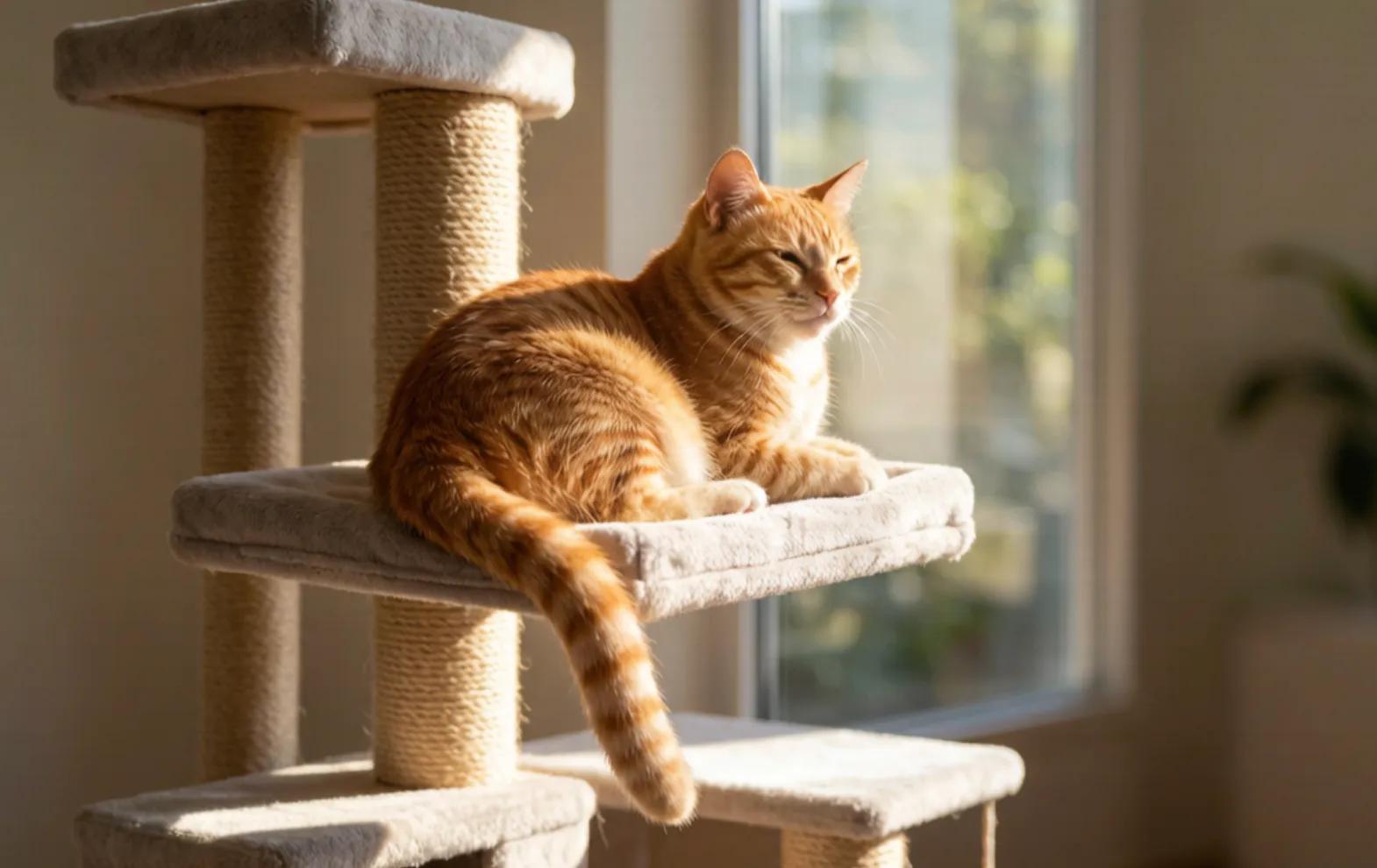
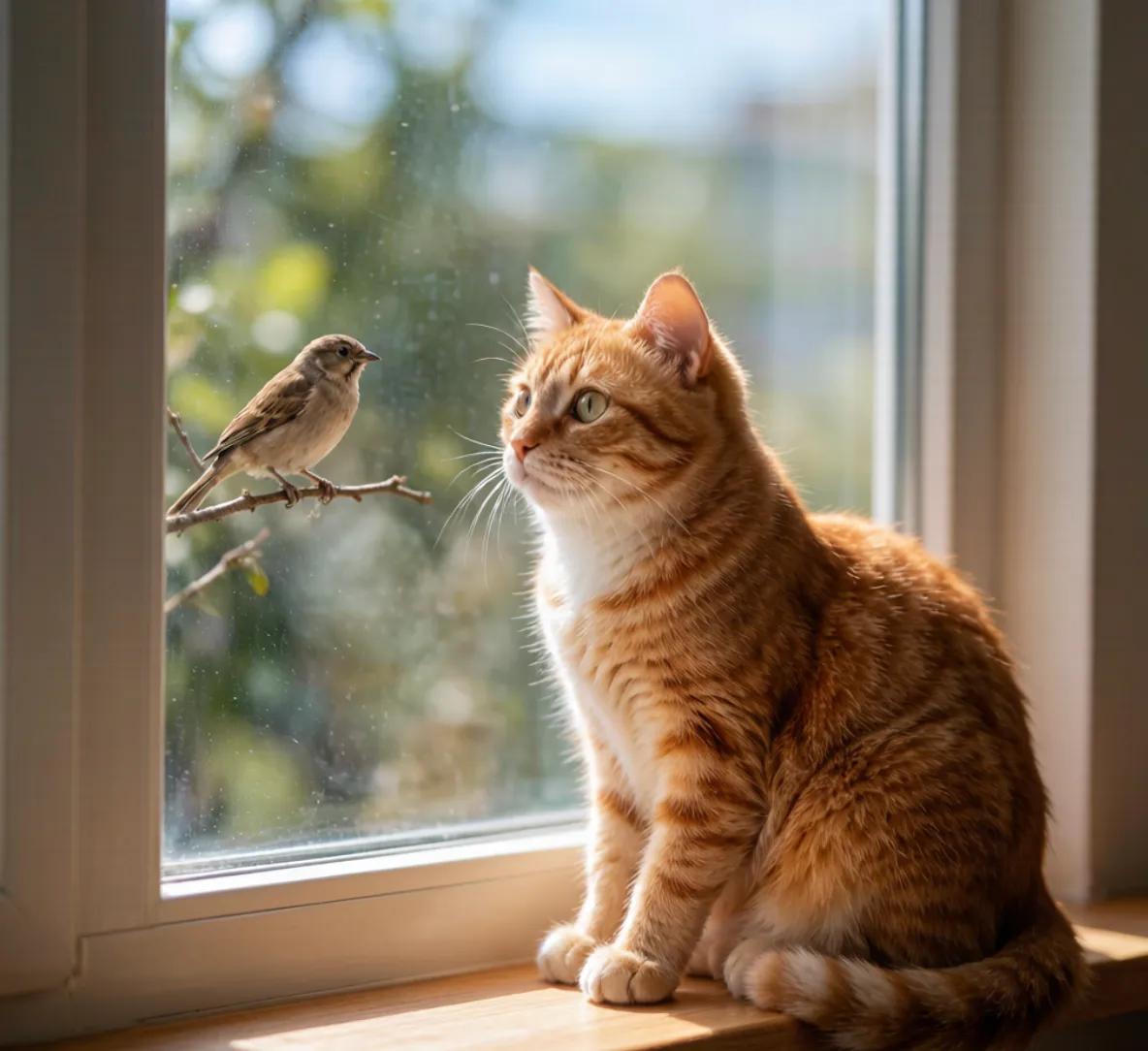
Cats feel secure up high. Ohio State's Indoor Pet Initiative points out that a cat that can hear or smell things outside but can't see them gets stressed — so perches matter [8]. A perch can be anything your cat can lie on, sit on, or look out from: a window perch, a cat tree, a sturdy table, even the top of a bookcase. Put several in different rooms, ideally near windows. If you can hang a bird feeder outside a window, you've just built your cat a TV. My cats will sit transfixed at the window for an hour watching squirrels — it's free enrichment, and it works.
Scratching: Redirect, Don't Punish
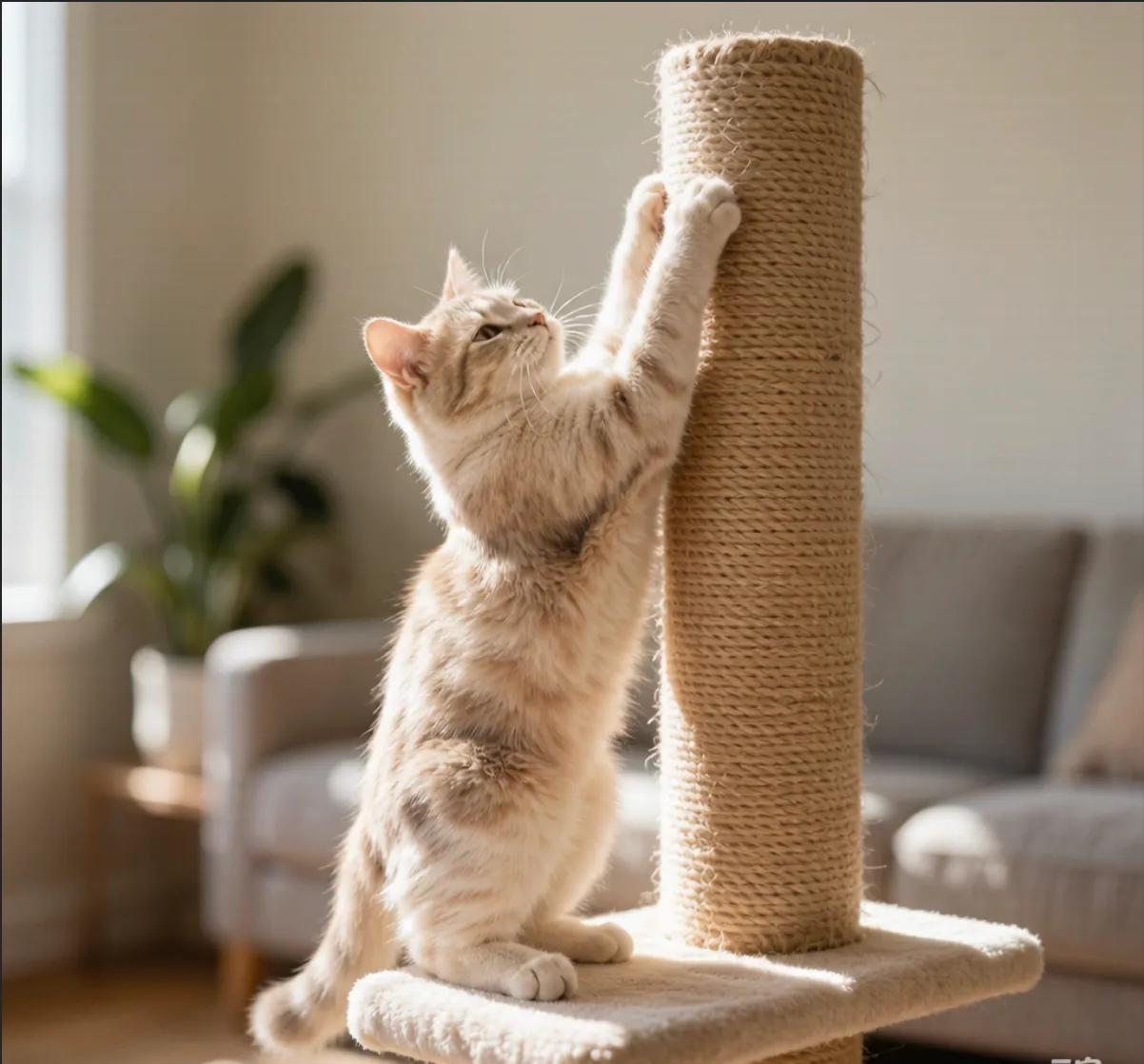
Your cat needs to scratch. Cornell's advice is to watch what it actually scratches — vertical or horizontal, carpet or wood or sisal — and then match the post to that preference [4]. A post that's too short is useless: it needs to be tall enough that your cat can stretch its front legs fully while standing on its hind legs. And it needs to be stable. A wobbly post is a deal-breaker. Place it where the cat already scratches, then slowly move it to where you want it. Reward use with a treat or catnip. And whatever you do, don't declaw — Cornell calls it an amputation with major controversy, a last resort [4]. New York banned it in 2019, and more states have followed or are considering it. There's no "correcting" this one; there's only providing the right outlet.
Litter Boxes: The n+1 Rule and the 1.5x Trap
This is the one people get most wrong, and it's the most common cause of the most common problem (peeing outside the box). The AAHA/AAFP feline guidelines are unambiguous: one litter box per cat, plus one extra [9]. Two cats, three boxes. And they can't all sit in a corner — spread them across the house in quiet spots with escape routes, so no cat gets cornered.
The other trap: size. The guidelines say a box should be at least 1.5 times the length of your cat, nose to tail [9]. That means most store-bought boxes are too small. A big storage tub with a cut-out entrance is often better than the "deluxe" box at the pet store. And scoop every day. No exceptions. Some cats will refuse a dirty box entirely [9].
The Safety Baseline: What Must Be Fixed
A cat-friendly home has a hard floor below which nothing is negotiable. The big one: toxic plants. The ASPCA lists common household plants that are poisonous to cats, and lilies are the standout danger — even small amounts can cause acute kidney failure in cats [10]. Sago palm, tulips, and azaleas are also on the high-risk list [10]. If your cat gets into something, the ASPCA Animal Poison Control line is (888) 426-4435 [10]. Also check windows and balconies — cats fall out of open windows, and "high-rise syndrome" (injuries from falls) is a real, documented risk [11]. And keep cleaners and chemicals where a curious cat can't reach them.
The Daily, Weekly & Monthly Routine That Makes It Stick
This is the layer that turns a well-designed home into a healthy cat over years. Care routines aren't about technique — they're about habit. Build small, positive habits you can actually keep, and "grooming" stops being a weekly fight and becomes a minute you and your cat both tolerate. The rule of thumb: five minutes a day beats one big battle a week.
Teeth: The Habit Your Cat's Health Depends On
Dental disease is one of the most common health issues in cats, and most of it is preventable. The ideal is brushing every day, and International Cat Care walks through how to build up to it slowly: start by touching your cat's mouth, then let them lick toothpaste off your finger, then move to a finger brush, then a real brush [12]. Start with 10 seconds per side and work up to 30. A little bleeding early on is normal as gums get healthier. Use cat toothpaste only — human toothpaste is not safe for cats [12].
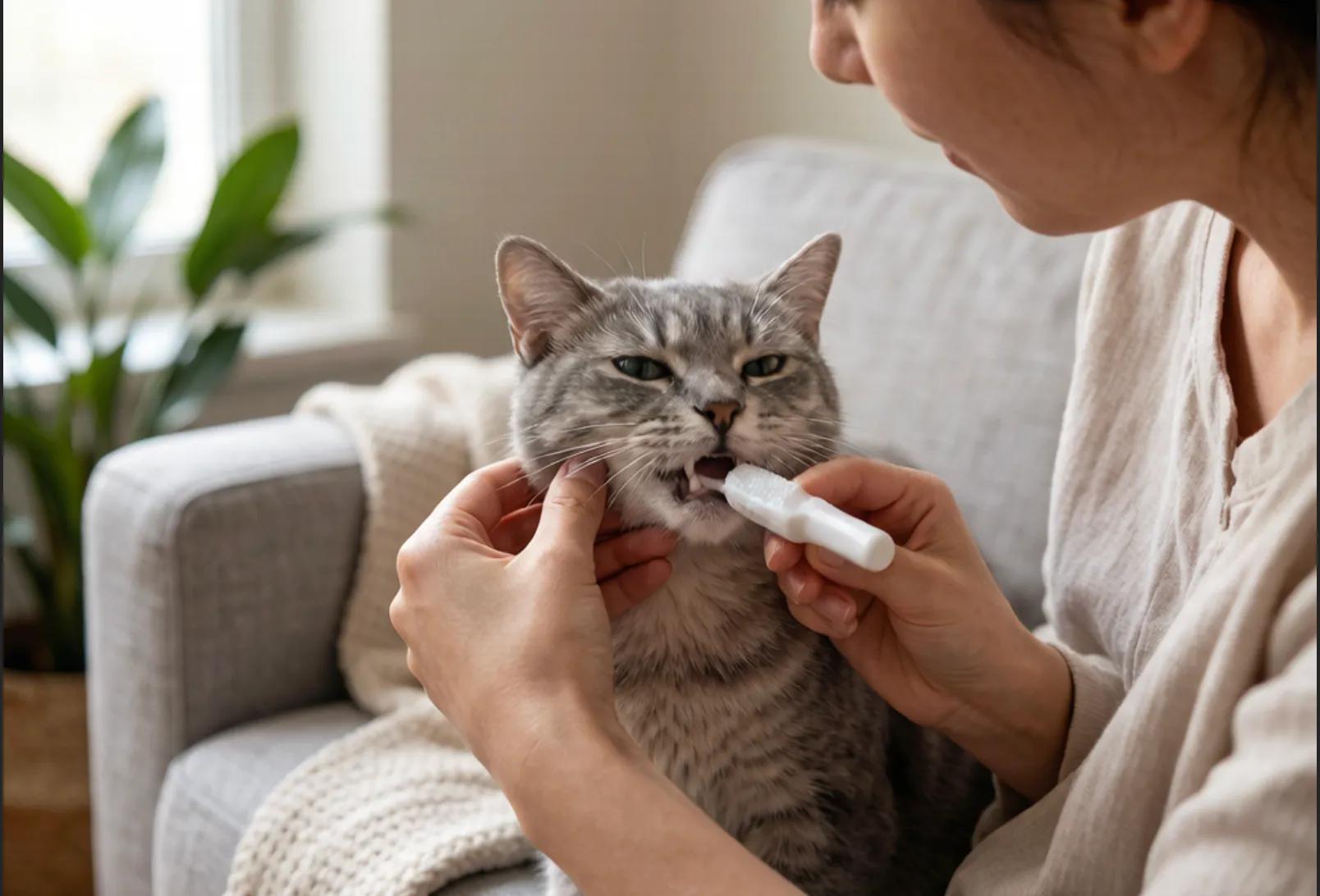
I'll be honest: my first cat never let me near its teeth, and I gave up. With the second one, I started slow — a finger brush dipped in chicken-flavored toothpaste, ten seconds, then a treat — and six months later she actually sits through a real brush. If your cat absolutely won't tolerate it, use dental treats or ask your vet about a dental diet. But brushing is the gold standard, and it's worth the slow build [12].
Nails: Every Two to Four Weeks
Indoor cats don't wear their nails down naturally, so they need regular trims. VCA recommends trimming every two to four weeks [13]. This is where daily-touch habits pay off — a cat used to having its paws handled is a cat you can actually trim.
Water: More Than One Bowl, Cleaned Daily
Cats are notoriously picky about water. VCA advises washing and rinsing water bowls daily to keep bacteria down, and placing water away from food and litter [14]. A fountain helps some cats drink more, but the daily clean matters more than the gadget.
Food Enrichment: Make Them Work For It
Here's a number that should worry you: 61% of cats examined by US vets were classified as overweight or obese in 2022, per the Association for Pet Obesity Prevention [15]. Indoor, sedentary, free-fed cats get fat. One of the cheapest fixes is feeding enrichment — puzzle feeders, or simply hiding a few pieces of food around the house so your cat has to hunt. It slows eating, adds brain work, and channels that predatory drive [16]. You don't need to buy much; a muffin tin with kibble in the cups works fine.

The Routine at a Glance
Here's the whole system on one card. Print it, stick it on the fridge.
| Frequency | What you do |
|---|---|
| Daily | Scoop litter boxes; refresh & rinse water bowls; 10–15 min of interactive play; 1–2 min of tooth brushing (if tolerated) |
| Every 2–4 weeks | Trim nails |
| Weekly | Brush coat (short-hair) / more often for long-hair; check ears & eyes; inspect scratching posts & perches |
| Monthly | Full home safety sweep (plants, cords, cleaners, windows); check food & litter supply |
| Yearly | Vet checkup + dental evaluation |
When Daily Care Isn't Enough: Vet Warning Signs
A good routine prevents a lot, but it doesn't replace a vet. You need to know the signs that mean "stop reading, call the vet now." These are the ones vets and organizations consistently flag:
- Straining to urinate, frequent trips to the box, blood in urine — especially in male cats. This can signal a urinary blockage, which is life-threatening and an emergency [17].
- Not eating or drinking for more than 24 hours, especially with lethargy.
- Repeated vomiting or diarrhea.
- Difficulty breathing.
- Sudden behavior change — hiding, aggression, or yowling can be pain or illness, not "mood" [5].
This isn't a substitute for your vet's judgment — it's the "when to stop self-managing and get help" line. If you're unsure, call. A quick call can catch a problem early, and catching things early is the whole point of a system [17].
The Takeaway
Your cat isn't broken, and neither is your relationship with it. The home is the variable you control. Understand the cat's nature, design the home around it, and build small daily habits — and the "problem behaviors" mostly take care of themselves.
Design the home before you try to train the cat. The system works because it works with your cat's nature, not against it. And with 49 million households trying to figure this out, that's a framework worth getting right [1].
Furpick.app is a participant in the Amazon Services LLC Associates Program and other affiliate programs. We may earn from qualifying purchases. Content from Amazon and other retailers is provided 'as is' and subject to change. All trademarks are the property of their respective owners.