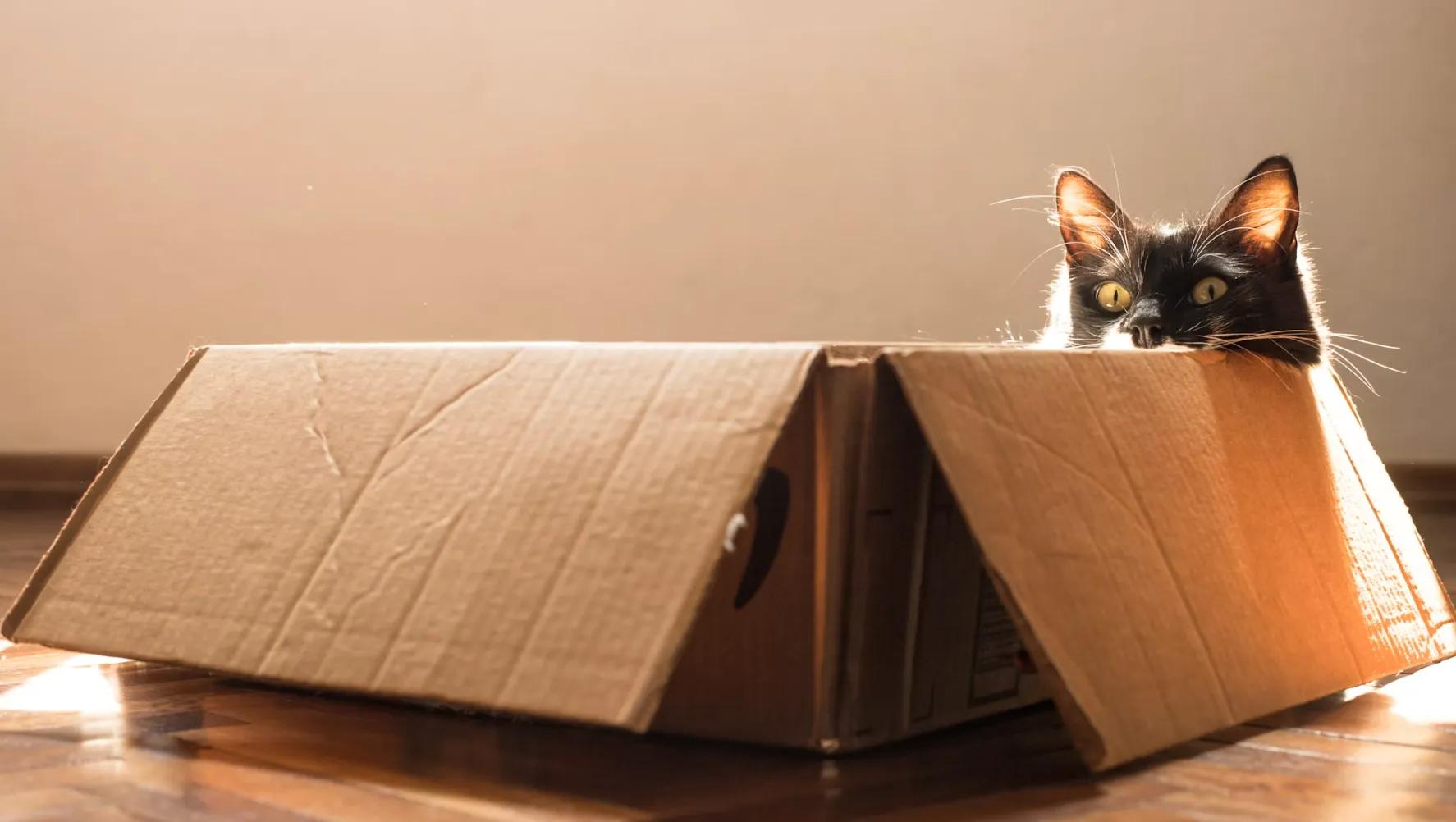
The 3-Layer Framework for a Cat-Friendly Home That's Actually Nice to Live In
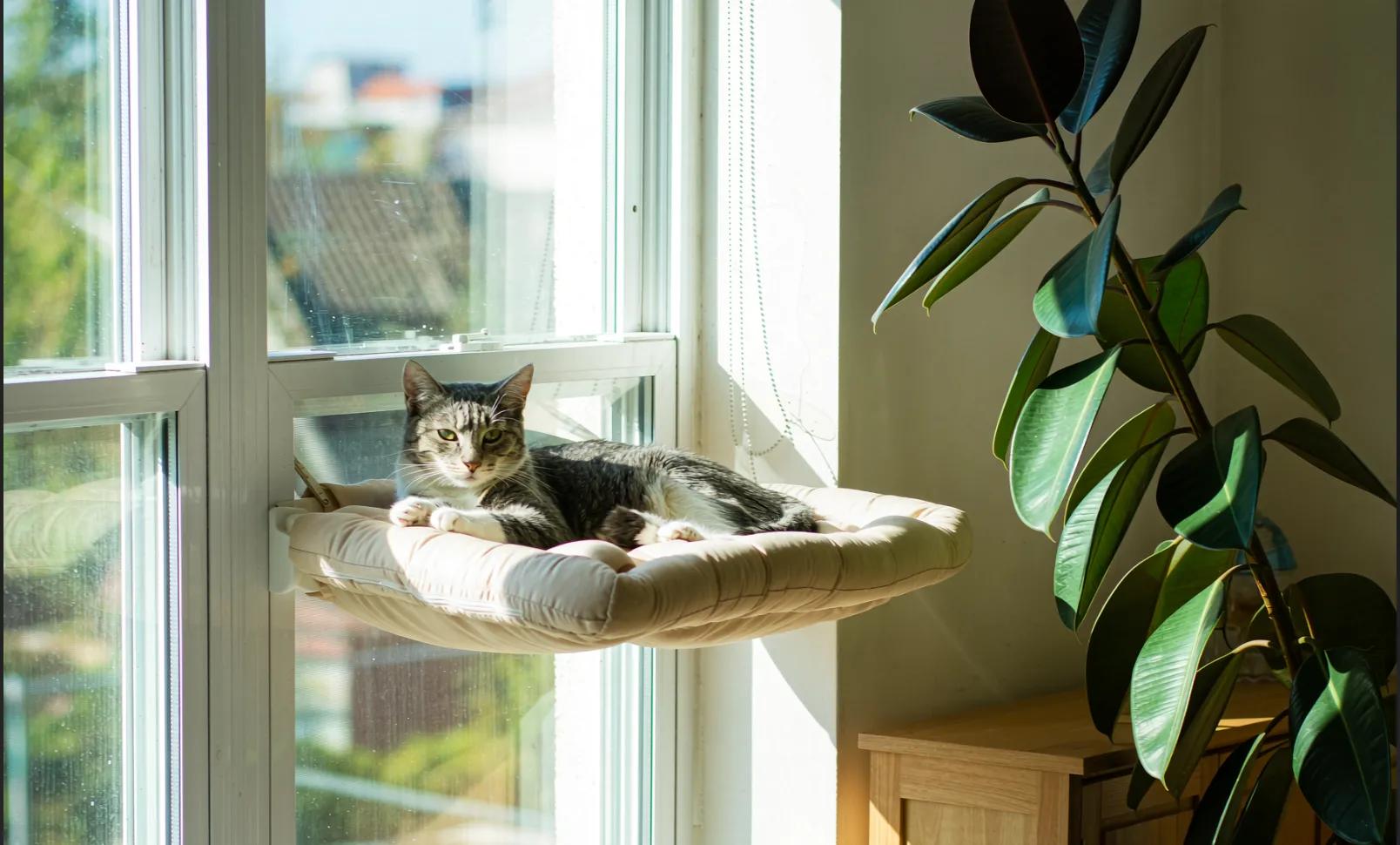
Picture this: it's a Tuesday evening, and you're staring at a couch with claw marks, a lint roller that's seen better days, and a litter box smell you've stopped noticing (your guests haven't). You've bought the scratch posts, the fancy food, the robot vacuum. Something still feels off.
Here's the uncomfortable truth: your home isn't working for your cat — or for you. And throwing more products at it won't fix that. What you actually need is a system.
Here's a number to start with: about 49 million US households now own a cat, up from 40 million in 2023, per the American Pet Products Association [1]. That's a lot of homes trying to make this work. And the pet tech market is exploding to match — roughly $15.6 billion globally in 2025, according to Global Market Insights [3]. The industry is betting big that you'll buy your way to a happier cat.
I'm not against buying. I'm against buying in the wrong order.
So let's reset with a framework instead of a shopping list. Three layers: design the space around your cat's instincts, let smart tech do the boring work, and build a cleaning system that actually keeps up. Work through them in that order, and your home starts working for both of you.
Layer 1: Design the space around your cat's instincts
The mistake most people make is buying cat stuff before thinking about cat nature. Flip that. Start with what your cat is wired to do, then shape the room around it.
The Ohio State University's Indoor Pet Initiative breaks a cat's basic needs down into a checklist: a litter box per cat (cleaned daily), scratching outlets, resting areas, vertical space, toys, and a safe hiding place [5]. Notice what's on that list and what isn't. No $200 gadget. Just spaces that meet a cat where it lives.
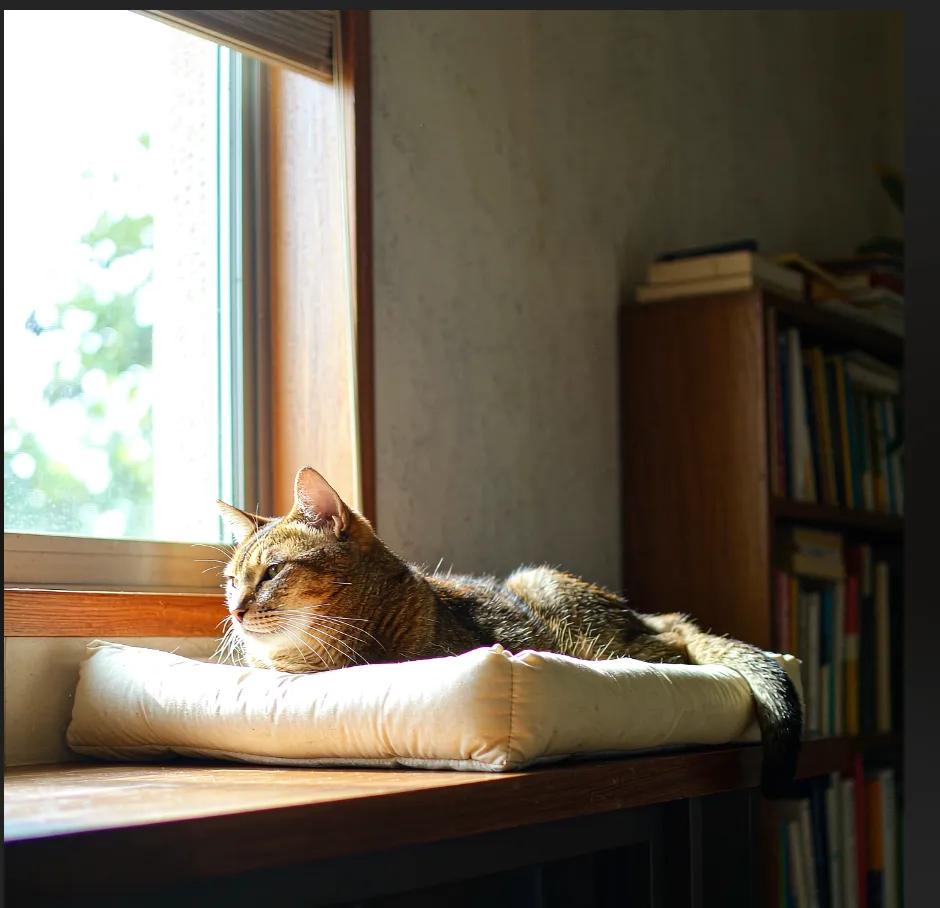
The single biggest win is vertical space. A perch isn't a luxury — OSU calls it a must-have [6]. Cats feel safe up high. It lets them watch the room, see out the window, and stay out of the path of other cats and small children. In multi-cat homes, height is the difference between peace and turf wars, because each cat can claim its own level [5]. You don't need a $300 cat tree to get this. A sturdy table by a window, a wide shelf, or a windowsill perch does the job. The key isn't height for its own sake — it's giving your cat a place to be above the action and out of reach when they want out.
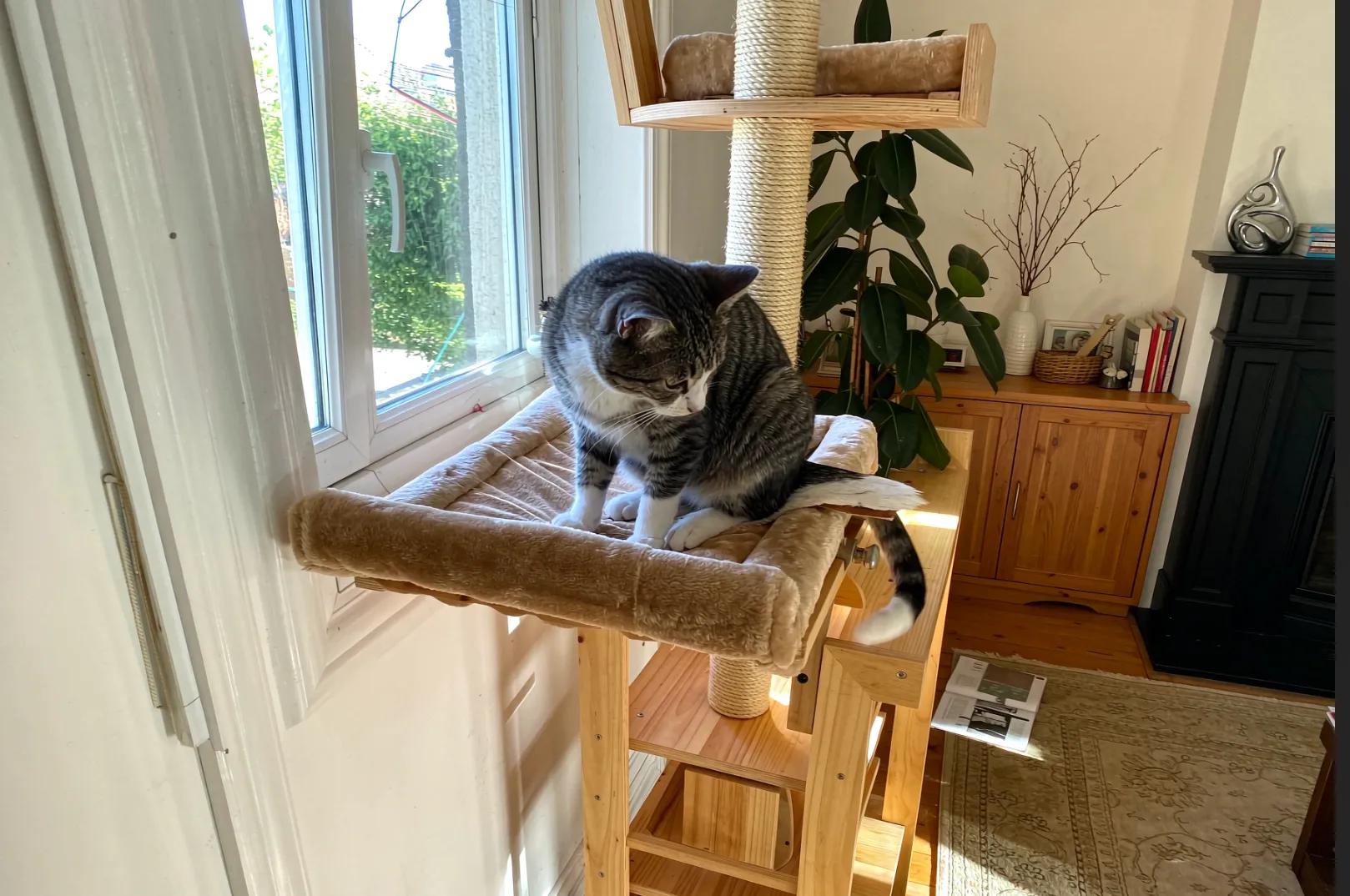
Next: hiding spots. Your cat needs somewhere quiet to retreat when the doorbell rings or the toddler is loud. Cornell's Feline Health Center and OSU both stress that refuge is a core need, not an optional extra [5][7]. A cardboard box, a covered bed, a cabinet top — any safe, quiet corner works. If you've ever wondered why your cat hides under the bed during guests, it's not being rude. It's using its only refuge.
Then there's scratching — the thing that wrecks sofas. Cornell is blunt about this: scratching is an innate behavior, as natural as grooming or burying waste [7]. Your cat isn't being vindictive. It's marking territory, removing old nail sheaths, and stretching. You can't stop it. You can only redirect it. Cornell's advice: give your cat a post that's tall enough to stretch fully against, that's sturdy enough not to wobble, and made of a material your cat likes (sisal, carpet, cardboard) [7]. Put it right next to the spot your cat already scratches, then slowly move it where you want. Reward use with treats and praise. Never punish — cats can't connect punishment to the behavior, so they just learn to fear you [7].
Here's the part people don't expect: Layer 1 is mostly about subtraction, not addition. You're not filling your home with more stuff. You're rearranging what's already there to fit a cat's nature — and protecting the things that matter to you.
Layer 2: Let smart tech do the boring work
Once the space is designed right, the next layer is about the chores. This is where smart tech genuinely earns its place — and where it can also become an expensive trap.
Let's start with the numbers, because the market tells you where the marketing pressure is. The global smart cat litter box market was about $1.09 billion in 2025, projected to hit $2.56 billion by 2030 — a compound growth rate of 18.62%, per Mordor Intelligence [2]. North America is the largest market, taking 42.7% of it [2]. A separate report puts the smart pet feeder market at roughly $1.5 billion in 2024 [4].
Those are big numbers. Here's what they actually mean for you: there's a lot of money behind convincing you to buy. So you need a filter, not a wishlist.
The rule I use: smart tech is worth it when it does a chore you'd otherwise skip or dread — not when it's a gadget that plays itself. The two devices that consistently earn their keep are automatic litter boxes and (for some people) automatic feeders.
Automatic litter boxes. The case for them is real: scooping is the chore owners dread most, and in multi-cat homes the math gets worse. But this is also the category with the biggest regret rate. Look at what owners actually say: popular options like the Litter-Robot dominate the hype, but real reviews are split — great convenience, real reliability headaches [8]. So if you buy one, buy on safety and fit, not on brand hype. Mordor's report notes the big barriers are the upfront cost (typically $300–600) and cybersecurity/data-privacy concerns [2]. Look for pinch sensors that guard against paw entrapment, weight sensors that identify which cat used it, and a cleaning cycle fast enough for multiple cats [9]. And set expectations: you'll still need to empty it, and you should still clean it out fully now and then.
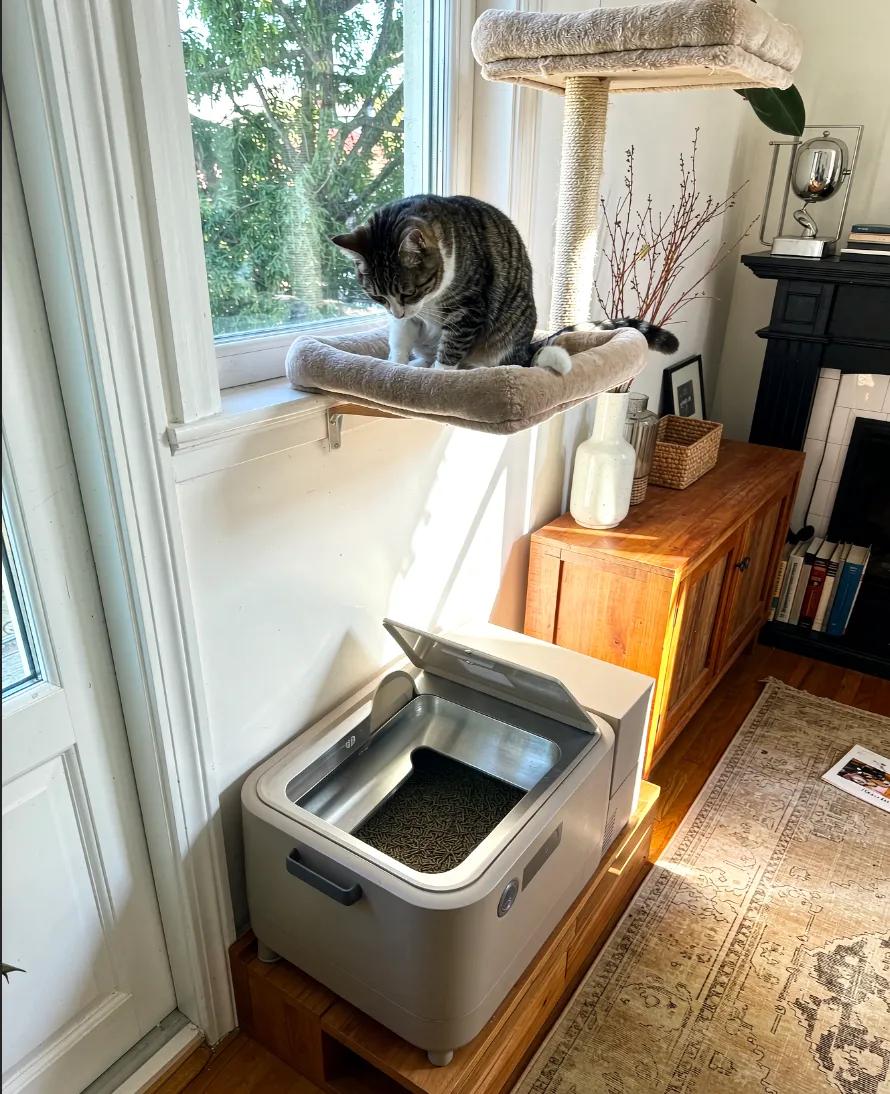
Automatic feeders. Genuinely useful if you're away during feeding times or your cat grazes and you want portion control. But feed dry food only — don't trust a feeder with wet food sitting out. And keep the "auto" in perspective: a feeder dispenses food; it doesn't replace interaction.
What to skip. This is where I'll be honest: most of the "smart toy" category is solving a problem you don't have. A gadget that plays with your cat by itself is a novelty, not enrichment — enrichment is interactive, and interactive means you [5]. Pet cameras are nice for checking in on a trip, but they're a want, not a need.
The through-line is the same as Layer 1: buy for the job, not the trend. If a device handles a real chore, it pays for itself. If it's just clever, it'll end up on a shelf next to the cardboard boxes your cat prefers.
Layer 3: Build a cleaning system that actually keeps up
Here's the reality nobody mentions: with a cat, cleaning isn't an event. It's a daily system. If you treat it as a weekly emergency, you lose. If you build a system, you barely think about it.
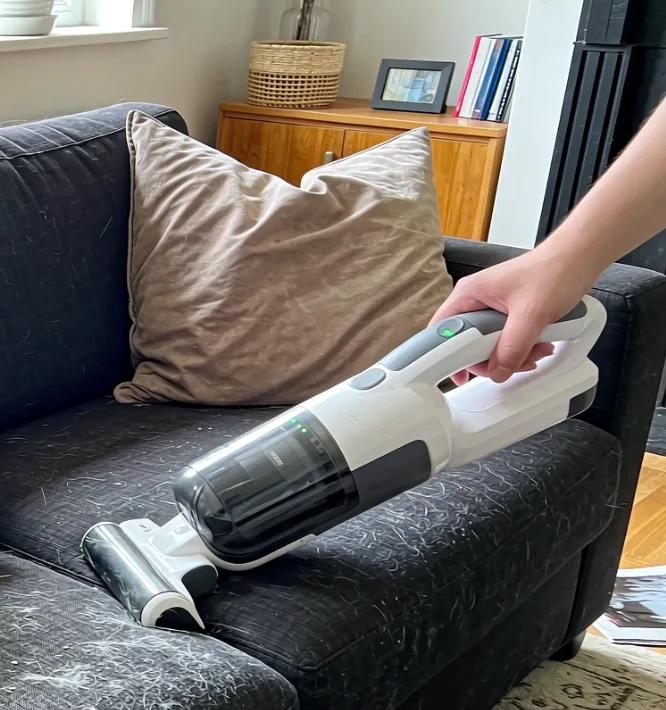
Hair. This is the number-one complaint, and the fix is prevention-plus-removal. Prevention is regular grooming — brushing your cat pulls loose fur before it becomes furniture fur. Removal is about the right tools: a vacuum built for pet hair, a rubber grooming brush, and lint rollers where the vacuum can't reach [12]. Testers at Good Housekeeping and RTINGS put real effort into finding vacuums that don't clog or spray hair back [12]. If you're buying one vacuum, buy it for pet hair specifically.
I'll be honest: my first "pet hair" vacuum just sprayed the fur back out the exhaust. Second time around I read the reviews properly and got one built for the job. That's the difference between a system and a toy.
Smell. Cat urine smell is the hardest one, and there's a reason: plain ammonia cleaners often make it worse, because they don't break down the uric acid crystals in the stain [11]. The fix is an enzyme-based cleaner that actually digests those crystals [11]. For the litter box itself, the basics do most of the work: scoop daily, and the box stops being a smell source. If you notice a strong ammonia smell despite regular scooping, that's worth flagging — it can point to a box that's too small, too few boxes, or a medical issue like a urinary problem. That last one is a "talk to your vet" moment, not a "buy another air freshener" moment.
Furniture. Some fabrics hold up to cats better than others. Tightly woven, durable fabrics (many microfibers and performance weaves) resist snags far better than loose knits or glossy leather [13]. If you're buying a sofa and you have a cat, choose the fabric with that in mind. If your sofa's already clawed, you have two moves: redirect scratching (Layer 1) and cover the spots you care about.
And one non-negotiable: the cleaning products themselves have to be cat-safe. ASPCA's poison control is clear that several common products are genuinely dangerous to cats — including laundry pods and fabric softeners (which can cause serious chemical burns), toothpaste with fluoride, and undiluted bleach [10]. Store them where a cat can't get them, use enzyme-based cleaners for messes, and if you ever suspect your cat got into something, call your vet or the ASPCA Poison Control hotline at (888) 426-4435 [10].
The safety red lines you shouldn't cross
Layer 1 through 3 only work if the home is safe. So let's put some hard red lines down.
Windows and balconies. Cats fall out of open windows — a risk real enough to have a name: high-rise syndrome. WebMD, reviewed by vets, reports that with timely care the survival rate is about 90%, but the injuries (broken jaws, fractured limbs, punctured lungs) are serious [14]. ASPCA vets can see up to five fall-injured cats a week in summer [14]. The fix is simple and cheap: sturdy, well-fitted window screens — not child guards, which cats can slip through [14]. If you have a balcony, make it an enclosed catio or don't let them out there.
Cleaning products and plants. Keep the dangerous stuff (pods, softeners, toothpaste, undiluted bleach) out of reach [10]. If you have houseplants, check them — several common ones are toxic to cats, and a cat that chews plants is a real emergency risk.
Litter box count and placement. OSU's rule: at least one box per cat, plus one [5]. Clean it daily. And if your cat suddenly stops using the box, that's a medical red flag (urinary issues), not a behavioral "they're being difficult" — get them to a vet.
A rhythm that makes it all stick
Systems work because they run on autopilot. Here's the cadence I've settled on:
Daily: scoop the box. Refresh water. A couple of 5-minute interactive play sessions [5]. A quick pass with a lint roller on the couch.
Weekly: brush your cat. Vacuum the furniture and floors with the pet-hair tools. Wipe down the litter box area with an enzyme cleaner.
Monthly: deep-clean the litter box (empty, wash, refill). Check the window screens. Check your cleaning products and plants against the safety list.
Every so often: reassess. When your cat starts scratching a new spot or hiding more, that's your cue that the space needs a tweak — not a shopping spree.
The takeaway
Here's the one-line version: design the home before you buy more stuff.
Start with space — vertical perches, hiding spots, and redirected scratching. Let smart tech handle the chores that actually drain you, but buy on fit and safety, not on hype. And run a cleaning system that keeps up daily instead of fighting the mess weekly. Do those three layers in order, and you'll have a home that's genuinely good for your cat — and genuinely nice to live in.
The pet industry will keep telling you the answer is the next product. The better answer is usually already in your house: it just needs to be arranged around a cat's nature.
Furpick.app is a participant in the Amazon Services LLC Associates Program and other affiliate programs. We may earn from qualifying purchases. Content from Amazon and other retailers is provided 'as is' and subject to change. All trademarks are the property of their respective owners.